Tehran Talks, Strait Smoke: A Day of Contradictions Off the Iranian Coast
Hours after Iran's foreign ministry declared no deal with Washington was final, an unexplained explosion was reported along the country's southern coast. The sequence captures a negotiation still being fought in public, with both sides talking past each other.
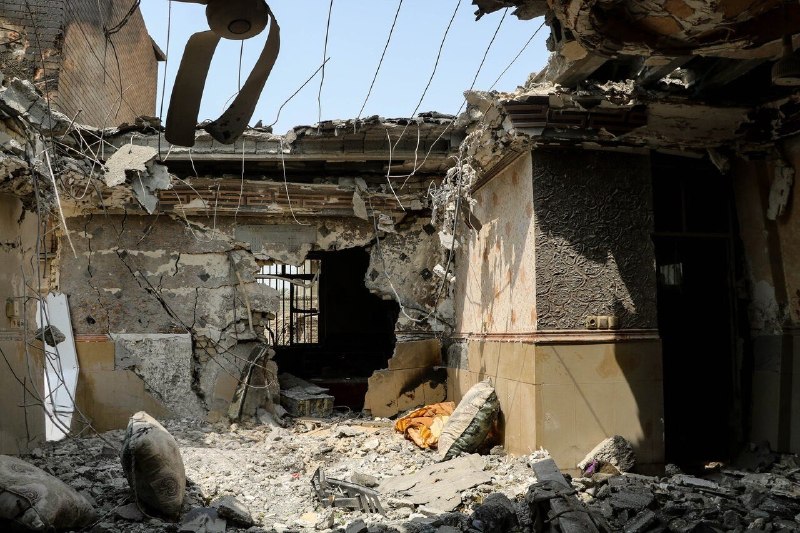
On 11 June 2026, in the late-evening hours over the Gulf of Oman, two signal flares rose in opposite directions within minutes of each other. The first was diplomatic: Iran's Ministry of Foreign Affairs publicly insisted that "nothing has been finalised" with Washington and that claims of an agreement are "merely speculation." The second was kinetic and unresolved: open-source monitors reported an explosion near Iran's southern coastline around Sirik, the cause of which remained unclear as of the last hours of UTC. The juxtaposition captures a negotiating process in which Iranian officials are publicly holding firm even as the operational environment around them shifts.
The two threads are not easily separated. The ministry's statement, transmitted through the official X account and republished by the Iran-focused open-source account Open Source IntelNOW at 21:23 UTC, framed American messaging as a pressure tactic. "America wants to imply that Iran has backed down because of threats," the readout read. "Iran will not back down from its initial red lines." Less than an hour earlier, the same ministry had stressed that "the highest authorities will discuss all the terms of any possible understanding and we will announce our position in due time." Within a single news cycle, Tehran produced three distinct postures: denial, defiance, and deferral upward to the country's senior leadership.
The diplomatic picture, in Tehran's own framing
The readouts that reached the open-source feeds on 11 June were issued in a way designed to constrain American interpretation. A line republished by ClashReport at 20:27 UTC said explicitly: "Reports and claims regarding a possible agreement are merely speculation, and nothing has been finalized. Iran has not yet reached a final conclusion regarding an agreement." The Al-Alam Arabic news channel, an outlet of Iranian state broadcasting, carried the ministry's framing in three urgent flashes at 20:26 and 20:27 UTC, emphasising in turn that "the agreement with Washington has not yet become final," that "the American side's narratives are to show that Iran has retreated from its positions under pressure and threat," and that any resolution would be authorised at the top of the system and announced "in due time."
Each of those messages does a different piece of work. The denial forecloses the idea that a deal has been reached, blunting any sense of momentum in Washington. The defiance reframes the dispute as one of national will, not technical negotiation, putting American pressure into the rhetorical role of a thing Iran has survived before. The deferral upward is structurally important: it places the decision outside the foreign ministry and into a small circle of senior officials, signalling to outside observers that the public posture of the ministry is not the same thing as the negotiating ceiling. In the Iranian institutional grammar that Western analysts have learned to read since 2015, deferral upward usually means talks are alive.
That triple posture also disciplines the American end of the conversation. By floating a narrative of Iranian capitulation in the same news cycle, the ministry forces journalists and intermediaries who want to credit Washington with a win to read the actual text of any announcement with care. The contrast is real: official Iranian messaging in the public thread is consistent and detailed; the sources do not specify what the American side has actually said about the state of play beyond what Tehran attributes to it.
The explosion at Sirik
At 21:23 UTC, the open-source account Open Source IntelNOW posted that there had been "an explosion near Iran's Sirik coastline" and that "the cause remains unclear." Sirik is a small coastal town in Hormozgan Province on the Gulf of Oman, on the eastern flank of the Strait of Hormuz. The Strait is the chokepoint through which roughly a fifth of the world's oil passes; the Iranian coastline adjacent to it is laced with port facilities, naval bases, and energy infrastructure.
A single open-source report of an unexplained blast is not, on its own, a determination of cause. Such reports have, in previous episodes along the Iranian coast, preceded Israeli or American statements of responsibility, but they have also preceded the public emergence of accidental industrial incidents and Iranian internal security operations. The sources available at the time of writing do not specify which. The location matters: events in this stretch of coastline tend to be read as signals even when their authors do not intend them to be.
The timing is also what makes the report salient. It arrived in the same window in which Iran's foreign ministry was publicly contesting the American framing of the talks. When the operational and the diplomatic move in the same news cycle, analysts tend to look for a connecting logic. The sources do not supply that logic. They do, however, register the coincidence.
What the Iranian messaging tells us about the negotiation
Reading the four messages in sequence — the three Al-Alam Arabic flashes at 20:26–20:27 UTC, the ClashReport line at 20:27 UTC, and the Open Source IntelNOW relays of the foreign ministry at 21:23 UTC — produces a coherent internal account of where Tehran believes it stands.
First, the Iranian system is not treating the question of an agreement as closed. The reference to "possible understanding" and to authorities who will discuss the terms suggests that a draft text, or a framework, may be in play. The denial is not that talks are happening; it is that talks are concluded. Second, the ministry is preserving space for the senior leadership to set the final terms without appearing to react to American public pressure. The deferral upward is a way of saying, in effect, that what is on the table has not yet been endorsed by the people whose endorsement counts. Third, the framing of American messaging as designed to depict Iran as retreating is a defensive line: it pre-empts a specific kind of Western headline that would credit a sanctions- or military-pressure campaign with a diplomatic dividend.
A structural point follows. In negotiations conducted under sanctions, threat of force, and a deep asymmetry of information between a closed Iranian system and a noisy American political process, the public floor of one side is rarely the private ceiling. Iranian officials have, since at least the early 2000s, treated the public floor as something to be defended while private movement occurs elsewhere. Western coverage that treats public denials as dispositive tends to overstate the deadlocks; Western coverage that treats anonymous readouts of progress as dispositive tends to overstate the breakthroughs. The honest position, on the available sources, is that there is a negotiating process in motion, that the public face of it is firm, and that the working level of it is not visible.
A counter-narrative: the strike hypothesis
A plausible alternative read of the day's events is that the explosion at Sirik and the foreign ministry's posture are causally linked, and that the link is kinetic rather than rhetorical. Under that read, an Israeli or American action against a coastal target — military, intelligence, or infrastructural — would have produced two predictable Iranian responses in sequence: a hardening of public diplomatic language, and a deferral upward of the substantive response. The hardeners would point out that, in past episodes, Iranian retaliation has lagged the event it was responding to, sometimes by days, and that a public denial of an agreement can sit comfortably alongside preparation of a measured military reply.
The case against that read is, on the sources, equally direct. Open Source IntelNOW's posting is explicit that the cause "remains unclear." No other open-source channel in the thread context has, at the time of writing, attributed the explosion to any actor. The Iranian foreign ministry, in the messages captured here, is not framing the event as an attack; it is framing the diplomatic dispute with Washington. If the explosion had been clearly a strike, the Iranian public posture would, on past precedent, look different — closer to the language of national defence and away from the language of negotiating positions. That is not what the available readouts show. The most defensible reading is therefore that the explosion is genuinely under investigation and that its connection to the negotiation, if any, is not yet established.
Structural frame: signals, scepsis, and the Strait
What this news cycle surfaces is the continuing centrality of signalling in a Middle Eastern security environment in which the line between the diplomatic and the military is not policed by any neutral arbiter. The Strait of Hormuz is the canonical case: a corridor of energy transit narrow enough that even the possibility of disruption moves the price of crude, and long enough that almost any reported incident on either shore can be repriced by markets before it is explained by officials. Tehran has spent two decades building a reputation for ambiguity in this corridor — both as a deterrent against a strike on its own territory and as a way of forcing external powers to negotiate rather than to escalate. The combination of an unexplained coastal incident and a triple-layered diplomatic denial is, in that sense, the operating logic of the system doing what it is designed to do.
The more uncomfortable point is on the American side. The Iranian messaging explicitly identifies American "narratives" as the object of its pushback. That is a description of an information environment in which Washington believes it is winning a pressure campaign and Tehran believes it is fending off a public-relations offensive. Both can be true at once: pressure can be producing movement at the working level while the Iranian public system denies movement for domestic and bargaining reasons. The problem for outside observers is that the only direct read they have into the working level comes from American readouts that Tehran is, in the same news cycle, calling into question.
Stakes and what to watch
The trajectory of the next seventy-two hours is the one that matters. Three things would meaningfully change the picture. First, confirmation by any official Israeli, American, or Iranian source of responsibility for the Sirik incident, with or without a target description, would move the analysis out of the ambiguity lane and into the retaliation lane. Second, a public statement by Iran's supreme national security council, or by senior political figures above the foreign ministry, would be the most credible signal of a closing or opening of the negotiating space. Third, a public readout from Washington that names the stage of the talks and the issues still in dispute would do the most to discipline speculation in either direction. None of those moves has been made in the available sources.
In the meantime, the day's record is one of contradictions that are real, not stylistic. The foreign ministry is denying a deal, defending Iran's red lines, and referring the question upward. The coast is producing an explosion whose cause no one in the open-source feed is yet prepared to call. Both can be true. The hard part is the weighting.
The sources do not specify the cause of the Sirik explosion; they do not specify whether any negotiating round took place on 11 June; and they do not specify which Iranian authorities, beyond the foreign ministry, have been engaged in the working-level talks. These are the three points on which any subsequent read of the day will rest.
This article treats Iranian state-adjacent messaging as a primary source on Iran's public posture, while withholding judgment on questions of fact the open-source record has not yet resolved.
Wire provenance
This editorial synthesis draws on the following public wire/social posts:
- https://t.me/osintlive
- https://t.me/osintlive
- https://t.me/ClashReport
- https://t.me/alalamarabic
- https://t.me/alalamarabic
- https://t.me/alalamarabic
- https://en.wikipedia.org/wiki/Sirik
- https://en.wikipedia.org/wiki/Strait_of_Hormuz
Follow the event.
These dated source records provide context. They do not retrospectively verify this archive article.
Separate what the nuclear watchdog reported from what it could not determine after the June 2025 strikes.