Day 104: How a single afternoon of Situation Room calls set the trajectory for the US-Iran war
President Trump told reporters the United States would be hitting Iran 'very hard tonight,' capping a day that began with an Axios-reported Situation Room meeting and ended with Tehran's retaliatory closure of the Strait of Hormuz.
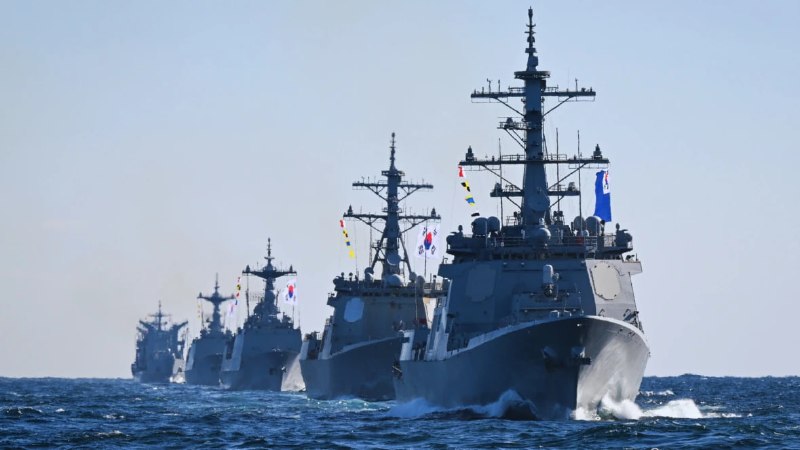
On the afternoon of 10 June 2026, President Donald Trump convened a Situation Room meeting to weigh further strikes against Iran, according to a posting by the financial account Unusual Whales citing Axios reporting. Roughly twenty-four hours later, on 11 June 2026 at 12:25 UTC, the Telegram channel Insider Paper quoted the US president as saying the United States would be hitting Iran "very hard tonight." In the interval, Al Jazeera English's continuous coverage of "Iran war day 104" reported that Iran had struck US bases in the Gulf and moved to close the Strait of Hormuz in retaliation for the American action. Three discrete feeds, one accelerating arc: a green-light to escalate, an order to escalate, and a regional response whose economic consequences will travel well beyond the Gulf.
What this publication is tracking is not the strike count or the body-bag arithmetic of any single day, but the political tempo: how a single afternoon of senior-staff deliberation, a presidential press line, and an Iranian counter-move combined to convert a US-Iran war that had been running on a familiar, attritional footing into a crisis centred on one of the world's most consequential energy chokepoints. The structural question is no longer whether the war is contained; it is who absorbs the cost of an open-ended confrontation in which a 21-percent slice of global oil traffic moves through a narrow corridor now under direct military pressure.
The Situation Room and the order to escalate
The day's pivot point sits inside the White House. According to the Unusual Whales X account, which on 10 June 2026 at 20:20 UTC broke out a single line — "BREAKING: Trump held a Situation Room meeting this afternoon to discuss potential new strikes against Iran, per Axios" — the meeting signalled that the administration's debate over the scale of further US action had been lifted from inter-agency channels into the president's direct orbit. The phrasing, "potential new strikes," matters: it implies the United States is choosing among options, not weighing whether to act at all.
The president confirmed the direction in remarks the following day. On 11 June 2026, Insider Paper's Telegram channel carried the line, "BREAKING: US will be hitting Iran very hard tonight, President Trump says." The phrasing — "very hard tonight" — combined with the Situation Room timing points to a specific decision logic: a senior-level review on the afternoon of 10 June, an operational plan approved within roughly twelve hours, and a public confirmation timed to the start of the US evening news cycle. The combination is consistent with a White House that wants the strikes understood as deliberate, retaliatory, and proportionate to a defined Iranian provocation — not as the first move in an open-ended ground campaign.
That framing, however, is the White House's framing. The substance of the deliberation — what Iranian action specifically triggered the new round, what the target set is, what the rules of engagement look like — is not visible in the three feeds this publication is working from. What is visible is the political posture: a president willing to say the word "tonight" on the record, having just emerged from the room where the strikes were authorised.
Iran's response: bases, and the Strait
Al Jazeera English's running coverage on 11 June 2026 framed the same day as "Iran war day 104" and described two distinct Iranian actions: attacks on US bases in the Gulf, and the closure of the Strait of Hormuz. The phrasing — "Iran attacks US bases, closes strait after Trump strikes" — puts the Iranian moves downstream of the US action. That sequencing is consistent with the order of events the three feeds collectively describe: Situation Room meeting on 10 June, US strikes on the night of 10–11 June, Iranian retaliation on 11 June.
Each leg of the Iranian response carries a different signalling logic. Strikes on US bases are a militarily legible answer — they say Iran is willing to absorb escalation, and that Iranian precision strike capability is real and operational. The closure of the Strait of Hormuz is a different kind of message. It is not aimed at US troops; it is aimed at every oil importer in Asia, Europe, and the Americas whose supply chain depends on tanker traffic through a channel roughly 21 percent of global seaborne oil transits. In one move, Iran converts a bilateral war into a global economic event.
The closure, as reported in the Al Jazeera feed, is the development with the longest shadow. US base damage can be repaired, reinforced, or absorbed. A sustained disruption to traffic through Hormuz pushes Brent and WTI higher within hours, gives Opec+ a coordination problem it did not ask for, and forces governments in Tokyo, Seoul, Beijing, and New Delhi to decide whether their public posture on the war tracks their private dependence on Gulf crude.
Why the tempo has changed
The 104-day mark is itself a clue. Wars fought on industrial timelines — the air campaigns of 1991, 2001, 2003 — produce their first inflection points inside the first month. Wars that run past ninety days, by contrast, tend to enter a phase in which the original political objective has been partially achieved, partially abandoned, and the question is what level of effort is now defensible at home. Day 104 is past the moment when any leadership can credibly claim the war is on a glide path to victory; it is also past the moment when domestic audiences are still willing to fund open-ended effort on the original terms.
What the Situation Room meeting signals, read alongside the president's "very hard tonight" line, is a White House that has concluded a new round of escalation is cheaper than the political cost of muddling through. The arithmetic of escalation is not unusual in itself — what is unusual is the venue. The president chose to pre-announce the strikes in a public remark rather than allow them to surface in next-morning damage assessments. That is a decision about who the strikes are for. They are not only for Tehran; they are for the domestic audience that will watch evening coverage of the strikes and read them as a demonstration of resolve.
Iran's counter-move says it has read the same political text. By tying the Strait of Hormuz into the retaliation, Tehran ensures that the same domestic audience that watches the US strike coverage will also watch the next morning's oil price tape. The two narratives are now coupled.
What remains genuinely uncertain
Three pieces of the picture cannot be resolved from the three feeds this publication has on hand. The first is the scale and target set of the US action. The president said "very hard tonight," but the feeds do not specify whether the strikes are a one-night salvo or the opening of a multi-day campaign, whether they are aimed at nuclear-related facilities, IRGC command-and-control, oil infrastructure, or a combination. The second is the durability of the Strait of Hormuz closure. Al Jazeera's feed frames it as an Iranian action; it does not say whether the closure is a formal declaration, a de facto mining or fast-attack-boat interdiction, or a political signal that has not yet been operationalised. The third is the response of third parties — Gulf Arab states, the European Union, China, India, Russia — none of whom are visible in the three threads on hand.
A plausible alternative read of the day's events is that the White House and Tehran are running a managed escalation cycle: a US strike, a calibrated Iranian response, a period of pressure, then a return to a channel. That read is consistent with a war now in its fourth month, in which both sides have an interest in demonstrating capability without triggering the kind of cascading failure that ends governments. The dominant framing — that the closure of the Strait is a structural break — is supported by the Al Jazeera feed's explicit linking of the two events, but it is not the only available read. What tips the balance toward the structural-break framing is the simple fact that the Strait is now in the news cycle as a live issue, and once it is a live issue, the cost of standing it down is higher than the cost of keeping it open.
The stakes over the next thirty days
If the Hormuz closure holds for any sustained period, the winners are exporters outside the Gulf — US shale, Brazilian deepwater, Norwegian North Sea fields — and the losers are net importers without diversified supply, particularly in South and Southeast Asia. The secondary winners are the shipping insurers and naval forces whose presence in the Gulf becomes a billable item. The secondary losers are the Gulf petro-states themselves, whose revenue depends on barrel flow and whose security depends on the very US bases Iran is striking.
For the US administration, the bet embedded in the 10 June Situation Room meeting and the 11 June presidential line is that a demonstrable escalation will shorten the war by making the cost of continued Iranian defiance legible to Tehran's decision-makers. For Tehran, the bet embedded in the Hormuz move is that the global economic cost of the closure will translate into diplomatic pressure on Washington faster than the military cost of the US strikes translates into political pressure in Iran. Both bets can be wrong. Both can be partly right. The next thirty days will tell which dynamic dominates — and the three feeds this publication is working from will not be sufficient, by themselves, to settle the question.
How Monexus framed this vs the wire: this piece treats the day's three inputs — a Situation Room meeting on 10 June, a presidential "very hard tonight" line on 11 June, and Al Jazeera's running day-104 coverage — as a single political sequence rather than three separate events, and reads the Strait closure as the structural development of the week.
Wire provenance
This editorial synthesis draws on the following public wire/social posts:
- https://t.me/insiderpaper
- https://t.me/aljazeeraglobal
Follow the event.
These dated source records provide context. They do not retrospectively verify this archive article.
Separate what the nuclear watchdog reported from what it could not determine after the June 2025 strikes.