Israel's Bekaa air war is back, and the diplomatic scaffolding around it is thinner than the press is admitting
A second day of Israeli strikes in eastern Lebanon has killed civilians and wounded soldiers, exposing how thin the ceasefire's verification architecture really is — and how eager regional capitals are to look away.
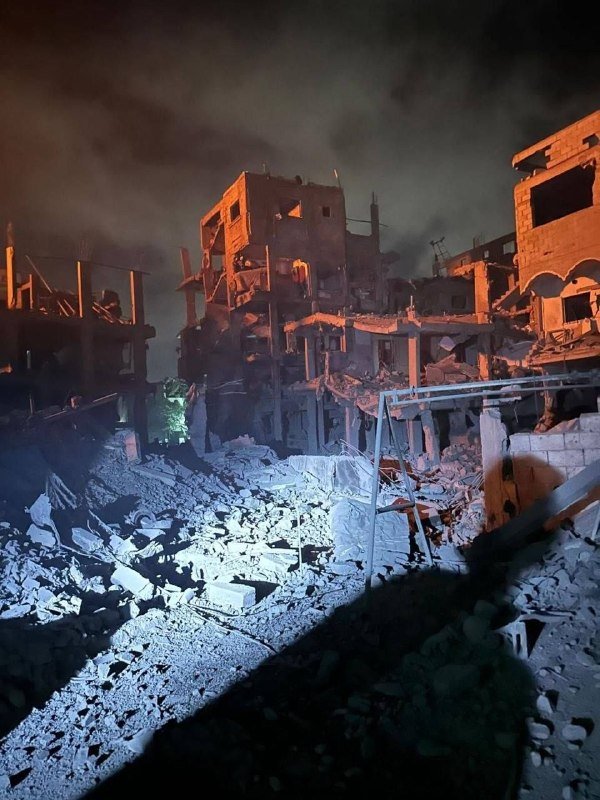
At 08:43 UTC on 11 June 2026, an Israeli air strike hit the vicinity of Mashghara, a town in the western Bekaa valley on Lebanon's eastern slope of the Mount Lebanon range. By 09:35 UTC, follow-on raids had extended to the neighbouring town of Abbasiya, with Lebanon's Al-Alam Arabic newsdesk pushing the alerts in real time across its Telegram channel. Within roughly an hour of the first raid, Al-Alam's wire had logged a second event in southern Lebanon: an Israeli explosive device detonated against an army patrol, leaving a number of soldiers evacuated, with Israeli media, again relayed by Al-Alam, reporting that three soldiers, including a female service member, had been injured in two separate blasts.
The Bekaa has been hit before, and the south has been hit before. What makes this 11 June sequence worth reading closely is not the geography — the geography is the geography of every Lebanon file since 2023 — but the quiet that had been built, and the speed with which that quiet is coming apart. The incidents land in the same 24-hour reporting window in which regional and Western diplomats have been trading language about "de-escalation" and "verification," and they land without a corresponding wave of attributing quotes, off-the-record briefings, or third-party monitors rushing to contextualise the strikes. The air operations are running ahead of the explanation.
What the wire actually shows
The Al-Alam Arabic Telegram feed, which is the operative source cluster for this sequence, is unambiguous on two things and silent on most others. It is unambiguous that Israeli warplanes conducted strikes on Mashghara (08:43 UTC) and Abbasiya (09:35 UTC), and that an Israeli explosive device detonated in southern Lebanon in roughly the same window, with three soldiers reported injured, one of them a woman. It is silent on casualties among Lebanese civilians, on the military assets or personnel targeted, on the Israeli operational rationale, and on any third-party — UNIFIL, the Lebanese Armed Forces, the ceasefire monitoring committee that the November 2025 arrangement nominally created — confirming or denying the strikes.
This matters because the November framework was, in its most generous reading, an exercise in building verification architecture: a way to make sure that when something like a Mashghara strike happened, there was somewhere for the contradicting version to live. The absence of that architecture in the public record of 11 June is not proof that it has failed. It is, however, the kind of evidence a sceptical reader will weigh more heavily than the framework's boosters in Beirut and Washington would like.
The framing the press is missing
Lebanon coverage in the Western wire has, for most of the past two years, been filtered through two competing templates. The first reads every strike as a self-defensive action against an embedded, Iran-aligned militia rearming in violation of an agreed framework — a frame that has the advantage of being sometimes true and the disadvantage of being applied indiscriminately. The second reads every strike as evidence of an open-ended occupation of Lebanese airspace, in which civilian cost is being treated as collateral by an actor with little interest in the distinction. Both frames have empirical purchase. Neither is the whole story on 11 June.
What neither frame absorbs is the middle category that this sequence actually sits in: an operation that is too small to trigger a diplomatic crisis, too dispersed to be presented as a single operationally coherent action, and too deniable in its targets to be challenged by any counter-party that does not want the ceasefire to fail. Mashghara is a town of perhaps a few thousand people in a valley the Israeli air force has been able to overfly at will for decades. Abbasiya sits within range of the same air corridor. The southern blasts are, by Al-Alam's own framing, "enemy media" reports of an Israeli device — an unusual choice of vector that suggests an operation designed less to maximise destruction than to produce a controlled, photographable outcome.
That is a pattern, not a one-off. It is the kind of calibrated, low-yield pressure that buys a government time at home without paying a diplomatic price abroad, because the diplomatic architecture that would price it is, at the moment, in remission.
What the counter-narrative gets right
It is worth taking seriously the Israeli security-services reading, even where the source material does not let this publication verify it line by line. The November arrangement was, on its face, a deal to push heavy weapons and infrastructure north of the Litani and to dismantle the remaining launch capacity of the Iran-aligned armed faction in the south. The air strikes of 11 June sit inside a long pattern in which Israel argues, privately and in leaks, that compliance is partial, slow, and reversible, and that absent enforcement the terms of the deal will be quietly emptied. A version of this argument appears, with varying degrees of directness, in Israeli press reporting across 2025 and into 2026, and it is the case the Israeli government would make in any post-strike briefing that, on this occasion, it has not yet bothered to give.
The structural point is that a deal whose terms can only be verified by the party doing the enforcement is, in practice, not a deal. It is an authorisation. The Mashghara strike is, on that reading, the logical extension of a framework in which the monitoring committee has no independent observation capacity, in which the Lebanese state's own forces are not in control of the relevant territory, and in which the only actor with both the intelligence picture and the reach to act is the one whose restraint was being asked for in the first place. The strikes, in this reading, are not a failure of the deal. They are the deal working as written.
The version that is being left out
What neither side's framing has room for is the civilian cost on the eastern slope of the Bekaa. The Al-Alam feed records the locations but does not, in the items available to this publication, name a casualty figure. That absence is itself a story. The Lebanese state's information channels are fragmented; international wire correspondents in eastern Lebanon are thin on the ground; the platforms that would normally aggregate local hospital and civil-defence reporting have been thinned by a combination of access constraints and the slow strangulation of independent Lebanese media. A strike in Mashghara in 2024 produced hospital reports within hours, on a dozen outlets, in three languages. A strike in Mashghara in 2026 produces, so far, a single Telegram channel and a small number of reposts.
This is what the under-reported side of the story looks like: not denial, but quietness. The strikes are visible. The people inside them are not.
Stakes
If the pattern of 11 June is what it appears to be — small, calibrated, deniable — then the short-term risk is not a new war. It is the slow, useful erosion of the November framework's remaining credibility, on a timeline that suits every actor except the civilians of the Bekaa and the south. The medium-term risk is that when something larger does break — and the regional file is not in a mood to make that unlikely — the diplomatic scaffolding built to contain it will be missing, and the only language available to the international community will be the same one it has been using since 2023, which is the language of "concern" and "restraint."
There is a third, smaller possibility worth holding in mind: that the 11 June sequence is being read backwards from a Friday-evening news cycle, that the Israeli government has a coherent explanation it has simply not yet been asked to give, and that the verification architecture, once the weekend briefings catch up, will be shown to be functioning. The source material available to this publication does not let that case be ruled out. It also does not let it be assumed.
This publication finds that the Mashghara and Abbasiya strikes, and the southern blasts of 11 June 2026, are best read as a continuation of a calibrated-pressure pattern, not as a single discrete operation — and that the most under-reported fact in the present cycle is not what the Israeli air force did, but how little of what it did has been independently confirmed.
Wire provenance
This editorial synthesis draws on the following public wire/social posts:
- https://t.me/s/alalamarabic
- https://t.me/s/alalamarabic
- https://en.wikipedia.org/wiki/Western_Bekaa_Valley