Jumblatt tells Al Jazeera the door to peace with Israel is shut — for now
In a Wednesday interview, the veteran Druze leader Walid Jumblatt said he sees no realistic path to normalisation and warned that neutralising Lebanon is the wrong frame for the moment.
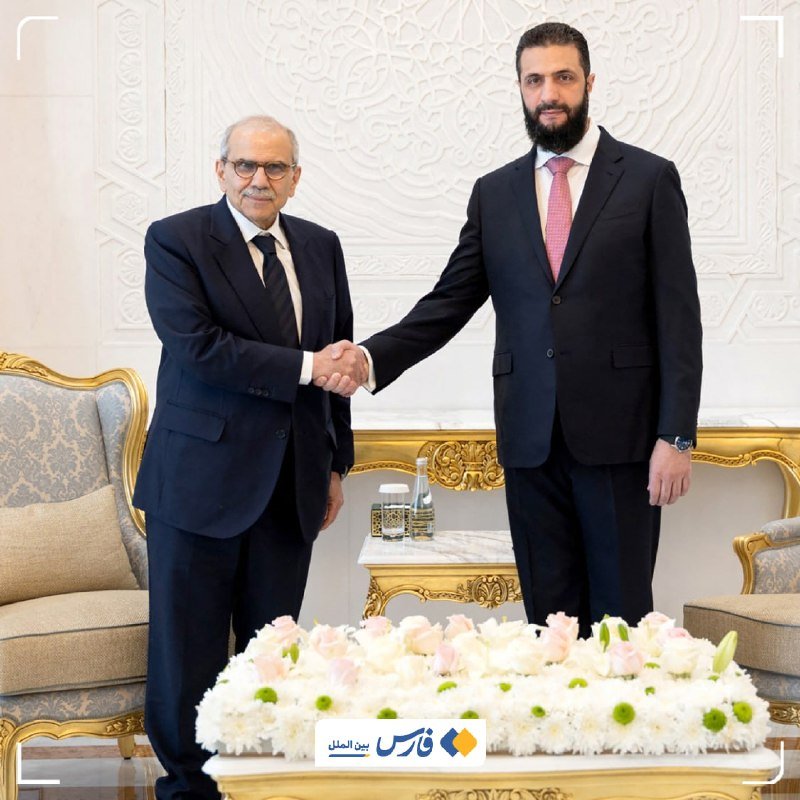
Wal
id Jumblatt, the veteran Druze leader who has shaped Lebanese politics for four decades, used an Al Jazeera interview on 11 June 2026 to deliver an unusually direct reading of his country's strategic predicament: peace with Israel is not on offer, and the familiar Washington-driven formula for "neutralising" Lebanon is the wrong instrument for the moment. The comments, relayed by the Telegram channel @wfwitness in a four-item thread posted between 16:09 and 16:23 UTC, are the clearest public signal in months that a key pillar of post-civil-war Lebanese political thinking has shifted from caution to flat rejection.
The substance is the headline. Jumblatt's framing matters less for what it says about any future negotiation than for what it says about the present political space inside Mount Lebanon's Druze community — the constituency his Progressive Socialist Party has organised since Kamal Jumblatt founded it in 1949. When a leader of that standing publicly closes the door, the door is, in practical terms, closed.
What Jumblatt actually said
The thread's three substantive quotations, each attributed to the Al Jazeera interview, are pointed. On the diplomatic question, Jumblatt said: "I do not see any possibility of peace with Israel. Some Lebanese no longer consider t" — the excerpt cuts off mid-sentence but the direction is unambiguous. On the much-debated idea of a regional non-aggression or neutralisation arrangement, he added: "The possibility of neutralizing Lebanon at the current time is difficult, and we must" — again truncated, but the operative word is "difficult," not "impossible," and the conditional tense signals a political judgement about timing rather than principle. A third strand, attributed to a separate commentary in the same broadcast, observed: "Lebanon is not isolated today from what is happening in the Gulf" — a deliberate relocation of the Lebanese debate inside a wider Arab geopolitical frame, away from the Lebanon-Israel bilateral that has consumed the country's diplomacy since the Taif Agreement of 1989.
The wording is careful. "Difficult" is not "impossible." "I do not see" is not "we reject." Jumblatt is leaving himself — and by extension the Druze political space — a narrow corridor to shift position if circumstances change. That is the habit of a political class that has survived Syria, Israel, Hezbollah's armed primacy, and three decades of post-war fragility by reading the room before speaking.
Why the framing is shifting
The "Lebanon is not isolated today from what is happening in the Gulf" line is the most analytically loaded of the three. For most of the post-2005 period, Beirut's strategic conversation has been hostage to two anchors: the Iran-aligned axis running through Hezbollah, and the Israel-Lebanon frontier in the south. The Gulf — Saudi Arabia, the United Arab Emirates, Qatar — has loomed mostly as a source of remittances, expat labour markets, and the occasional donor conference. Jumblatt's instinct, in this interview, is to point at a third anchor: the energy of a Gulf that is now re-engaging Syria, talking openly to Iran via intermediaries, and exploring regional security architectures that did not exist three years ago.
If that reading holds, then the binary that has organised Lebanese political journalism — Hezbollah-aligned versus March 14-aligned — is being supplemented, and in some quarters displaced, by a Gulf-mediated frame in which Lebanon is a small piece of a larger settlement. The implication for Israel is uncomfortable: the negotiating partner Beirut once imagined for itself may no longer be the one the region now needs to talk to.
The Druze position inside Lebanon
It is worth saying what Jumblatt is not doing. He is not speaking for Lebanon's Sunni establishment, which has its own calculations centred on the prime minister's office and the Saudi relationship. He is not speaking for Lebanon's Maronite leadership, whose traditional interlocutor on security questions has been the Baabda palace and, behind it, the French. He is speaking for the roughly half-million Druze voters of Mount Lebanon, the Chouf, and Aley — and for a community that has historically been over-represented in the security services, the army officer corps, and the diplomatic corps.
That over-representation is the point. When Jumblatt says the door is closed, the foreign-policy establishment of a confessional state hears it. The Progressive Socialist Party's parliamentary bloc, while not the largest in the National Assembly, has punched above its weight in every post-war cabinet that mattered. His signal to Gulf capitals, to the French, and to the handful of Western chancelleries that still maintain a Lebanon desk is that the Druze will not be the in-country vehicle for a normalisation track, at least not on the timeline currently being discussed.
What the framing gets wrong — and what it gets right
The sceptical read is that Jumblatt is performing for a domestic audience. A leader whose community is geographically wedged between Christian Maronite areas to the north and Shiite Hezbollah territory to the south has every reason to publicly harden the line on Israel: it reassures the Shiite neighbour, it does not alienate the Christian neighbour, and it positions the Druze as the principled holdout. The argument is fair. It is also incomplete.
The more durable read is that Jumblatt is reporting a constituency reality. The Al Jazeera platform matters here: it reaches a Lebanese and Arab Shia-majority audience that no other broadcaster reaches with comparable depth, and it is the venue in which Sunni, Druze, and Christian Lebanese political figures have historically signalled across confessional lines. To deliver this message on that platform, in those words, is to broadcast it to the audiences that the policy will eventually have to clear.
Stakes
If the reading is correct, the practical consequences are three. First, the Western capitals that have quietly explored a Lebanon track — Paris above all, with a supporting cast in Berlin and London — will need to recalibrate. A Jumblatt veto does not make a deal impossible, but it removes the cleanest in-country broker. Second, Gulf states will read the interview as licence to deepen their own re-engagement, including with Damascus, on terms that do not necessarily pass through Beirut. Third, the Lebanese government — already operating under a caretaker mandate and an IMF-monitored stabilisation programme — will find its room to manoeuvre narrower, not wider.
The honest uncertainty is this: the source material is a Telegram channel's transcription of a live broadcast, with two of the three substantive quotations truncated mid-sentence. Al Jazeera has not, in the material available to this publication, published a clean transcript of the segment. Until that transcript is in hand, the precise wording — and therefore the precise weight to place on "difficult" versus "impossible," on "I do not see" versus "we reject" — remains provisional. The direction of travel, however, is no longer in doubt.
Desk note: Monexus is publishing this against a single-source Al Jazeera broadcast relayed by @wfwitness on Telegram. The wire wire has not yet published a clean transcript; the analysis above is therefore deliberately calibrated to the wording as it stands, and is open to revision once Al Jazeera's full segment is available.
Wire provenance
This editorial synthesis draws on the following public wire/social posts:
- https://t.me/wfwitness
- https://en.wikipedia.org/wiki/Walid_Jumblatt
- https://en.wikipedia.org/wiki/Progressive_Socialist_Party_(Lebanon)
- https://en.wikipedia.org/wiki/Taif_Agreement