Strikes on Karaj, Silence in Washington: What the First Hours of a US-Iran Air War Looked Like
Within minutes of the first explosions, the only verifiable record came from Telegram mapping channels. The world's two most powerful communications machines had not yet said a word.
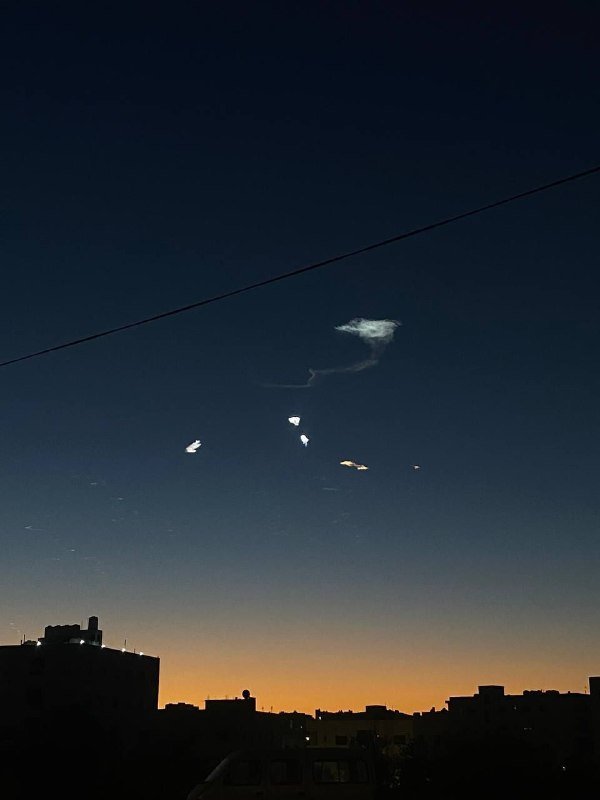
At 00:34 UTC on 11 June 2026, a Telegram channel called GeoPWatch posted a short, declarative line: a second explosion had been reported in Karaj. Four minutes later, the same channel counted at least eight explosions. By 00:38 UTC a parallel account, AMK_Mapping, was sharing audio of what it described as US airstrikes. By 00:40 UTC, additional footage was circulating. By 00:42 UTC, GeoPWatch was reposting scene after scene from the city northwest of Tehran. For close to an hour after the first detonations, the only verifiable public record of what was happening in Karaj came from these two open-source channels and a handful of reposts. No major Western wire had moved. No Iranian state outlet had officially characterised the strikes. The information environment, in other words, was being written by people with phones, not by ministries with podiums.
This is the lens through which the opening of a US air campaign against Iran is being filtered — not the studio reads that will eventually air, not the spokesperson briefings, but the granular, semi-anonymous work of conflict mappers operating in real time. Understanding that ordering is essential to understanding what is actually being decided in Washington, in Tehran, and in the corridors of every Gulf capital watching the escalator.
The shape of the first hour
Karaj is not a frontier town. It sits roughly 30 kilometres from central Tehran, holds well over a million residents, and houses industrial and military-adjacent sites that Iranian sources have long treated as strategically sensitive. The mapping channels that broke the news described a sequence of detonations clustered within minutes of each other — a pattern consistent with coordinated strikes rather than a single munition or accidental blast. AMK_Mapping explicitly identified the origin of the explosions as US airstrikes, and GeoPWatch used the same framing while sharing scene footage. The clustering of the posts — six separate dispatches across roughly ten minutes, all timestamped in absolute UTC — gives the picture a coherence that a single viral clip would not. None of this is independent confirmation. It is one set of accounts, working from the same city, converging on the same description.
What the channels did not do is just as telling. Neither named a specific target. Neither cited official Iranian or US statements. Neither offered a casualty figure. In the first hour of an air war between two governments with sophisticated communications machines, the people who knew something had happened were civilians and conflict mappers, and what they knew was sound and light.
The counter-narrative that did not (yet) appear
Two well-rehearsed counter-frames are absent from the initial record and worth marking. The first is the Iranian state framing. In past US-Iran confrontations — from the killing of Qassem Soleimani in January 2020 to the exchanges around the Strait of Hormuz in 2019 — Iranian outlets moved quickly to characterise the event in their own terms, often before Western wires had anything more than a brief. The silence here, if it persists, is itself a story. It may indicate an information blackout, a power outage, or a deliberate decision to keep initial reactions off the official record. Without Tehran's first read, the claim that these are US airstrikes rests on the framing of the mapping channels alone.
The second absent frame is the US confirmation chain. The Pentagon, the White House, and the State Department routinely pre-position statements for major operations. Their absence from the record — at least within the first hour captured by these channels — is notable. It may mean the operation is being conducted without a public announcement strategy. It may mean a statement is queued. Or it may mean that what unfolded in Karaj was a more limited action than the first reports imply, and the formal apparatus has not yet decided how to describe it. Each of these readings has a different strategic weight.
The structural picture, in plain terms
The deeper pattern here is the one the open-source record makes unavoidable. When the first public accounting of a kinetic act between two sovereign powers comes from Telegram channels operating without state backing, the older hierarchy of information — official communiqué, wire confirmation, public reaction — has been inverted. The platforms that handle crisis footage are no longer ancillary to the news; for the first minutes, they are the news. That inversion has been a slow-moving story for a decade, and is being compressed, in this case, into a single hour.
Underneath it lies the harder question of what kind of war, if any, is being authorised. A US strike on Karaj in isolation is one kind of event. A first strike in a sequenced air campaign is another. A response to a specific Iranian act, with the escalation ladder already mapped, is a third. The first hour's record does not resolve the question. The mapping channels are not equipped to, and were not trying to. They were reporting what they saw and heard, in a window in which seeing and hearing were the only available evidence.
Stakes, and what to watch
If this is the opening of a sustained US air campaign against Iran, the cost will be measured in Iranian lives, in US assets exposed across the Gulf, in oil markets, and in a regional order that has spent two decades improvising around the assumption that direct US-Iran kinetic confrontation was unthinkable. Tehran's response, when it comes, will shape the next 72 hours more than anything Washington says in that same window. Gulf states will be reading Iranian state media for signals of regime control and for the framing of martyrdom and retaliation. Israel will be reading the operation's architecture to gauge whether this is a one-off, a coordinated campaign, or a component of a wider effort that includes its own theatre. China and Russia will be reading the diplomatic options left on the table.
The honest position at the end of the first hour is that the record is thin. We have a sequence of Telegram posts, a count of detonations reported by people on the ground, and an attribution to US forces that is consistent across two channels but that no government has yet confirmed or denied. The architecture of the strikes — number, target set, munitions, intended effect — is unknown. The Iranian and US official framings are not yet on the wire. Everything between those facts and a confident narrative is currently being filled in by analysts, by markets, and by people posting from Karaj.
This publication will update this story as official Iranian and US statements become available, as casualty reports are verified through hospital and Red Crescent channels, and as independent outlets on the ground corroborate or correct the mapping channels' first-hour account. Until then, the discipline is to report what is known, attribute it precisely, and resist the temptation to dress uncertainty as analysis.
Desk note: Monexus is leading this story from open-source channels and on-the-ground video because, in the first hour of this event, those were the only verifiable inputs. Western wires had not yet filed; Iranian state media had not yet characterised. Where the mapping channels' framing converges, we treat it as credible early reporting. Where it does not, we flag the gap. The framing will harden as official statements land.
Wire provenance
This editorial synthesis draws on the following public wire/social posts:
- https://t.me/GeoPWatch
- https://t.me/GeoPWatch
- https://t.me/AMK_Mapping
- https://t.me/AMK_Mapping
- https://t.me/GeoPWatch
Follow the event.
These dated source records provide context. They do not retrospectively verify this archive article.
Separate what the nuclear watchdog reported from what it could not determine after the June 2025 strikes.