Kharg Island and the Closing of the Off-Ramp
Tehran is hardening Kharg Island and warning of a 'crushing' response to any US move. The signal is not strength — it is the world's largest oil chokepoint being converted into a tripwire.
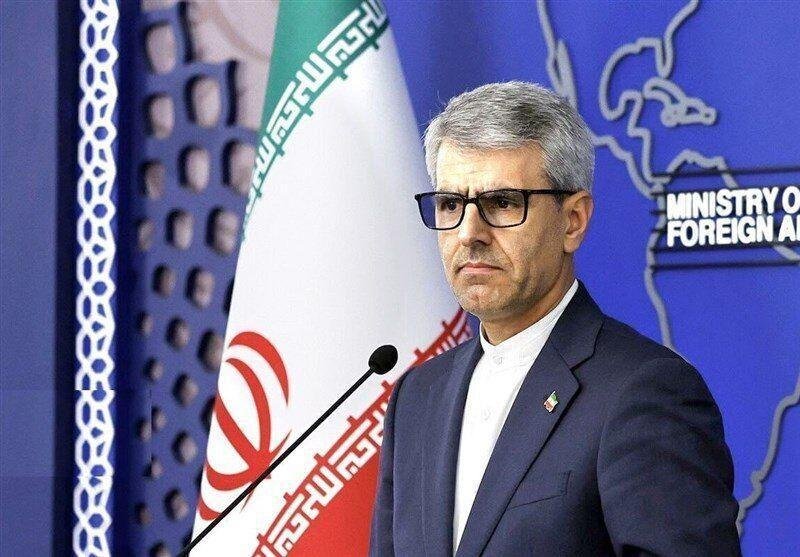
On 11 June 2026, as Washington's Kharg Island rhetoric hardened, Tehran's military command put the narrowest of claims on the record: any US strike will be met with escalation, and "the fire of war will become more widespread." That wording travelled fast because it travelled with hardware. Per reporting summarised on X by @sprinterpress at 17:35 UTC, citing CNN, Iran is preparing defensive structures on Kharg Island — air defence systems being deployed, mines being laid along the coastline. The bellicose framing is Iranian; the air-defence and mining detail is American, via a US network with its own reasons to amplify it. Read together, the two strands describe something older than a news cycle: a chokepoint being converted, in real time, into a tripwire.
The Strait of Hormuz carries roughly a fifth of the world's traded oil. Kharg Island handles the majority of Iran's crude exports. Whoever controls the approaches to the island, in a crisis, controls the price of petrol in Islamabad, the diesel bill in Berlin and the inflation print in Jakarta. The signalling this week is not really about whether the US will strike tonight. It is about who, in the minutes and hours after any strike, gets to decide whether the Strait stays open.
What Tehran is signalling
The threat to deliver a "crushing, painful" response to any US move on Kharg, flagged on Polymarket's market-moving account at 15:46 UTC on 11 June 2026, is a deliberate departure from the more abstract language Iranian officials have used in past confrontations. Past cycles traded in slogans about regional reach. This one names the asset, the approach vector, and the cost in advance. That is the language of deterrence theory, not theatre: by pre-committing to a particular response against a particular target, Tehran raises the perceived cost of the action and hopes the other side re-runs the calculation.
The hardware underwrites the rhetoric. Air-defence systems on Kharg compress the timeline a strike package would need to spend over the island; coastal mines do something more permanent, putting a price on any attempt to clear the approaches that would have to be paid in hulls. The combination is classic sea-denial architecture — and the more relevant point is that it does not require a war to matter. The mere presence of those systems in 2026, on the eve of any US decision, shifts the insurance premium on every tanker in the Gulf.
What Washington is signalling back
The interesting move is American. A US cable network surfacing, on 11 June, granular detail about Iranian defensive deployments and mine-laying is itself a piece of signalling. Publicising the location of air-defence systems and minefields is not what you do if you intend to use the surprise. It is what you do if you want the other side to know you already know — and to spend the next 48 hours worrying about which windows the intelligence might leave open. The leak shape is closer to the run-up to the 2003 Iraq campaign than to a genuine last-minute de-escalation. That is not a prediction of war; it is a description of whose nerves the information is being aimed at.
Markets are reading it the way markets read any such sequence: oil futures jitter, insurance war-risk premia on Gulf shipping tick up, and political risk desks in Singapore, London and Dubai start running the same five scenarios. Polymarket's continued pricing of an Iran-US kinetic event in the near window is itself a signal worth treating as a market, not a forecast.
The structural frame
Strip the headlines away and the underlying pattern is familiar. A hegemonic power with the capacity to strike a small adversary's most valuable piece of real estate; an adversary that cannot match that capacity conventionally and so reaches for the chokepoint and the rhetoric of regional war. The pattern does not require either side to want escalation. It requires only that neither side can afford to be seen climbing down, and that the chokepoint sits between them. This is what coercive bargaining looks like when the bargaining chip is the global energy market.
The frame has a second feature that is easy to miss. The consumer of the signal is not only Washington or Tehran. It is every Gulf capital that has spent the last two decades trying to diversify away from oil; every Asian importer running down strategic petroleum reserves on the assumption that Hormuz stays open as a free transit corridor; and every European government that has, in parallel, written its energy security plan on the assumption that the corridor can be policed by someone else. If the tripwire holds even for a week, all those plans become a little more expensive at the margin, in the same week.
The counter-read, and what it gets right
The counter-narrative, which is the one Tehran prefers and which the OSINT live-channel summary on Telegram at 17:18 UTC carries in its starkest form, is that this is American gunboat diplomacy aimed at a country that has spent four decades under sanctions, and that any defensive preparation on Kharg is the ordinary prudence of a state surrounded by aircraft carriers. That read is not wrong; it is just incomplete. The mine-laying detail, if confirmed, is not a defensive posture. Sea mines are offensive in character because they are indiscriminate and they bind the hand of the country that laid them long after the immediate crisis has passed. Iran knows that. The question is what it gains by advertising the cost of de-escalation so explicitly.
Stakes
If the off-ramp closes in the next 72 hours, the immediate losers are oil importers with thin reserve cover — Pakistan, Bangladesh, parts of Southeast Asia and southern Europe in particular. The medium-term losers are the Gulf petro-states whose sovereign wealth funds rest on the assumption that the Strait remains an open utility. The winners, in a narrow and ugly sense, are the refining margins of major integrated majors, the defence contractors on either side of any conflict, and — if the crisis lasts long enough — the renewable-energy financing case that has, until now, struggled to compete with cheap Gulf crude. The structural lesson is the same one the world keeps declining to learn: the global economy is still wired through a handful of geographic points, and the politics of those points are not stable.
What remains uncertain
The CNN-sourced reporting on the specific defensive systems and the mine-laying has not been independently confirmed by a Western wire at the time of writing, and the OSINT summaries circulating on Telegram are working off those same source items. Tehran's public threat, by contrast, is on the record and verifiable. The largest unknown is the most consequential: whether the intelligence picture in Washington is detailed enough to support a strike that survives the first 48 hours of escalation, or whether the more likely outcome is a tightening of the sanctions net, a long shadow operation, and a quiet return to the same off-ramp both sides will deny ever needing.
— Monexus staff. Wire reports this story at the intersection of US-Iran coercion and global energy infrastructure; the analytical frame here is Monexus's own.
Wire provenance
This editorial synthesis draws on the following public wire/social posts:
- https://x.com/sprinterpress/status/...
- https://t.me/osintlive
- https://x.com/polymarket/status/...
Follow the event.
These dated source records provide context. They do not retrospectively verify this archive article.
Separate what the nuclear watchdog reported from what it could not determine after the June 2025 strikes.