Knicks move to brink of NBA title as Barkley lets fly at "dumbest team in history"
New York take a 3-1 lead over San Antonio after a fourth-quarter comeback that Charles Barkley described in unusually blunt terms, while ABC posts its largest Game 3 Finals audience in 28 years.
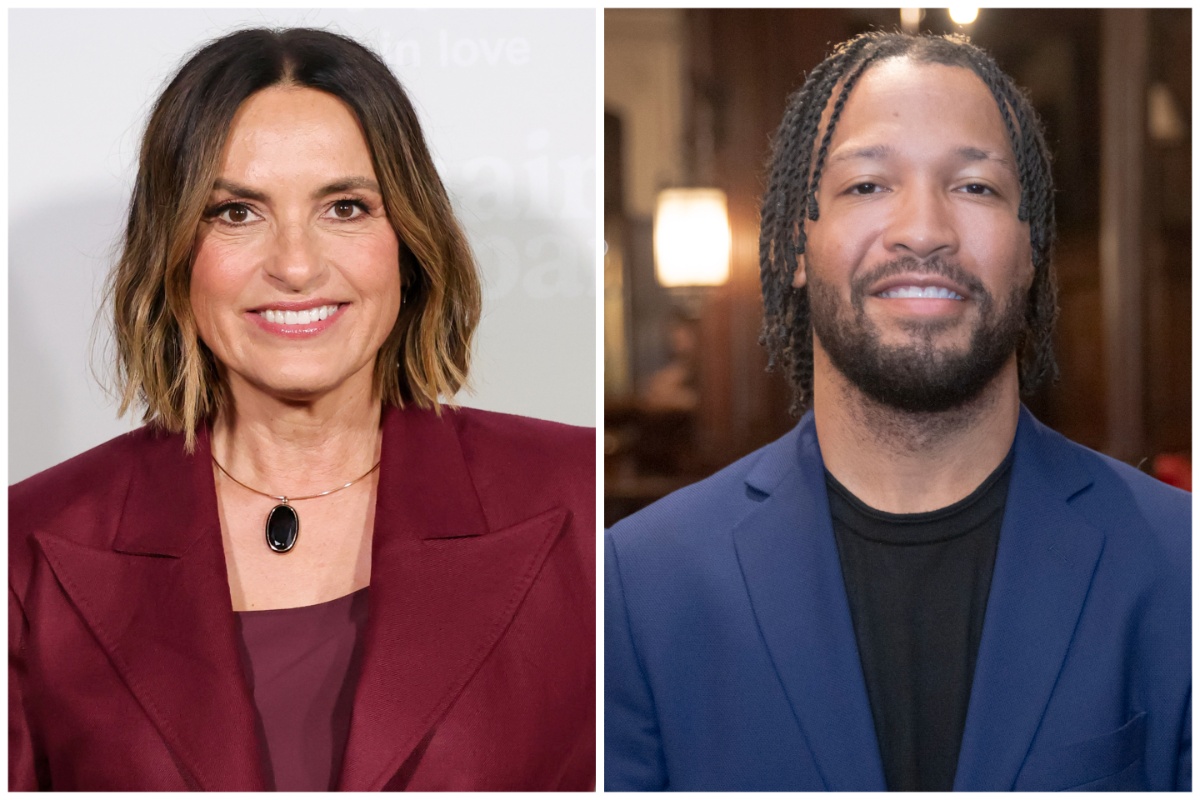
The New York Knicks moved within one win of the NBA championship on the night of 10 June 2026, recovering from a fourth-quarter deficit at Madison Square Garden to beat the San Antonio Spurs and take a 3-1 lead in the best-of-seven Finals series. The win, confirmed in BBC Sport's 06:58 UTC report on 11 June, sets up a close-out opportunity for New York in San Antonio and gives the league its first Knicks title run since the franchise's most recent championship in 1973.
The result was not as straightforward as the series scoreline suggests. Game 4 produced the kind of late reversal that turns a series into a referendum on composure, and on the TNT studio set, Hall of Famer Charles Barkley delivered the line that has since defined the post-game coverage: that the Spurs, having surrendered a fourth-quarter lead in a Finals game, are "the dumbest basketball team in the history of civilisation." The remark landed because it was aimed at a team that entered the series with the deeper rotation and the more experienced half-court offence, and which now faces elimination because of the kind of late-game breakdowns the league's most decorated franchises are supposed to outgrow.
How the game turned
For three quarters, the series script held. San Antonio's half-court execution kept the Knicks' perimeter defenders a step late, and the Spurs' bench, the league's most productive in the regular season, outscored New York's reserves through the first three periods. The game turned in the final six minutes, when New York switched repeatedly onto the Spurs' primary ball-handler and forced the kind of live-ball turnovers that have been the Knicks' calling card all post-season. The Guardian's live build-up, filed at 23:54 UTC on 10 June, had framed Game 4 as a referendum on the Spurs' discipline against the Knicks' disruption; the fourth quarter was the referendum in practice.
The win gives the Knicks three chances to win one game, and the league a fifth consecutive Finals to extend beyond five games. It also gives the TNT broadcast a different problem to manage: the network's lead analyst, Barkley, has now inserted himself into the series narrative in a way that is impossible to ignore and difficult to walk back.
The Barkley factor
Studio analysts are paid to be opinionated, but Barkley's career has been built on a specific register — the gruff, self-deprecating voice that turns brutal assessments into punchlines. The Spurs remark sits at the edge of that register, and Barkley's defenders will note that the underlying point is conventional: a Finals team that cannot execute in the half-court under pressure deserves to be on the wrong end of a comeback. The phrase, though, will travel further than the analysis, which is why it has already become the lead of the post-game wire copy and the most-circulated clip on basketball social media.
For the Spurs, the calculation is narrower. Gregg Popovich's teams have always been defined by late-game poise, and the team that took a 2-1 lead into Game 4 looked, for long stretches, like a Popovich team. The team that lost Game 4 did not. Whether that is a one-game aberration or a structural problem is the question that will define the rest of the series, and that no studio analyst — Barkley included — can answer from a desk in Atlanta.
A Finals that the league needed
The off-court numbers, where they are reported, point to a series the league badly needed. The NBA's broadcast partner ABC averaged 23.8 million viewers for Game 3, the most-watched Game 3 of the Finals in 28 years, dating to the Chicago Bulls-Utah Jazz series of 1998, according to a 20:49 UTC Telegram post from the NBALive channel on 10 June. For a league whose regular-season ratings have been a recurring subject of anxiety in the Western sports press, a Finals that returns the audience to the Jordan-era benchmark is the most useful kind of vindication.
The ratings matter because the league's next media-rights deal — the central financial event of the NBA's calendar — will be priced off this post-season's audience. A Knicks team on the verge of its first title in over half a century, playing against a Spurs franchise whose brand of basketball the league's international partners have spent two decades promoting, is the precise match-up the league's commercial team would have ordered if it had been given the chance.
What the comeback does not prove
The structural caveat is the same one that applies to any comeback win in a Finals: a single late run does not, on its own, settle the question of which team is the better squad over a seven-game sample. The Spurs entered Game 4 with the series lead, took a fourth-quarter lead in Game 4, and lost on the road; a return to San Antonio shifts the venue, the crowd and the altitude of the moment. The Knicks have three chances to win one. The Spurs have one chance to even.
Barkley's remark, for all its news value, is the kind of analysis that ages badly in either direction: if the Spurs win the next three, the quote becomes a footnote; if they do not, it becomes the headline. The series, not the studio, will decide which.
This article treats the 10 June 2026 Game 4 result as confirmed by the BBC wire and the contemporaneous live build-up, and the Game 3 viewership figure as a single-source claim from the NBALive Telegram channel pending confirmation from ABC or Nielsen.