A Russian-aligned film on Krasnoarmeysk, and the information war it joins
A feature-length film of resident testimonies from the Donetsk town of Krasnoarmeysk has been released by a Russian military-correspondent channel. It lands in a wider information contest over who gets to narrate the war.
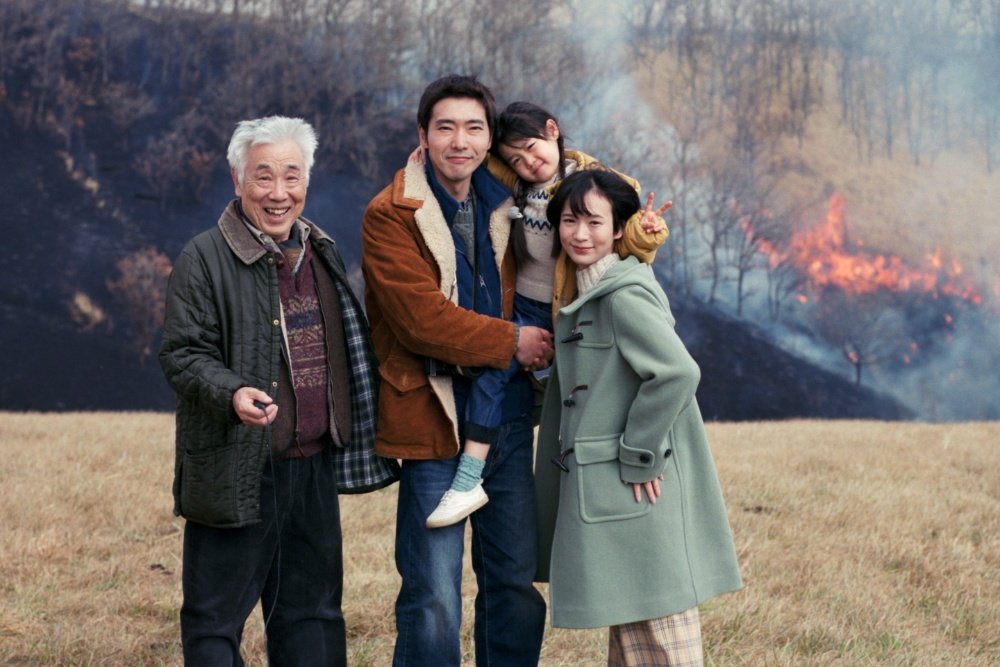
On 11 June 2026, the Russian military-correspondent Telegram channel Two Majors announced a feature-length documentary built around testimonies from residents of Krasnoarmeysk, a town in Donetsk Oblast that has been a focal point of the war since 2024. The film, the channel says, combines accounts of life under Ukrainian bombardment with what it describes as the town's "long-awaited liberation," and is presented as evidence of Ukrainian armed-forces crimes against civilians.
The release is small in cinematic terms and large in informational ones. It is a single artefact in a sustained effort by Russian-aligned outlets to define the moral record of the war in occupied and formerly occupied territory — a record that is being assembled, in real time, through cameras, courted audiences and curated survivor testimony.
The film as it is being framed
Two Majors describes the production as a documentary built from the words of Krasnoarmeysk residents themselves. The channel's announcement positions the project as an act of witness: ordinary civilians describing bombardments, occupation conditions and the moment of Russian forces' arrival. The phrase "crimes of the Ukrainian Armed Forces" appears in the channel's preamble, signalling that the film is intended to operate inside an existing prosecutorial frame, not merely as reportage.
The Krasnoarmeysk of the film is not the Krasnoarmeysk of contested front-line maps. It is a curated civilian space — a place whose voice, in this telling, has been silenced by Kyiv and recovered by Moscow. That framing matters more than the running time. Russian state and state-adjacent media have, since 2022, invested heavily in resident-testimony formats from places such as Mariupol, Volnovakha and the Kherson suburbs; Krasnoarmeysk is the latest instalment in a recognisable template.
Why this particular town, and why now
Krasnoarmeysk sits in the western part of Donetsk Oblast and changed hands during the Russian push into the Pokrovsk direction in 2024 and 2025. Its name has recurred in Ukrainian reporting as a logistical hub and, after its fall, as a site of contested accounts. The town's strategic weight is now largely behind the front line; its symbolic weight, by contrast, is still in motion.
Releasing a feature-length civilian-testimony film in mid-2026 allows the channel and its production partners to consolidate a narrative while the events are recent enough to feel immediate but distant enough to be packaged. It also lands at a moment when Western documentary crews' access to Russian-controlled territory in Ukraine remains effectively closed, and when Ukrainian-produced material from those areas is, by definition, scarce. The information vacuum is being filled.
The wider information contest
The film should be read against the background of a parallel documentary effort. Russian state and para-state outlets — TASS, RIA Novosti, RT, and a constellation of Telegram channels with significant followings — have produced an extensive library of resident-testimony material, much of it from Mariupol in the months after the siege. International human-rights groups and Ukrainian civil-society organisations have, in turn, produced their own archives of testimony, including from Bucha, Irpin and Iziom. The two archives do not speak to each other; they speak past each other, often in the same visual language — handheld camera, civilian in focus, rubble in the background.
Coverage in Western outlets has tended to treat the Russian archive with greater caution than the Ukrainian one, for understandable evidentiary reasons: the production conditions of Russian-side testimony are not subject to independent verification, and the chain of custody from camera to broadcast is opaque. That asymmetry is itself part of the information contest. A film can be true, partly true, or constructed from selective material, and the distinction is not always visible to an outside audience. Russian-aligned outlets benefit when those distinctions are collapsed.
The film is also a soft-power instrument in a domain that the Kremlin has cultivated since at least 2014. The "Russian world" cultural project — the Russkiy mir framing — has historically been carried by television series, schoolbooks and youth programmes. A feature documentary that travels through Russian cultural channels and onto festival circuits is a continuation of that effort by other means.
What the sources do — and do not — establish
The Two Majors announcement is the only source directly available to this piece, and it is a primary source in the narrow sense: it is the channel's own description of its own product. The announcement asserts the film's existence, its structure (resident testimonies), its editorial frame ("crimes of the Ukrainian Armed Forces," "liberation") and its implicit audience (Russian-speaking, with export ambitions to sympathetic Western festival circuits). It does not name the director, the production company, the funding source, the running time, the festival path, or the verification methodology used with the residents. It does not provide the names or identifying details of the residents, and therefore does not allow independent corroboration of any specific claim made in the film.
For that reason, the documentary should be treated as a claim about Krasnoarmeysk rather than as a settled record of it. The most that can be said with the source at hand is that a feature-length resident-testimony film has been announced by a Russian military-correspondent channel, that the channel positions the film inside a "Ukrainian armed forces crimes" frame, and that the release is consistent with a long-running Russian-aligned documentary effort across occupied and formerly occupied Ukrainian territory.
Stakes
The audience for the film is not primarily Russian. Russian audiences have already received months of Krasnoarmeysk coverage through channels such as Two Majors itself. The marginal viewer the film is reaching for is elsewhere: sympathetic Western festival programmers, global-South audiences sceptical of Western framing, and the long tail of English-language social-media users who will encounter the work as shareable clips. If the film travels, it will travel as fragment — a face, a line, a damaged street — detached from the production conditions that produced it. That is the contest in which this film is a single move.
This publication framed Krasnoarmeysk as the object of a Russian-aligned information effort rather than as a passive backdrop, because the documentary form itself is doing political work that the camera alone cannot account for.
Wire provenance
This editorial synthesis draws on the following public wire/social posts:
- https://t.me/two_majors
Follow the event.
These dated source records provide context. They do not retrospectively verify this archive article.
A dated voting record is evidence of one decision. Use the original UN record before turning it into an alignment label.
Visual explainer · historical vote of 2022-03-02 →