The MT Jalveer and the language of an 'attack off Oman'
Two Indian sailors died after what Indian reporting now calls a US strike on a tanker off Oman — and the gap between that account and the West's carefully hedged language says something larger about who gets to define an incident at sea.
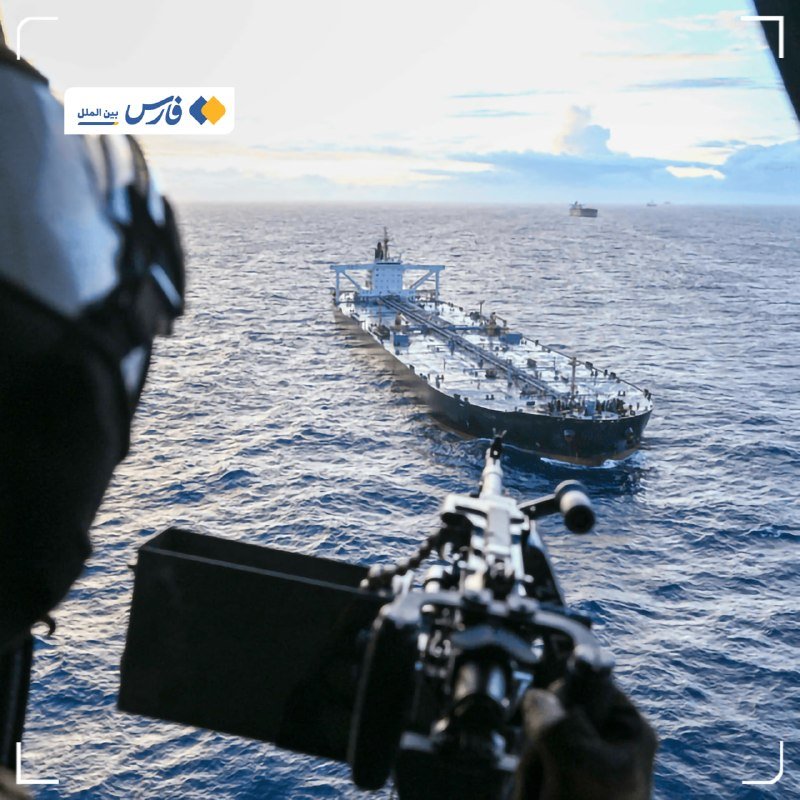
The Indian Express reported at 06:52 UTC on 11 June 2026 that two Indian sailors who went missing after a US strike on a tanker off the coast of Oman have been killed. The vessel, identified as MT Jalveer, was carrying Indian crew and came under attack in waters that have become, almost by default, the working theatre of the United States Navy's maritime interdiction campaign against Iranian oil exports. The Indian Embassy in Muscat said on 11 June 2026 that it was aware of the incident involving Indian nationals, according to early wire reporting distributed via the wfwitness channel at 06:57 UTC.
The word attack is doing a great deal of work in those sentences. The Express does not use it. The Telegram wire of the same bulletin does. The difference is not stylistic. It is a tell about which country's institutions get the benefit of the verb strike — a deliberate, named, attributable act — and which country's reporting has to fall back on the looser word.
An incident that requires a more careful verb
The framing of the MT Jalveer episode is not yet settled. What is known, on the evidence available at 11 June 2026, is narrower than the headlines: a tanker came under attack off Oman in the early hours of 11 June 2026, Indian sailors were on board, at least two of them are dead, the Indian mission in Muscat has been alerted, and Indian media is openly attributing the strike to the United States. None of the available reporting names a target state, an operational justification, a shipowner, a flag state, or the cargo manifest. Until those details surface, the word attack is the right one for journalism. Strike is the word that requires the United States to confirm what its vessels appear to have done.
That distinction matters because the maritime interdiction campaign in and around the Gulf of Oman has, for more than two years, operated in a peculiar legal twilight. American naval task forces have stopped, boarded, and in several documented cases seized tankers that Western sanctions architectures designate as Iranian-linked. Some of those operations were publicly defended as interdictions under counter-narcotics or counter-proliferation authorities. Others have been left without a public legal rationale, the silence itself a kind of answer.
The Indian angle is not collateral
Reporting the MT Jalveer episode purely as an Omani or Iranian story misses the part that is most likely to define its political afterlife. India is now a state whose nationals are dead inside an American maritime operation whose target it had not, to public knowledge, been asked to bless. The crew lists of tankers that have been stopped in the Gulf of Oman in recent years have not been an Indian diplomatic priority; they are about to become one. New Delhi has a long-standing policy of treating its seafarers as a quasi-strategic workforce — evacuated from war zones by naval task forces, fast-tracked through consular channels, mourned at senior political level when they die. The MT Jalveer now sits inside that frame.
The Telegram bulletins of 11 June 2026 do not record an Indian government response beyond the embassy's awareness note. The reporting that will matter in the next 24 to 48 hours is the response from the Ministry of External Affairs in New Delhi, the statement from the operator, and the position of Omani authorities, who retain nominal responsibility for what happens in the waters off their coast. Until those arrive, the public record is the Indian Express headline and the two early Telegram wires.
What the language tells us
The terminology in circulation on 11 June 2026 is itself part of the story. Attack, in the Telegram wire, is the word of someone who has not yet decided who is responsible — a careful word, in its way. Strike, in the Indian Express headline, is the word of a publication that has, for its own editorial reasons, decided. The verb one chooses before a name is attached is the verb that survives in the public memory when the name arrives. A strike has a perpetrator, a chain of command, a target list. An attack can still be a malfunction, an accident, a stray munition from an exercise, a Houthi drone, a pirate skiff — anything, in fact, except the truth that the Indian Express has decided is the truth.
This is not a small thing. The same weeks that produced the MT Jalveer episode have produced a stack of Houthi claims, Iranian counter-claims, and US Central Command statements about what its forces did or did not do in the western Indian Ocean. In that environment, the choice of verb is, for the Global South press, an assertion of epistemic independence. For the Western wire, it is a liability hedge. For the seafarer's family in, say, Kerala or Tamil Nadu, the verb is irrelevant. They want the body home.
Stakes, and what we do not yet know
The stakes of the MT Jalveer episode are concrete and quickly measured. If the US confirms the strike and accepts responsibility, the diplomatic move is in New Delhi — demarches, a parliamentary question, a request for compensation, possibly a quiet revision of port-call arrangements for US naval vessels. If the US denies, the question of what munitions struck the ship, and from which platform, becomes the open file. If the operator was, as several recent cases in these waters have been, sailing under a flag of convenience for an Iranian-linked cargo, the legal question gets more layered and the political one gets simpler. The Indian press is, in effect, demanding that the United States answer in the open, with its own verbs.
The honest reading of the evidence available at 11 June 2026 is narrower than any of those scenarios. The Indian Express has reported two deaths and attributed them to a US strike. The Telegram wires have reported an attack on the MT Jalveer, Indian crew on board, and an Indian Embassy in Muscat that says it is aware. There is no Omani statement, no US Central Command release, no operator disclosure, and no flag-state notification in the record that Monexus has been able to read. The single most important paragraph of this story has not yet been written. It will be written by an admiral, a foreign secretary, or a shipowner — and probably in that order.
Desk note: Monexus is running the Indian reporting at face value while flagging the absence of US, Omani, and operator confirmation; the verb choice in headlines is treated as part of the news, not separate from it.
Wire provenance
This editorial synthesis draws on the following public wire/social posts:
- https://t.me/wfwitness/1216
- https://t.me/wfwitness/1215
- https://t.me/IndianExpress/142