Oil, Aid, and Asymmetrical Bargains: Three Signals Point to a Reordering of US Leverage
On 11 June 2026, three wire items landed within hours of each other: a US-Iran track producing a deal-shaped result, a sudden acceleration of US aid to Kyiv, and confirmation that the United States is now the world's single largest oil exporter. Read together, they look less like coincidence than architecture.
Three wire items landed in quick succession on 11 June 2026, and the distance between them is shorter than the geography suggests. At 15:57 UTC, an account associated with market coverage posted that the United States has become the world's largest oil exporter, attributing the figure to Reuters. At 22:14 UTC, the Ukrainian outlet TSN reported that the United States may dramatically increase aid to Ukraine in an unexpected decision. At 23:02 UTC, an account identifying itself as Sprinter Press wrote simply that there is a result from the negotiations between reformists and the United States, an opaque sentence that nevertheless points at a US-Iran track producing something the parties are willing to call an outcome. None of the three items, taken alone, is decisive. Read together, they describe a particular configuration of US leverage — over energy markets, over a war economy in Eastern Europe, and over a regional negotiation with a sanctions-battered counterparty — and a configuration of leverage is itself a kind of policy.
The question this piece attempts to answer is the one the wires, by their nature, leave implicit: what does it mean that these three signals arrived on the same day, from three different desks, in roughly that order? The honest answer is that no single source confirms causation. But the geometry of the day suggests an administration that is increasingly willing to convert three traditionally separate policy instruments — hydrocarbons, military assistance, and bilateral negotiation with a sanctioned state — into a single negotiating posture. The implications run from Brent crude to the Carpathians to the Gulf.
The energy signal
The simplest of the three items is also the most structurally important. Confirmation that the United States is the world's largest oil exporter reframes a debate the industry has been having for the better part of a decade. The framing in Washington for years treated US energy policy as a domestic matter with foreign-policy spillover; the framing in Riyadh and Moscow treated US shale as a cyclical challenge to manage. If the United States is now the largest single exporter, that framing is obsolete. Energy policy is foreign policy. The country that sets marginal supply sets the price, and the country that sets the price sets the budget envelope of every other producer.
This is the part of the picture that often gets smoothed over in commentary. Saudi Arabia still holds spare capacity. Russia still exports at discount to a captive Asian book. But the direction of travel — set by Reuters's reported figure, repeated by the unusual_whales account on X at 15:57 UTC — is that the United States is no longer a swing consumer importing to balance the market. It is a swing producer exporting to set it. The diplomatic utility of that position is not theoretical. It is the reason an administration can run parallel tracks on Ukraine and Iran in the same news cycle without having to choose between the cost of supporting one and the cost of insulating the other from oil-shock pressure. The export base absorbs the shock.
There is a counter-narrative worth naming. The largest-exporter label is sensitive to definition: gross exports, net exports, crude only or crude plus products, the inclusion or exclusion of re-exports of foreign crude. The figure reported by Reuters may move quarter to quarter. The shale complex remains capital-disciplined in a way the OPEC core is not, which means US production is more responsive to price than to geopolitics. The leverage is real, but it is leverage over price levels, not always over price direction. Still, the structural point holds: the United States is the country most able to absorb a supply shock and therefore the country least constrained by the fear of one.
The aid signal
The second item, reported by the Ukrainian outlet TSN at 22:14 UTC under the headline-form description that the United States can dramatically increase aid to Ukraine, sits in a different policy register but draws on the same underlying balance sheet. Aid to Ukraine is not a free good. It is a transfer of capability from a US defence industrial base that, by any honest accounting, has been running hot since February 2022 and is now being asked to run hotter. The relevant question is not whether more aid is welcome in Kyiv — it is, and the Ukrainian framing reflects that — but what the United States receives in return for the marginal commitment.
The wires do not, in the items available to this publication, specify what the aid package contains, what its dollar value is, or what conditions may attach to it. The framing "dramatic increase" and "unexpected decision" comes from TSN's own positioning of the story. That positioning matters: TSN is a Ukrainian domestic outlet writing for a Ukrainian audience that has learned to read Western aid commitments sceptically. The fact that TSN is framing an increase as unexpected is itself information. It suggests either a faster timeline than the previous aid cycle, a different instrument (loans rather than grants, or a different funding mechanism altogether), or a politically significant shift in the domestic US debate that has not yet been reported in English.
The counterpoint is the obvious one. An aid increase that is not yet on the wire in concrete terms remains a signal, not a delivery. Ukraine has received signals before. The relevant precedent is not the 2023 cluster-munitions debate or the Patriot timing controversy — those are internal to the alliance — but the broader pattern of US support arriving in waves that correspond to perceived negotiating windows with Moscow. The structural reading is that aid in 2026 is being deployed not as a constant flow but as a lever. If that reading holds, the leverage works in two directions simultaneously: it raises the cost of a settlement Kyiv finds unacceptable, and it raises the cost of a frozen conflict Moscow finds comfortable.
The honest caveat is that the sources available to this publication on 11 June 2026 do not establish the package's size, timing, or statutory vehicle. They establish a Ukrainian outlet's claim that a dramatic change is being considered. The remainder is inference from pattern, not confirmation from text.
The negotiation signal
The third item is the most opaque, and the most interesting for that reason. The Sprinter Press account on X posted at 23:02 UTC that there is a result from the negotiations between reformists and the United States. The post itself is brief. It does not specify what the result is, what the reformists have agreed to, or what the United States has offered in return. It does, however, confirm that a track exists and that it has produced something the parties are willing to call an outcome.
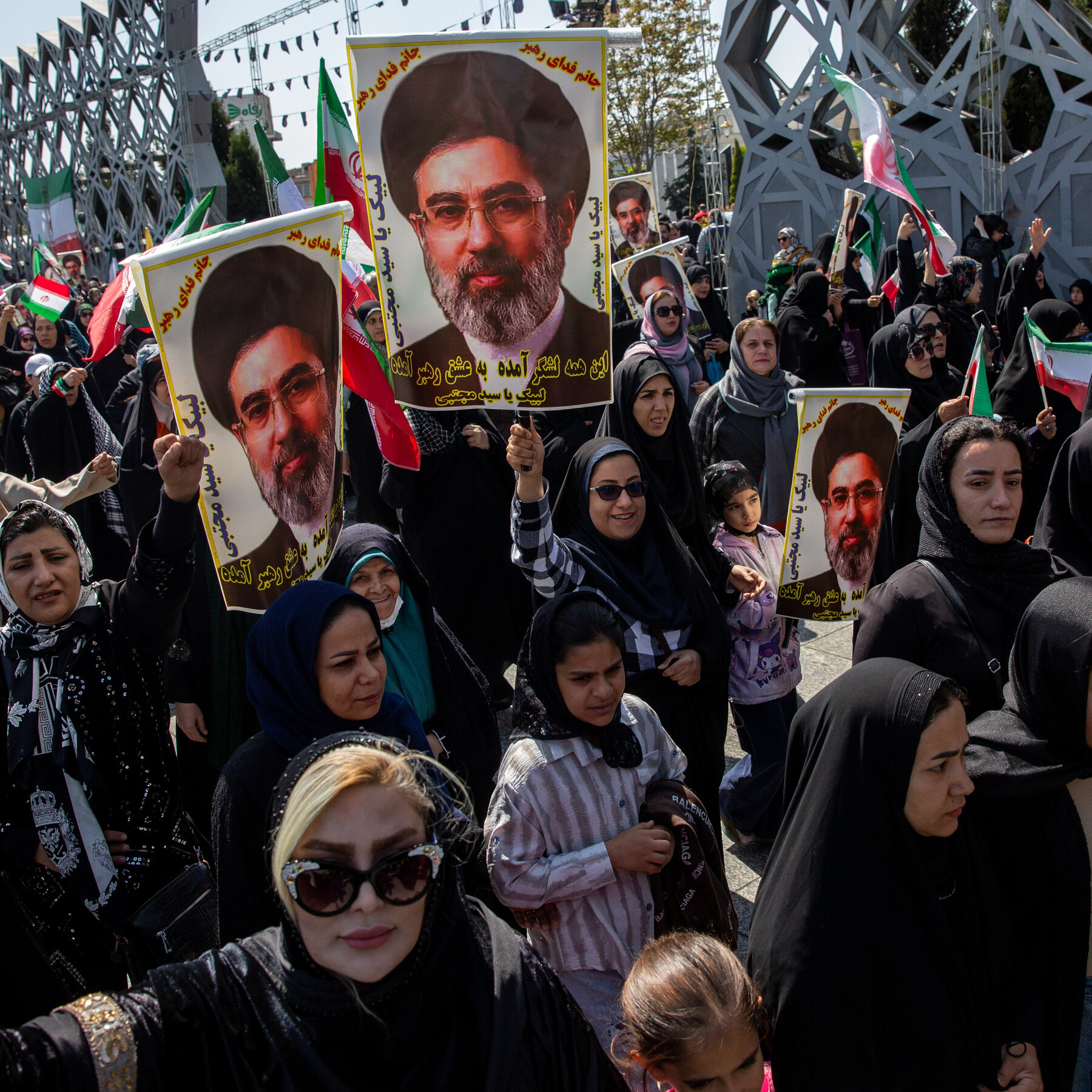
The word "reformists" matters. In the Iranian political lexicon, it is the standard shorthand for the faction associated with relative openness to a negotiated settlement with the United States — the faction associated, in recent years, with figures like Foreign Minister Abbas Araghchi and the broader diplomatic apparatus around the presidency. The use of the term in an English-language X post suggests the poster is following the negotiation closely enough to use its insider vocabulary. The use of "result" rather than "framework" or "understanding" suggests something more than a procedural milestone. The post does not, however, establish a text, a signing, or a sanctions architecture.
The counter-narrative is necessary. Iranian state-aligned outlets have spent the better part of two decades announcing progress in negotiations that Western readers later discover contained no movement. The pattern is familiar enough that any single post from a single account warrants a high prior on caution. The structural point, however, is that even the announcement of a result — whether or not it materialises into a document — does work in the broader US negotiating posture. A track with Iran that is producing outcomes, even partial ones, lowers the temperature in the Gulf and therefore lowers the insurance cost of the broader posture. It is the diplomatic equivalent of the oil-export position: an absorber of pressure that lets the rest of the system run hotter.
The honest caveat is the same as for the aid item. The sources available to this publication on 11 June 2026 do not contain a primary text, a wire confirmation, or a named official on the record describing the substance of the result. They contain a single X post from a single account. The remainder is structural inference.
What the three items, read together, describe
The temptation in writing a piece like this is to over-claim. The temptation is to assert that the United States is running a coordinated grand strategy in which oil exports, military aid, and Iranian negotiations are the three levers of a single machine. That is a tempting read, and it is probably too tidy. Governments do not work that cleanly. The interagency process is too fractious, the timeline too compressed, the personalities too various.
The more defensible read is structural rather than conspiratorial. The United States in mid-2026 is in a position none of its predecessors have held: it is simultaneously the world's largest oil exporter, the indispensable arms supplier to a European war, and a negotiating counterpart to a sanctions-battered regional power. Each of those positions existed in some form in earlier administrations. What is new is the combination, and the combination produces a specific kind of diplomatic room. A country that can absorb an oil shock, fund a war, and negotiate with a counterparty it has sanctioned into a corner has more degrees of freedom than a country that has to choose between those three things. The three items on 11 June 2026 are evidence of the degrees of freedom, not proof of a plan.
The stakes follow from the position. If the configuration holds, the United States can run a more ambitious Ukraine policy at lower domestic energy cost than would otherwise be possible. It can absorb a partial Iran deal that lets the regional temperature drop without conceding the broader sanctions architecture. It can use the oil position to discipline other producers whose cooperation is needed for the Ukraine and Iran tracks to work. If the configuration does not hold — if the export number turns out to be a quarter-specific artefact, if the aid package gets stuck in domestic procedural battles, if the Iran track produces a result that does not survive the next news cycle — the degrees of freedom contract, and the policies that depended on them become more expensive in domestic political terms.
What remains uncertain
The single largest gap in the available record is the absence of a primary-source confirmation of the aid package's substance. TSN's framing of an "unexpected decision" is consistent with multiple scenarios, and they are not equally benign. A fast, large grant package with no conditions is one scenario. A loan package structured around specific Ukrainian procurement commitments is another. A political commitment from the US side that has not yet cleared the relevant committee is a third. The wires, as of 11 June 2026, do not let this publication distinguish among them. The same gap applies to the Iran track. The post attributed to Sprinter Press at 23:02 UTC is a single data point from a single account; the framework, if there is one, is not yet on the public record in a form this publication can cite.
The export number is the firmest of the three, both because it is attributed to a tier-1 wire and because it describes a structural reality that has been building for years. Even there, the volatility of the underlying data means the labelling can shift quarter to quarter. The honest read is that the United States is the largest or among the largest, that the precise rank depends on the metric, and that the policy implication is robust to the precise rank. The honest read is also that the policy implication is conditional on the United States choosing to use the position, and that choice is the one the three items, taken together, suggest is being made.
None of this is proof of a strategy. It is, at most, evidence of a configuration. Configurations, however, are what strategies are made of. The 11 June 2026 record will be more legible in a week. For now, the three items on the wire are the record this publication has, and they point in a coherent direction.
How Monexus framed this: the wires on 11 June 2026 published three separate items on three separate desks. This publication read them as a single configuration rather than three coincidences, and flagged the structural inference explicitly so readers can decide whether the read holds. The aid-package and Iran-track substance are not yet on the public record in citable form; the export number is.
Wire provenance
This editorial synthesis draws on the following public wire/social posts:
- https://t.me/TSN_ua
- https://t.me/TSN_ua
- https://x.com/sprinterpress/status/
- https://x.com/unusual_whales/status/
- https://en.wikipedia.org/wiki/Shale_oil_in_the_United_States
Follow the event.
These dated source records provide context. They do not retrospectively verify this archive article.
A dated voting record is evidence of one decision. Use the original UN record before turning it into an alignment label.
Visual explainer · historical vote of 2022-03-02 →