A Somali referee, a US visa refusal, and a widening question about who gets to govern the global game
UEFA has named Somali referee Omar Artan to officiate the European Super Cup just weeks after Washington refused him entry to the 2026 World Cup. The episode lays bare the visa powers now entangled with international sport.
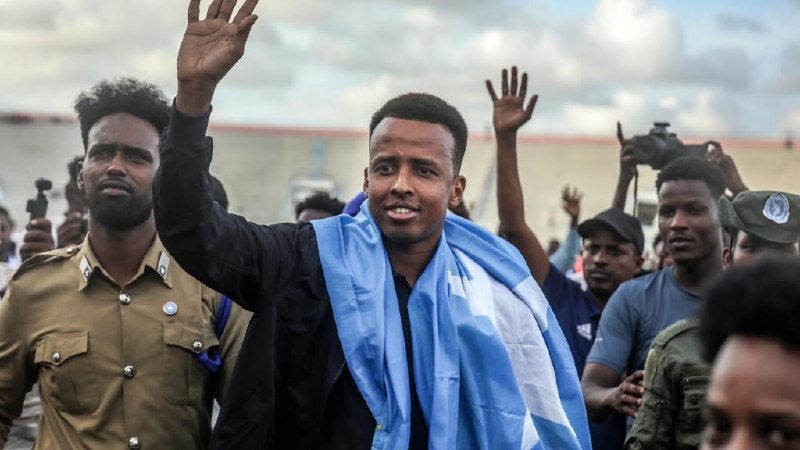
On 11 June 2026, UEFA confirmed the appointment of Somali referee Omar Artan to the officiating crew for the European Super Cup final between Paris Saint-Germain and Aston Villa, scheduled for 12 August. The announcement, carried by Al Jazeera and the France 24 English wire, came a few weeks after the United States refused Artan entry to the 2026 FIFA World Cup — a tournament the United States is co-hosting. The contrast is the story: an African official rated good enough to oversee one of European football's marquee fixtures, but unwelcome on American soil for the planet's marquee fixture.
The episode is small in personnel terms — one referee, two matches, two federations — and large in what it surfaces. Hosting rights for a World Cup have always conferred the right to issue visas; what is newer is the willingness of a host to use that power against an individual match official named by the sport's global body months in advance, and the speed with which the European federation has chosen to answer by putting the same official on its own marquee stage.
What UEFA said, and what it did not
UEFA's announcement named Artan among its match officials for the Super Cup, the annual curtain-raiser between the Champions League winner and the Europa League winner. The France 24 English wire reported the decision on 11 June 2026, noting that the appointment followed the US entry refusal; Al Jazeera's breaking-news feed carried the same line within minutes. Neither UEFA's statement, as reported, nor the wires specified a reason for the original US visa denial. The framing in both dispatches was that the decision speaks for itself: a Somali referee is qualified to officiate a European showpiece, and the federation is willing to say so publicly.
UEFA has, in the past, kept quiet when its officials encountered friction with national authorities. This time the federation opted for a visible endorsement. The choice reads as institutional self-defence: governing bodies depend on the portability of their officials, and a precedent in which a host country can effectively veto a FIFA-appointed referee sets a cost that European federations will pay first.
A precedent that goes beyond football
The structural fact is that globalised sport runs on a chain of permissions — visas, work permits, broadcast rights, sanctions waivers — issued by sovereign states. For most of the modern era, those permissions have been treated as administrative: the host country issues them, the game proceeds, the world watches. The 2026 World Cup is the first to be co-hosted across three countries (the United States, Canada and Mexico) and the first to be staged under a US administration that has visibly narrowed the categories of travellers it is prepared to admit.
Artan is not the first figure in the global game to run into that narrowing. Coaches, players and officials from a range of African and Middle Eastern jurisdictions have, in recent months, faced longer processing, publicised denials, or quiet omissions from shortlists. What makes the Somali referee an unusually legible case is the clarity of the credentials on the other side of the ledger: he had been named by FIFA to the World Cup match-officials panel, and within weeks he was named by UEFA to a European final. The mismatch is hard to read as a sporting judgement.
There is a counter-reading, worth taking seriously. The United States, as a sovereign host, retains the right to refuse entry to any non-citizen it chooses, on any ground consistent with its own law, and a visa refusal does not by itself imply a comment on the individual's competence. African and Middle Eastern federations have, in turn, sometimes chosen to publicise individual cases for leverage. UEFA, in elevating Artan, may be acting on sporting merit alone and the visa story may be incidental to its choice. The reason the framing holds — the reason the wires led with the connection — is that the timing makes coincidence hard to sustain.
What is at stake for the sport
The first stake is reputational. A World Cup whose officials cannot freely enter the host country is a World Cup whose officiating is, by definition, partial. FIFA's match-officials panels are assembled years in advance precisely to avoid last-minute substitutions driven by political rather than sporting criteria. If substitutions now arrive because of consular decisions, the tournament's claim to universality is weakened in a way that no marketing slogan can repair.
The second stake is institutional. UEFA, the Confederation of African Football, the Asian Football Confederation and CONMEBOL all have overlapping interests in keeping officials portable. A US visa refusal that ends a Somali referee's World Cup sets a precedent that other hosts can copy, and that European clubs, broadcasters and federations will eventually feel when their own staff are caught in other jurisdictions' consular nets. UEFA's response — public appointment to a high-visibility fixture — is the gentlest possible counter-move, and it is still legible as one.
The third stake is geopolitical and is the one the wires have so far left under-lit. International sport is one of the few domains in which a Somali professional can stand in a stadium in front of a global television audience under the banner of his craft, and not under the banner of his passport. The decision to refuse that professional entry, and the decision to compensate by appointing him to a different marquee event, are both statements about which category of identity the relevant institutions are willing to privilege. The fact that the African federation has, to date, issued measured statements rather than a public rupture suggests the case is being held in reserve — a precedent to be cited, not yet a confrontation to be escalated.
What remains unclear
The sources do not specify the legal ground for the US visa refusal. They do not say whether the decision was made at a consulate, by a federal agency, or as part of a broader policy targeting Somali or East African travellers; the US administration has, separately, tightened visa categories for nationals of several African countries in recent years, but the wires do not connect that policy to Artan's case directly. It is also not yet known whether FIFA will seek a formal explanation from the US authorities, or whether the appointment of a replacement to Artan's World Cup panel will be communicated before the tournament begins on 11 June. The 12 August Super Cup will, in the meantime, give the story a public second act, watched by a global audience that includes the country that refused him entry the first time around.
This article is built from three wire dispatches published on 11 June 2026. Where the reporting rests on institutional statements rather than independently verified documents, that distinction is preserved in the source ledger below.
Wire provenance
This editorial synthesis draws on the following public wire/social posts:
- https://t.me/france24_en
- https://t.me/ALJAZEERAEN
- https://t.me/StandardKenya
- https://en.wikipedia.org/wiki/2026_UEFA_Super_Cup
- https://en.wikipedia.org/wiki/2026_FIFA_World_Cup