Pakistan's budget is being written in a war zone — and the middle class is the obvious casualty
As Islamabad prepares an austerity budget shaped by a war it did not start and a bailout it did not want, the question is who absorbs the cost. The middle class is the obvious answer.
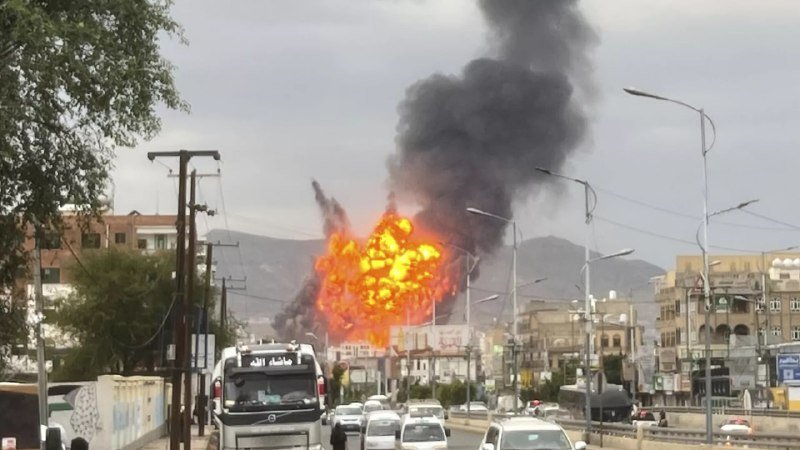
On 11 June 2026, Reuters reported that Pakistan is preparing a federal budget shaped by two outside forces the country did not choose: an active US-Iran war that has rattled energy markets and remittance flows, and a continuing International Monetary Fund programme that constrains how much Islamabad can borrow to cushion the shock. The same morning, the country's economic survey projected real GDP growth of 3.7% for the fiscal year now ending — respectable by recent standards, but thin gruel for a population of more than 240 million heading into another round of belt-tightening. (Reuters, 11 June 2026, 16:05 UTC and 16:10 UTC.)
The framing matters. Pakistan is not a peripheral actor watching someone else's war. It shares a long, porous border with Iran, hosts millions of Afghan refugees, depends on Gulf labour markets for a remittance base that is already under strain, and runs an external account that is acutely sensitive to oil prices. When Washington escalates against Tehran, Islamabad is one of the first capitals to feel the bill — through diesel, through the current account, and through the political demands of constituencies that did not sign up for someone else's war.
What the budget actually does
According to Reuters' budget preview, the fiscal year 2026-27 package is designed to squeeze the middle class — salaried workers, small importers, and the urban service economy — while leaving the energy subsidy architecture and the military's non-development budget largely untouched. The pattern is familiar from earlier IMF windows: raise revenue from those who pay income tax, cut import-side costs the politburo of big business has lobbied to preserve, and signal fiscal discipline to the Fund. The arithmetic, on paper, stabilises the external account. In practice, it transfers the cost of geopolitical disruption onto households that were already running out of room. (Reuters, 11 June 2026, 16:10 UTC.)
The growth backdrop makes the politics harder, not easier. A 3.7% real GDP expansion — reported by the country's own economic survey on the same morning — is well below the 5-6% trajectory that Pakistani planners once treated as the floor for absorbing new entrants to the labour market. With inflation still elevated in food and fuel, and with Gulf remittance corridors exposed to both Iranian airspace closures and tighter US sanctions enforcement, the budget's revenue assumptions look optimistic. The IMF, for its part, has historically rewarded that optimism with the next tranche — and punished any deviation with a stern letter.
The war outside the ledger
The other pressure is kinetic. On 11 June 2026, US President Donald Trump said the United States would hit Iran "very hard" that night, a posture consistent with the pattern of escalation that has defined the spring. (Scroll.in wire report, 11 June 2026, 15:36 UTC.) Prediction markets on the same day priced only a 33% chance of a US-Iran ceasefire by month-end — a sober reading that the de-escalation rhetoric of recent weeks has not translated into a settlement. (Polymarket, 10 June 2026, 21:41 UTC.)
For Islamabad, this is not background colour. A serious US-Iran confrontation pushes oil up, the rupee down, and remittances into reverse. The Strait of Hormuz — the narrow waterway through which a meaningful share of Pakistan's imported crude transits — becomes a strategic variable, not a logistical one. Iran's eastern border with Balochistan becomes a security concern, and an immigration concern, on top of the existing Afghan refugee load. None of this appears as a separate line in the budget. All of it appears in the price of petrol, the cost of wheat imports, and the size of the foreign-exchange cushion the State Bank has to defend.
Whose frame is this, really?
The Western wire framing of Pakistan's fiscal bind tends to read as a story about IMF conditionality and domestic reform lag. The Pakistani framing — visible in editorials from Dawn to Business Recorder — tends to read it as a sovereignty problem: a developing economy forced to internalise the cost of a great-power contest in West Asia, on terms dictated by a Washington-based lender that answers to no Pakistani voter. Both reads are partial. The honest version is that Pakistan's policy space is being narrowed simultaneously by a war it cannot influence, a Fund it cannot exit without worse pain, and a domestic tax base too narrow to redistribute the shock. The middle class sits at the intersection of all three constraints.
There is a counter-narrative worth taking seriously. Pakistani governments of both major parties have, over decades, deferred the politically expensive work of broadening the tax net, eliminating energy-sector circular debt, and trimming the security state's non-developmental footprint. The IMF, in this reading, is the messenger. But the messenger is also the enforcer of a global financial architecture that gives large deficit economies very little room to run countercyclical policy during a war-driven terms-of-trade shock. The fact that the war is happening simultaneously does not make the two pressures redundant — it makes them compound.
What is not yet clear
Three things remain genuinely uncertain. First, the size and duration of the energy-price pass-through — that depends on whether the US-Iran confrontation stays at the "very hard tonight" level or whether it de-escalates into the ceasefire that prediction markets put at roughly a one-in-three shot by 30 June. Second, the political durability of the budget itself: Pakistani parliaments have rejected IMF-shaped packages before, and the current civilian coalition has its own factional math. Third, the remittance response. Gulf labour markets have absorbed Pakistani workers for fifty years; a sustained downturn in Gulf construction and services would hit household income long before it hit the headline growth number.
What is already clear is who is being asked to pay. Salaried professionals, small traders, and the urban service class will see their real incomes compressed to finance a fiscal stance designed, above all, to keep external creditors comfortable during a war that started on someone else's timetable.
*For Monexus readers tracking the South Asia desk: the wire framing has emphasised IMF conditionality as the binding constraint. We read the binding constraint as the overlap of that conditionality with an energy shock the country cannot insulate against — and a domestic tax politics that has not yet been forced to choose between the military's books and the middle class's.
Wire provenance
This editorial synthesis draws on the following public wire/social posts:
- http://reut.rs/3QyrpMQ
- http://reut.rs/4vIrQmv
Follow the event.
These dated source records provide context. They do not retrospectively verify this archive article.
Separate what the nuclear watchdog reported from what it could not determine after the June 2025 strikes.