Pentagon partially evacuated over air-quality incident as hazmat units respond
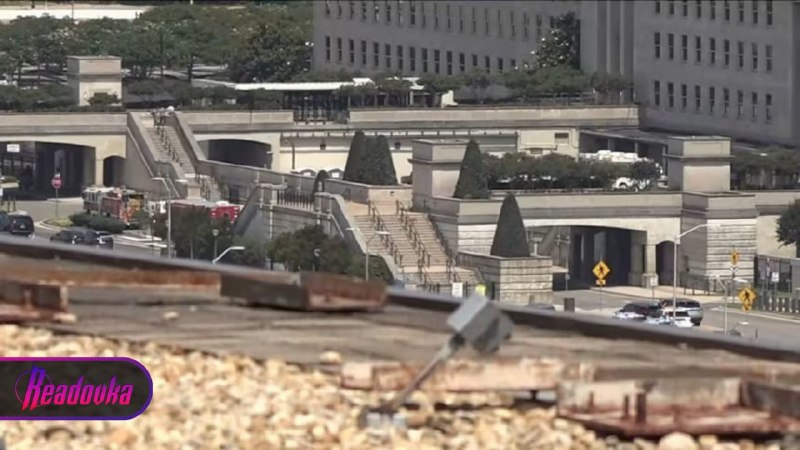
The Pentagon was partially evacuated on the afternoon of 11 June 2026 after air-quality control systems activated inside the building, prompting a hazmat response and a lockdown of multiple floors and corridors. The incident, reported by CNN and relayed through two independent Telegram channels, unfolded between approximately 15:00 and 16:00 UTC and triggered the most visible internal disruption at the US Department of War headquarters in recent memory.
A Department of War spokesman identified by initial reporting as Parnell confirmed that an air-quality event had triggered the building's safety systems. Hazmat units were dispatched to the scene, and staff in affected sections of the building were moved out while the rest of the complex remained in a heightened-access posture. As of the early reporting window, no injuries had been confirmed and the cause of the air-quality alert had not been publicly identified.
What is known, by the hour
The first public signals arrived shortly after 15:00 UTC, when the channel GeoPWatch, citing three sources familiar with the situation, reported that multiple floors and corridors inside the Pentagon had been locked down, with others being evacuated. A Pentagon spokesperson acknowledged the situation, though the initial on-record description was limited to procedural language about an air-quality response. By 15:47 UTC, CNN was reporting that the Pentagon had been evacuated over concerns of "air quality," with hazmat units on site. The Pentagon-specific channel readovkanews added a further detail at 15:52 UTC: that part of the premises had been isolated and that air-quality control systems inside the building had activated, triggering the evacuation. The Department of War spokesman Parnell, named in reporting relayed by the wfwitness channel, confirmed the air-quality activation.
The three accounts align on the core sequence — an air-quality event, an internal lockdown, the dispatch of hazmat teams, and the partial evacuation of staff. They diverge only in granularity: CNN framed the incident as an evacuation driven by air-quality concerns, while the Telegram-sourced accounts emphasised the activation of the building's own monitoring systems and the isolation of a defined portion of the premises.
Why an air-quality alert moves a building like this
The Pentagon operates on a layered safety protocol in which air-handling systems, fire-suppression sensors, and chemical detection nodes are continuously monitored. An activation of the air-quality control system does not, on its own, confirm a hazardous-material release: the same system can be triggered by construction dust, a localised mechanical fault, a refrigerant leak, or a false positive from a sensor cluster. The default institutional response — isolate, evacuate the affected zone, bring in hazmat, test the air — is the same in every case, which is why the visible posture on 11 June was serious even before a cause had been named.
This procedural conservatism is itself the story. A building of roughly 6.5 million square feet, with thousands of staff on a given workday, treats any air-quality activation as a potential CBRN-class event until instrumentation rules it out. The decision to lock down multiple floors, evacuate staff from the affected sections, and dispatch hazmat within a single news cycle is consistent with that doctrine. What remains unknown — the specific contaminant, the sensor that triggered, the duration of exposure for any staff present — is precisely the information the hazmat response is designed to gather before any public statement moves beyond procedural language.
A building under new branding, in a tense news cycle
The 11 June incident lands at a sensitive moment institutionally. The department historically known as the Department of Defense has been operating under the rebranded title Department of War during the current administration, a change that has reshaped both internal signage and external press-relations protocols. A hazmat event at the headquarters of a department mid-rebrand introduces an additional layer of messaging complexity, because the public-facing spokesperson quoted in early reports carries both the building's safety authority and the new departmental branding. The use of the title "Department of War spokesman" in the relay of the CNN report reflects that shift.
It also lands during a period in which the Pentagon's posture and personnel decisions have been under sustained public scrutiny. Any incident at the building is read, fairly or not, against that backdrop. The risk for officials is not the air-quality event itself, which the building is explicitly designed to absorb, but the time-lag between the lockdown and a fully sourced public explanation. In the absence of a confirmed cause, the vacuum fills quickly with speculation — a dynamic visible within the first hour of reporting on 11 June.
What we still do not know
The source material for this article is limited to three Telegram relays of early CNN and on-the-ground reporting, with no official Department of War statement beyond the on-record confirmation of the air-quality activation. The sources do not specify the contaminant or suspected contaminant, do not name the specific air-quality sensor or system that activated, do not provide a count of staff evacuated, and do not confirm whether any personnel required medical attention. The framing of the incident as a hazmat event is consistent with the response posture described, but the underlying cause has not yet been publicly identified.
For the moment, the institutional machinery is doing what it is designed to do: isolate, test, communicate minimally until the testing is complete. The authoritative version of the 11 June event will be the one issued once the air-quality data is in. Until then, the prudent read is that the Pentagon treated the alert seriously, the response was procedurally correct, and the cause remains an open question.
— Monexus framed this as a procedural safety event at a federal headquarters, not as a security incident. Where wire reporting emphasised evacuation and hazmat, Monexus centred the building's standing protocol and the gap between response and cause.
Wire provenance
This editorial synthesis draws on the following public wire/social posts:
- https://t.me/readovkanews
- https://t.me/wfwitness
- https://t.me/GeoPWatch