Poltava wakes to ballistic missiles while the world scrolls past
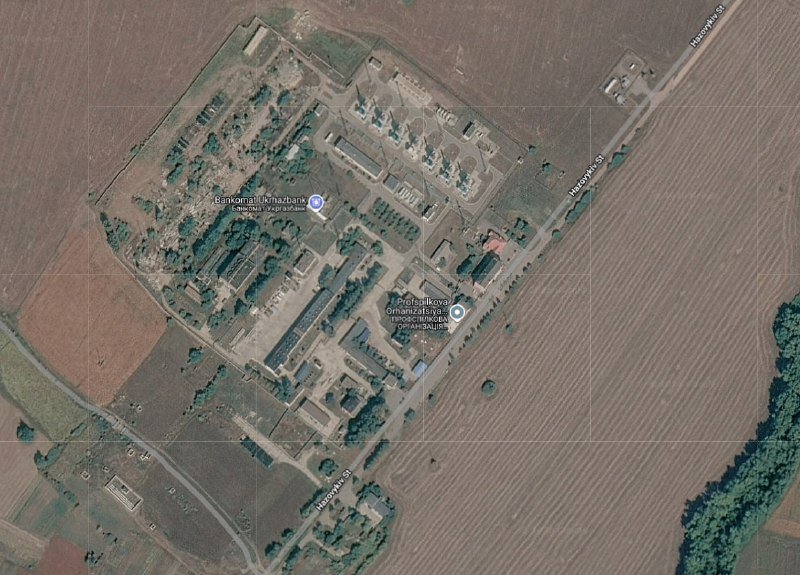
In the span of roughly eight minutes on the night of 10–11 June 2026, five Iskander-M ballistic missiles came down on Poltava. The first explosion was reported at 00:10 UTC. By 00:18 UTC the open-source channel AMK_Mapping had logged five impacts, smoke, and a recording of the final strike. That is the rate: a missile every ninety seconds into a city of roughly 280,000 people in central-eastern Ukraine. The arithmetic is the news.
Five short-range ballistic missiles on one Ukrainian oblast capital in a single salvo is not a weapons test, and it is not a probing attack. It is a routine. The same channel that posted the Poltava impact tape has spent two years documenting a steady creep in tempo — from weekly to nightly, from one missile to salvos, from military airfields to residential blocks. The lesson Poltava's residents absorbed at 00:10 UTC is the lesson Kharkiv, Mykolaiv, Zaporizhzhia and Dnipro learned before them: the next sound is always the next one.
The pattern is the policy
Russian strikes on Ukrainian population centres no longer need a pretext of battlefield logic. There is no frontline near Poltava, no concentration of Western armour at risk of being rolled, no obvious operational reason to spend five short-range ballistic missiles on a city 350 kilometres from the closest point of contact. The Iskander-M is a precision system, nominally reserved for high-value targets — command posts, rail junctions, ammunition depots. When five of them land inside a single urban grid in eight minutes, the targeting logic is the targeting logic: degrade the capacity of a country to function as a country.
This is what the literature used to call "strategic bombardment" before the euphemisms settled in. It has a long lineage — Grozny, Aleppo, Mariupol — and the practice has a familiar architecture: degrade power, degrade water, degrade morale, wait for the population to argue with its government about whether the cost of resistance is worth the price. It is brutally effective against societies, even if it is militarily inefficient. Ballistic missiles are expensive; terrified civilians are cheap.
The frame that won't hold
Western commentary still reaches for two explanations, both inadequate. The first is escalation management: every strike is read as a signal, a card played in a negotiation whose contours we are simply not allowed to see. The second is battlefield rationality: the missiles must be hitting something military, somewhere, even if we cannot see it. Both frames flinch from the simpler, evidence-anchored reading — that the strikes are doing exactly what they look like they are doing, that the target is the social fabric, and that the threshold for using a precision ballistic missile against a city has dropped near to zero.
A useful test: when was the last time a similar Russian salvo against a non-frontline Ukrainian city drew a structural policy response from any of the governments now debating the next sanctions package? The honest answer is that the responses have been rhetorical, calibrated not to the destruction on the ground but to the political weather in donor capitals. The missiles do not pause for weather reports. Poltava received five of them while most European parliaments were in recess.
What the wire doesn't say
Read the Reuters and AFP tickers on Poltava in the hours after 00:18 UTC and the picture is precise in a particular way: coordinates, missile type, possibly a casualty range once the SES confirms it, a quote from the regional military administration. What the tickers do not say is the cost of accepting this tempo as background. They do not name the strategic decision that allows a 300-kilometre-deep strike to be logged, filed, and forgotten before the morning briefing. They do not ask, because the form of the question is outside the genre, whether the present trajectory ends anywhere other than a Poltava every other week, a Kharkiv every month, a Kyiv eventually.
There is an alternative reading worth airing. It runs like this: the strikes are crude, they are wasteful, and they have not, on the evidence of two years, broken Ukrainian political will. The same polls that show war-weariness also show, consistently, a majority of Ukrainians opposed to territorial concessions and a majority opposed to a negotiated settlement on Russian terms. The missile is the wrong tool for the job the Kremlin insists on keeping open. By that reading, Poltava is a symptom of policy exhaustion at one end of the war, not a sign of progress.
Both readings can be true at once. The strikes are a policy that is not working militarily and is working politically — in the sense that every salvo, however useless against a modern air defence network, costs Ukraine something it cannot replace and costs Ukraine's partners a little more of the patience they have been told is finite.
Stakes
If the trajectory of the last six months continues, the question facing European governments in 2027 is not whether to keep Ukraine in the air-defence queue but whether the queue itself still exists. Patriot and SAMP/T batteries do not arrive in weeks; they arrive in years, and the rate at which Russia is spending Iskanders and Kh-101s against Ukrainian cities is, in the most literal sense, an investment in the day those batteries run out of interceptors. Poltava is the receipt. The bill is in the next column over.
The honest read: a population that has now spent four years absorbing ballistic-missile strikes at this cadence, in this city, in this rotation, is being asked to bet that the West's stated commitments are sturdier than the West's stated timelines. The missiles are not testing Ukrainian resolve. They are testing something else entirely, and the five impacts at 00:10, 00:13, 00:14, 00:15 and 00:18 UTC on 11 June 2026 are the test in real time.
This publication covered the strike as it developed, leaning on open-source channels because the institutional wires had not yet filed. The framing here is the editorial framing, not the wire framing — and the gap between the two is the point.
Wire provenance
This editorial synthesis draws on the following public wire/social posts:
- https://t.me/s/AMK_Mapping