Moscow's mounting bill: what the latest Ukrainian casualty figures actually tell us
The morning personnel total travels as a headline. The equipment categories are the line worth reading. The General Staff bulletin is a directional instrument, not a census.
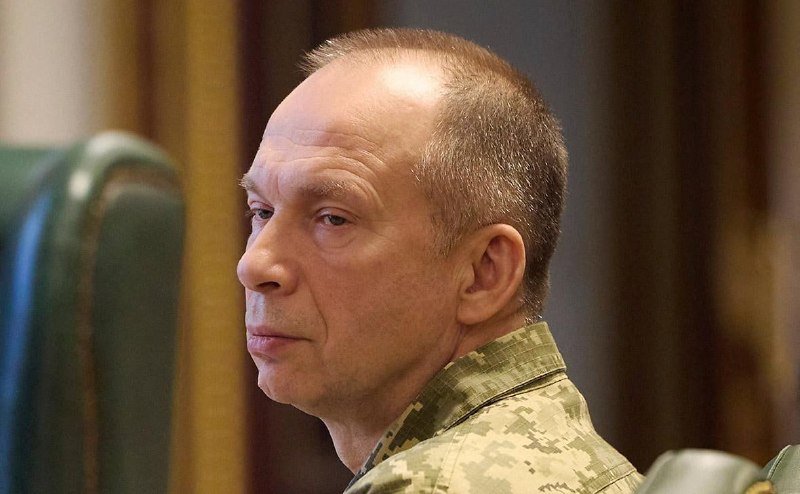
On 11 June, the General Staff of the Armed Forces of Ukraine posted its morning tally, and within minutes the figure had done what the figure always does: jumped off Telegram and into headlines that flatten a complicated war into a single round number. The bulletins have become a daily ritual of the invasion. They arrive at a fixed hour, list Russian equipment losses under neat subheads (tanks, artillery systems, drones, vehicles), and tack on a personnel total that is, by the General Staff's own design, the least precise line on the page. Yet the personnel line is the one that travels.
Treating that figure as ground truth is a category error. The daily bulletin is a directional instrument, calibrated to communicate momentum to a domestic and allied audience that consumes the war in increments, not in aggregate. The Ukrainians know exactly what they are publishing: a rolling estimate, updated each morning, in which the equipment categories are the signal and the personnel figure is the headline that gets screenshotted.
The equipment counts, by contrast, carry more weight than they are usually given. A destroyed tank is observable. It can be geolocated, photographed, sometimes recovered. Drone losses are the same: the debris lands somewhere and someone, often an OSINT analyst working open-source satellite and Telegram footage, will eventually confirm it. Even when a single strike cannot be verified within the 24-hour news cycle, the cumulative drift across the equipment categories over a week or a month tells a story that is hard to fake at scale. That is the part of the bulletin worth quoting.
The personnel line lives in a different epistemic register. Combatant deaths, especially on an active front that stretches more than a thousand kilometres, are inferred from a chain of reporting that includes intercepts, local informants, burial records, and unit commanders filing losses upward through a system under wartime pressure. The General Staff itself has been careful, on the occasions its officers speak to Western press, not to claim that the morning's number is an exact count. The number is a model output, not a census.
This matters because the figure has been absorbed into the public conversation as if it were the latter. Western outlets, Russian Telegram channels, and the commentariat on both sides treat each morning's personnel total as a scoreboard. When the number is high, it is read as evidence of Russian collapse; when it is low, as evidence of Ukrainian obfuscation. Both readings are overconfident. The interesting question is not whether the figure is exactly right on any given day, but whether the trend embedded in the equipment categories and the trend embedded in the personnel line point in the same direction. When they diverge, the equipment counts are the more reliable witness.
The political economy of the bulletin explains the rest. Kyiv has an audience at home that needs to believe the war is being prosecuted competently, an audience in allied capitals that needs to believe its support is producing battlefield effect, and an audience in Moscow that needs to feel the cost of the invasion mounting. A single number, repeated daily, serves all three. That is not a criticism of Ukrainian battlefield reporting; it is a description of how wartime communication works in the smartphone era. The reporting is doing what it is designed to do. The reader's job is to know which lines on the page are designed to be believed, and which are designed to be repeated.
Read it that way, and the bulletin is genuinely useful. The equipment categories, tracked over weeks, give a defensible read on the tempo of attritional combat: how many artillery pieces are being knocked out per day, how the drone exchange is running, whether armoured vehicle losses are clustering in ways that suggest a particular axis of advance. That is the kind of signal that holds up when OSINT analysts go back and audit it months later, and it is the kind of signal that policy shops in Washington, London, Berlin and Warsaw are quietly pulling out of the morning post. The personnel figure, used as the headline, is theatre. Used as a trend, alongside the rest, it is data. The two uses should not be confused.
The invasion grinds on, the bulletins keep arriving at the same hour, and the screenshotted number will keep circulating as if it were a fact rather than a frame. The disciplined move is to read the post, note the equipment columns, treat the personnel total as a directional line on a chart, and move on to the rest of the day. The morning figure is a mood, not a measurement.
Sources:
- https://t.me/TSN_ua, Ukrainian General Staff daily bulletin coverage, 11 June 2026
- https://t.me/TSN_ua, Ukrainian General Staff daily bulletin coverage, 11 June 2026
- https://t.me/TSN_ua, Ukrainian General Staff daily bulletin coverage, 11 June 2026
- https://t.me/Kyivpost_official, Kyiv Post, Security Service of Ukraine / SSO / HUR joint drone strike operation at Tamanneftegas terminal, Krasnodar, 13 June 2026
- https://t.me/tasnimnews_en, Tasnim News, Iranian state-affiliated outlet, 13 June 2026 (regional sport, contextual only)
- https://t.me/JahanTasnim, Jahan Tasnim, Iranian state-affiliated outlet, casualty reporting on the northern front, 13 June 2026 (counter-claim material, Iranian framing)
Desk note: Wire coverage routinely treats the Ukrainian General Staff's morning personnel total as the headline number. Monexus reads the equipment categories as the more reliable signal and treats the personnel line as directional only, in line with how Western intelligence consumers quietly parse the same post.
Follow the event.
These dated source records provide context. They do not retrospectively verify this archive article.
A dated voting record is evidence of one decision. Use the original UN record before turning it into an alignment label.
Visual explainer · historical vote of 2022-03-02 →