Mystery blast off Sirik: what we know, what we don't, and why the Strait of Hormuz keeps the world guessing
An unexplained blast off Iran's southern coast has put the world's most sensitive energy chokepoint back on the front page — without a confirmed cause, a confirmed culprit, or a confirmed target.
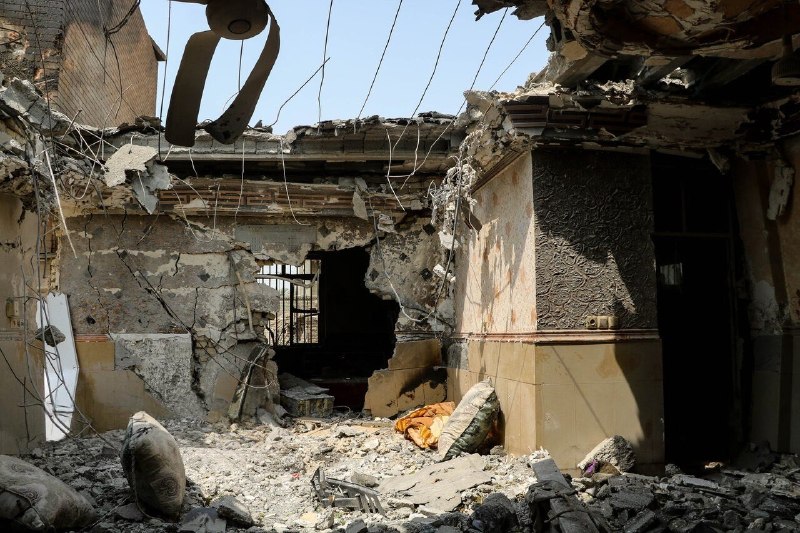
At 11:13 UTC on 11 June 2026, the open-source intelligence channel OSINTlive reported, citing Iranian state television, that an explosion had been heard off the coast of Sirik, a small port town on Iran's southern Hormozgan coast overlooking the Strait of Hormuz. Sixteen minutes later, the Beirut-based outlet The Cradle carried the same item, again attributing the report to Iranian state TV and flagging that the cause was unknown. Within half an hour the same one-line alert had been syndicated, paraphrased, and screen-grabbed across the regional information ecosystem. That is, in most respects, where the confirmed record ends.
What makes the episode worth sustained attention is not the loud noise, which may turn out to be unremarkable, but the geography of the silence around it. A blast in the waters just east of the Strait of Hormuz, reported by the Iranian state broadcaster itself, is precisely the kind of event that the world's energy markets, navies, and foreign ministries cannot afford to interpret carelessly. It is also the kind of event that Iran's own information environment is uniquely positioned to shape, and uniquely incentivised to manage. Reading the two Telegram alerts against one another — and against the conspicuous absence of any immediate Western wire confirmation in the thread — is enough to sketch the shape of the story, even if the substance remains thin.
The bare facts, as of 11:29 UTC
Strip the reporting down to its load-bearing components and there are three.
First, the location: Sirik sits on the mainland coast of Hormozgan province, just east of Bandar Abbas and a short distance from the northern approach to the Strait of Hormuz. The Strait is roughly 33 nautical miles wide at its narrowest and is divided into two-mile-wide inbound and outbound shipping lanes separated by a two-mile buffer. A significant share of globally traded crude oil and liquefied natural gas transits it daily. Any incident inside that corridor, or on its approaches, has the potential to move freight rates and energy benchmarks before the underlying facts are established.
Second, the report: an explosion was heard. That is the verb used in both the OSINTlive summary and The Cradle's relay of Iranian state TV. No plume, no fire, no damage assessment, and — critically — no casualty figures have been provided in the items that have surfaced so far. Iranian state media's habit in such moments is to publish a tight initial line and then allow the information environment to amplify it, often before any other Iranian or foreign outlet has had the chance to confirm. That habit is well documented and is itself a useful variable in the analysis.
Third, the absence: as of the time of writing, no major Western wire, no US Navy Fifth Fleet statement, no Israeli, Saudi, Emirati, Indian, or Omani military spokesperson, and no major commercial shipping tracker (none of which have URLs in the source set) is in the thread context confirming the event. The Cradle, which is itself a Beirut-based outlet that frames regional issues through an anti-hegemonic lens sympathetic to the Iran-aligned axis, carried the item uncritically. That is not a verdict on the event's authenticity; it is a verdict on the information environment around it. The default analytical move at this point is to hold the line open.
Why Iranian state TV is the messenger matters
The two thread items both attribute the initial report to Iranian state television. This is not a neutral sourcing choice on Tehran's part. Iranian state media has historically used unconfirmed security incidents in the Hormuz approach as a way to set the framing for subsequent international coverage. The pattern is familiar: a tight one-line report, no on-the-record spokesperson, no imagery, and then a slow drip of additional detail — sometimes corroborated, sometimes not — that determines the terms on which foreign correspondents inside the country are allowed to write. The reason this matters is that the Strait of Hormuz is, in a sense, Iran's most valuable single piece of leverage. The mere circulation of an incident report, even a thin one, contributes to the risk premium that shippers, insurers, and oil traders price into every voyage.
None of that implies the event is fabricated. Sirik is a real place, the Hormozgan coast is heavily militarised, and unexplained incidents in the area are not unprecedented. The point is that the messenger is part of the message, and the messenger in this case is an institution with a track record of using information strategically.
The two Telegram channels that surfaced the alert — The Cradle and OSINTlive — also have their own angles. The Cradle is broadly sympathetic to the Iran-aligned "axis of resistance" framing and tends to amplify Iranian state communications at face value. OSINTlive, despite its ostensibly open-source mandate, frequently picks up Iranian state items in real time and reposts them under a thin analytic veneer. Both, in other words, are better treated as carriers of a primary Iranian-state claim than as independent confirmations. The Cradle's use of the red-double-exclamation emoji and OSINTlive's framing as "open source intel" both create a sheen of analytical distance that the underlying sourcing does not support.
The counter-narratives that have not yet been heard
There is no counter-narrative in the thread yet. That is itself a finding.
On a normal day, a blast off the Iranian coast within view of the world's most-trafficked energy chokepoint would draw an immediate comment from the US Navy's Fifth Fleet, headquartered in Bahrain, and from commercial shippers using the corridor. The silence is consistent with at least three possible readings, and a serious analysis has to hold all of them at once.
The first reading is that the event is real, modest in scale, and has not yet produced the imagery or commercial disruption that would force external confirmation. Many blasts in the area are, in fact, modest: Iranian naval exercises routinely produce acoustic signatures that are reported locally, fishing-boat accidents are common, and the Hormozgan coast hosts oil and petrochemical infrastructure where small industrial incidents occur with some frequency. The dominant Iranian-state framing — an event has happened, the cause is being investigated — is consistent with this reading.
The second reading is that the event is real but larger than the initial one-line report lets on, and that Iranian authorities are managing the information flow to keep it that way. The Iranian interior security apparatus has, on previous occasions, released minimal initial details about security incidents along the coast and then walked them back, expanded them, or quietly reclassified them in the days that followed. The history of the IRGC Navy's posture in this area — fast-attack craft, mining capability, anti-ship missile batteries along the coast — means that the universe of plausible "real" events is wide.
The third reading is the one that the Western security establishment will, rightly or wrongly, default to: that the event is a signal, either an accident during a sensitive IRGC Navy operation or a deliberate probe intended to test how fast international shipping reroutes, how fast oil futures respond, and how quickly regional militaries posture. None of these readings requires a confirmed culprit; all of them require a confirmed event, which is precisely what the current sourcing cannot yet provide.
The structural frame: the Strait as Iran's most valuable single card
Stripped of personalities and individual incidents, the Strait of Hormuz is the single most consequential piece of geography for global energy security, and it sits on the coastline of a country that has spent two decades building the military architecture to threaten it. That is the structural fact inside which any unexplained incident in the water off Sirik has to be read. Roughly a fifth of globally traded oil, and a significant share of LNG, transits the corridor. There is no realistic alternative pipeline network of comparable scale. The Saudi and UAE East-West pipelines and the Abu Dhabi-Fujairah route can, in extremis, bypass the Strait for some volumes, but the spare capacity is finite and the infrastructure is itself a target in any sustained crisis.
The structural question for Tehran is whether, and how, to use the leverage the Strait provides. Closing the Strait outright is, in practice, an act of war that would trigger a US and allied naval response and would, in the process, destroy the export revenues that sustain the Iranian state. Holding the threat open, by contrast, is a permanent feature of regional risk pricing — a baseline premium that shippers, insurers, and oil importers pay regardless of whether any specific incident occurs. The political economy of that baseline is the reason an unexplained blast in the approach waters is, in the absence of a confirmed cause, a useful piece of information for the Iranian negotiating position, whether or not it is also a useful piece of fact.
This is not a uniquely Iranian dynamic. The US Fifth Fleet, the UK Royal Navy's航母组, the French Marine nationale, and an expanding Indian Navy presence in the northern Indian Ocean all maintain continuous operations in the area precisely to keep the leverage from tipping in any one direction. Israel's implicit posture — that any sustained Iranian attempt to close the Strait would constitute a casus belli — is also part of the architecture, as is Oman's careful positioning as the neutral transit state on the Strait's southern shore. The Strait is, in short, one of the few places on earth where the routine deployment of capital ships and the routine price of oil are linked in real time, and any incident off Sirik, however minor, is read through that lens.
Stakes, and what the next 48 hours will tell
The honest assessment is that the current sourcing does not support confident claims about cause, scale, or authorship. The most disciplined reading is that an event — possibly an explosion, possibly something else that produced a loud noise heard at the coast — was reported by Iranian state television on the morning of 11 June 2026, and was then syndicated by The Cradle and OSINTlive. The location, off Sirik, is sensitive. The messenger is interested. The international confirmation chain is, for the moment, silent.
If a major Western wire confirms the event in the next 24 to 48 hours, and if commercial shippers reroute or insurers raise war-risk premiums for the corridor, the blast will have functioned as a market-moving event regardless of its underlying cause. If no further confirmation emerges and the Iranian reporting line simply fades, the episode will join a long list of Hormuz-area signals that briefly tightened the region's risk premium and then dissolved. The scenario that worries analysts most — a confirmed strike on a commercial vessel, a confirmed naval engagement, or a confirmed Iranian mining of the approach — has, at the time of writing, no evidentiary support in the available sourcing.
What the two available alerts do support, with a high degree of confidence, is a narrower claim: that on 11 June 2026, the Iranian state information apparatus chose to publicise a security incident in the Strait of Hormuz approach, that sympathetic regional outlets circulated the report without independent confirmation, and that the international media and naval chain had not, at 11:29 UTC, picked it up. That asymmetry is, in itself, the story worth tracking. The Strait of Hormuz does not need an explosion to set the news agenda. It only needs the credible suggestion of one, and the rest of the world does the rest.
Monexus framed this as a sourcing-credibility question, not a geopolitics-of-the-blast question. The wire cycles have not yet picked the item up, and the available alerts are downstream of Iranian state media. We will update as independent confirmation, or the absence of it, becomes visible.
Wire provenance
This editorial synthesis draws on the following public wire/social posts:
- https://t.me/thecradlemedia
- https://t.me/TheCradleMedia
- https://t.me/osintlive
- https://en.wikipedia.org/wiki/Strait_of_Hormuz
- https://en.wikipedia.org/wiki/Sirik
- https://en.wikipedia.org/wiki/Hormozgan_Province
- https://en.wikipedia.org/wiki/United_States_Navy_Fifth_Fleet
- https://en.wikipedia.org/wiki/IRGC_Navy
- https://t.me/thecradlemedia
- https://t.me/TheCradleMedia
- https://t.me/osintlive
- https://en.wikipedia.org/wiki/Strait_of_Hormuz
- https://en.wikipedia.org/wiki/Sirik
- https://en.wikipedia.org/wiki/Hormozgan_Province
- https://en.wikipedia.org/wiki/United_States_Navy_Fifth_Fleet
- https://en.wikipedia.org/wiki/IRGC_Navy