Explosions off Sirik: a single hour in the Strait of Hormuz, and the fog that surrounds it
On the evening of 11 June 2026, Iranian outlets disagreed in real time about what was detonating in the waters off Sirik — and the disagreement itself is the story.
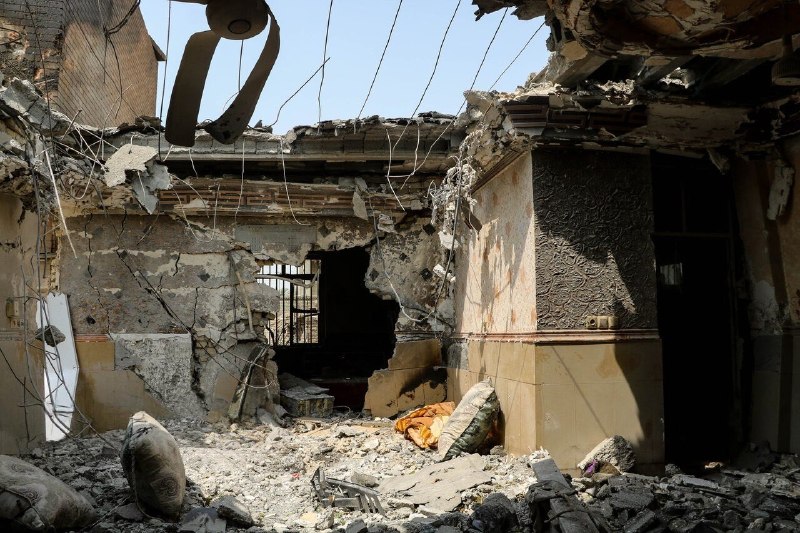
Between 21:21 and 21:47 UTC on 11 June 2026, an obscure stretch of the Persian Gulf briefly became the most-watched water on earth. Telegram channels linked to Iranian and Iran-watching open-source intelligence desks began relaying reports of explosions in the maritime area off Sirik, a port town in Hormozgan Province on Iran's southern coast, where the country's coastline bends toward the narrow chokepoint that carries roughly a fifth of the world's seaborne oil. Initial accounts, logged by the OSINT aggregator @rnintel at 21:21 UTC, said only that sounds of explosions had been heard in Sirik, with the cause unconfirmed, and that further blasts were being reported in the Strait of Hormuz off the Hormozgan coast. Within twenty minutes, Iranian state-affiliated outlets were offering a competing interpretation, and the gap between the two accounts is where the story actually lives.
What is known at the time of writing is narrow. Local residents and the Hormozgan provincial authorities reported audible blasts; no projectile impacts on Iranian soil were confirmed. The cause was contested, and remained contested, in real time, between two clusters of sources operating at different points on the spectrum between officialdom and independence. The episode is small in confirmed footprint. It is large in what it reveals about how information moves through the Iranian information environment in moments of stress, and how little of that movement is visible to outside readers.
What Iranian outlets actually said, and when
The Telegram channel @tasnimnews_en, carrying the English wire of Tasnim News Agency, the outlet widely understood to be close to the Islamic Revolutionary Guard Corps, reported at 21:39 UTC that a Tasnim correspondent in Hormozgan believed the sounds were "probably related to the armed forces confronting violations in crossing the Strait of Hormuz." A follow-up bulletin on the same channel at 21:44 UTC, citing a source in the Hormozgan Governorate, sharpened the framing: no projectile hits, no clashes in Sirik, and the sounds attributed to activity in the Strait of Hormuz. @wfwitness, an Iran-watching channel that re-aggregates Tasnim material, echoed the line at 21:45 UTC, characterising the blasts as "likely related to actions by Iranian armed forces in response to violations of passage through the Strait of Hormuz."
The semi-official Mehr News Agency, the wire historically associated with the Iranian president's office, ran a slightly different version. @wfwitness at 21:40 UTC and @intelslava at 21:47 UTC both relayed a Mehr report that explosions had "reportedly been heard again" off Sirik, with cause unknown and unverified accounts suggesting possible links to Iranian naval activity. Mehr's framing was descriptive; Tasnim's was assertive. That distinction matters. In a tightly-managed information environment, the difference between "reportedly" and "probably" is often the difference between an outlet willing to sit with uncertainty and one whose job is to set the official line before the outside world does the same.
The most cautious note came from the governorate itself, again carried by @tasnimnews_en at 21:44 UTC: no projectile hits, no clashes, sounds only. The most aggressive framing — blasts as a direct response to "violations" of passage — came from the Tasnim correspondent in Hormozgan, and was the only one of the three readings that put Iranian forces in the active-protagonist seat.
What the OSINT layer added, and what it did not
Outside the Iranian official ecosystem, two channels did most of the lifting. @rnintel, an open-source intelligence channel that aggregates ship-tracking data, social-media posts, and field reports, opened the file at 21:21 UTC with a flat "cause unknown" — a notable choice given the temptation to attribute. Eighteen minutes later it confirmed a fresh cluster of explosions "off the coast of Sirik, southern Iran." The channel stopped short of naming a cause, and offered no perpetrator. @GeoPWatch, another OSINT desk, summarised the Tasnim–Mehr split at 21:45 UTC and again declined to take a side: the sounds were heard from the sea, the governorate source said no hits, attribution remained open.
The result was a strange hour of reporting in which the Iranian state-press layer and the open-source layer agreed on the physical facts (blasts heard, no impact on land) and disagreed on the political facts (whose activity produced the blasts). Neither side had independent confirmation of the other's central claim. Tasnim was asserting Iranian action in the Strait; the OSINT layer was noting Tasnim's assertion; Mehr was reporting the blasts without endorsing the assertion. A reader following all three in real time could be forgiven for concluding that they were reading three different events.
The Strait as theatre
It is worth saying plainly that the Strait of Hormuz is not a quiet body of water, and has not been one for some time. Iranian naval forces have for years conducted seizures of commercial tankers, drone interceptions of foreign surveillance aircraft, and exercises simulating a closure of the shipping lanes. Most of these episodes generate exactly the kind of low-resolution audio-and-rumour footprint that the 11 June file consists of: a sound, a directional guess, a denial, a counter-claim. The episode off Sirik, in other words, fits a documented pattern in which uncertainty is itself a usable artefact, both for the Iranian side and for outside powers that have reasons to read events in particular ways.
The dominant Western framing, where it surfaces, treats any explosion in or near the Strait as a potential flashpoint between Iran and the United States, which maintains a naval presence in the Gulf and a sanctions regime that has been a load-bearing feature of regional policy for decades. The 11 June reports do not name a US role; the Iranian sources explicitly frame the activity as Iranian, in response to "violations" of passage. Whether the "violations" in question are US naval movements, commercial-tanker detentions, or an exercise of the IRGC Navy against an unidentified contact is the question the available reporting cannot answer. The sources are simply not granular enough.
What the sources do not settle, and what would
Three things would resolve the picture. First, automatic identification system (AIS) data from commercial traffic in the immediate window, correlated with the timestamps of the reported blasts, would show whether a vessel was where the Iranian reports suggested, and whether any of the major ship-tracking providers had flagged a mariner-distress signal. The Telegram thread does not include this layer. Second, satellite imagery of the area in the hours after 21:21 UTC — from any of the commercial providers that publish delay-strip imagery of the Gulf — would either confirm or rule out a visible plume, debris field, or naval repositioning. The thread contains no such imagery. Third, a confirmed statement from the US Navy's Bahrain-based Fifth Fleet, or from the UK Royal Navy's regional headquarters, would either corroborate or rebut the framing that Iranian forces were active. The thread contains nothing from the US or UK militaries.
What the thread does contain is a closed loop: Iranian state-affiliated wires offering an Iranian-state explanation; OSINT desks transcribing those wires while flagging the lack of independent confirmation; and the open question of whether the "violations" in question are real, fabricated, or — as has happened in past episodes — a constructed pretext for an Iranian action that would have occurred anyway. The most honest reading of the 11 June file is that it is evidence of an information posture, not of a kinetic event.
Stakes, and what to watch
The Strait of Hormuz is the world's most consequential energy chokepoint. Any episode in which Iranian armed forces are credibly reported to be operating in or near the shipping lane moves the price of crude, the posture of Gulf shipping insurers, and the calculations of every capital with carrier forces in the Indian Ocean. Even an unconfirmed episode does the same work, because the price of crude and the cost of war-risk insurance are set on probability, not on proof. A reader who watches the 11 June file and concludes that nothing happened may be reading the evidence correctly. A reader who watches the same file and concludes that something is being prepared may also be reading it correctly. The Telegram thread, taken on its own, does not let an honest analyst decide between the two.
What the 11 June thread does settle is something smaller and more durable: that, in a moment of regional stress, the Iranian information environment is segmented, fast, and capable of producing a self-consistent narrative in roughly twenty minutes from the first sign of a bang in the water. The OSINT layer outside Iran matched that speed, but not that coherence. The combination — rapid, contested official framing; transparent aggregation; no external corroboration — is the operating environment now, not an aberration from it. Monexus will update the file as the major wires file verifiable reporting on the 21:21–21:47 UTC window.
Desk note: Monexus treats the 11 June reports off Sirik as an information episode as much as a maritime one, and leads with the Iranian official and Iran-watching OSINT sources because they are the only sources that observed the event in real time. We have not cited the Western wires in the body of this piece because the thread context does not include their reporting, and the editorial standard is to source every claim to a URL the pipeline actually read.
Wire provenance
This editorial synthesis draws on the following public wire/social posts:
- https://t.me/intelslava
- https://t.me/GeoPWatch
- https://t.me/wfwitness
- https://t.me/tasnimnews_en
- https://t.me/wfwitness
- https://t.me/rnintel
- https://t.me/tasnimnews_en
- https://t.me/rnintel
- https://en.wikipedia.org/wiki/Strait_of_Hormuz