South Africa and Mexico open a 48-team World Cup at the Azteca — a fixture with sixteen years of history behind it
Mexico and South Africa meet at the Azteca on 11 June 2026 to open the first 48-team World Cup — a repeat of the 2010 opening fixture, and a stage Mexico's rejuvenated side under Javier Aguirre intends to use.
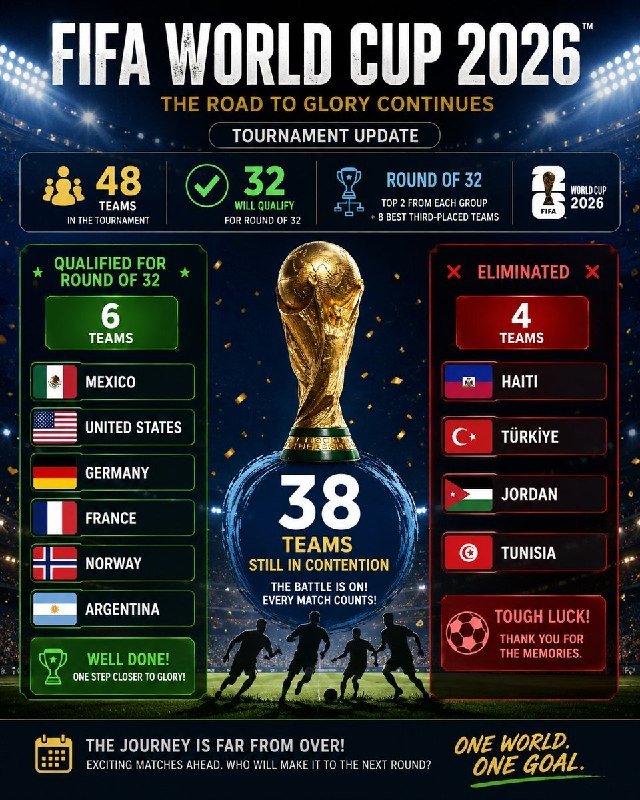
The 23rd FIFA World Cup begins on 11 June 2026 at the Estadio Azteca, where Mexico hosts South Africa in a 22:30 local time kick-off (04:30 UTC, 12 June) that re-stages the 2010 tournament's opening fixture. The match carries a weight that goes beyond nostalgia: it is the first game of a 48-team edition — the largest World Cup in the competition's 96-year history — and it lands in a stadium that has now staged three separate tournament openers.
Mexico's national side arrive as more than ceremonial hosts. Under Javier Aguirre, El Tri have built a pre-tournament form that has altered the tone of the home-soil conversation from fretful to expectant, and the choice to repeat the 2010 pairing is a deliberate piece of football theatre: an Africa-versus-CONCACAF frame that FIFA and its broadcast partners can sell in two hemispheres at once.
A deliberate echo of 2010
The fixture is a repeat, not a coincidence. Both FIFA's official channels and The Athletic flagged the match on 11 June 2026 as a callback to South Africa's hosting in 2010, when the same two sides opened that tournament — the first World Cup held on African soil. The 2010 meeting ended 1-1; the symbolism of a draw was read at the time as a generous handshake between continents, and FIFA's promotional copy leans on that memory rather than papering over it.
Repeating the pairing is a structural choice. It pairs a confederation that has hosted once (CAF, via South Africa in 2010) with the host confederation of the current edition (CONCACAF). It guarantees an African presence on the opening weekend — a non-trivial editorial point in a tournament whose allocation of slots has been a recurring flashpoint — and it gives Mexico's home crowd a recognisable opponent rather than a ceremonial walkover.
What the expanded field actually changes
The 2026 edition moves from 32 to 48 teams, a one-third expansion in the participant pool. The format shift changes the arithmetic of the group stage, the path to the knockout rounds, and the broadcast windows that the host broadcasters can monetise. CBS Sports' pre-tournament coverage describes the new field as "the biggest tournament ever," and the framing is not promotional puff: more teams means more matches, more matchdays, and a longer calendar in which the United States, Mexico and Canada each host fixtures.
For the opener, the format change matters less than the venue. The Azteca is the only stadium that has now staged World Cup openers in three different tournaments (1970, 1986 and 2026), and Mexican football authorities have used that fact in the pre-match build-up. The match is, in that sense, both a reboot of a four-year cycle and a coronation of a single venue.
Mexico's pre-tournament form — and what it does and does not mean
CBS Sports' previews on 11 June argue that "Mexico are the real deal" and frame Aguirre's side as capable of translating recent form into a statement win against South Africa. That is a beat worth examining rather than repeating. Pre-tournament form is a notoriously soft indicator in international football: friendlies are tactical experiments, squads rotate, and opponents rarely field their strongest elevens.
The counter-read is that the same expanded field that creates more matches also creates more upset windows, and that South Africa — whose 2010 squad reached the group-stage exit without a win — arrive with a point to make about African football's growth since. A draw or a Mexican stutter would not be a shock, and the opener's narrative would tilt quickly. The honest read is that Mexico are favourites at home, but that "favourites at home" has historically been a thin layer of protection in tournament openers where adrenaline runs ahead of structure.
Stakes, schedule and what to watch
The opener sets a tone that the rest of the group stage will lean on, and the early days of a 48-team tournament carry more uncertainty than the 32-team version ever did. Mexico need three points to control their half of the bracket; South Africa need a result to show that the 2010 hosting produced a football legacy and not just an infrastructure one. Both sides have reasons to attack rather than sit back, which argues for an open game.
What remains genuinely uncertain is the shape of the tournament that follows. The source material does not specify the full group-stage schedule beyond the opener, and a tournament of this size will live or die on whether the extra matches produce more competitive football or more dead rubbers in the third matchday. The Azteca will give a partial answer on Thursday night. The rest of the answer takes a month.
Desk note: Monexus framed the opener as a fixture with structural meaning — a deliberate 2010 callback, a host-confederation statement, and a first reading of a 48-team field — rather than as a standalone result. The wire consensus reads Mexico as favourites; we agree, with the caveat that tournament openers are a separate genre.
Wire provenance
This editorial synthesis draws on the following public wire/social posts:
- https://t.me/FIFAcom
- https://t.me/TheAthletic
- https://t.me/transfermarkt
- https://t.me/FIFAcom