The Strait Closes: A US-Iran Escalation Reshapes the World's Oil Choke Point
Within twelve hours, a US helicopter was shot down over Hormuz, US forces struck multiple targets in Iran, and Tehran announced the closure of the world's most important oil corridor. The consequences are already rippling.
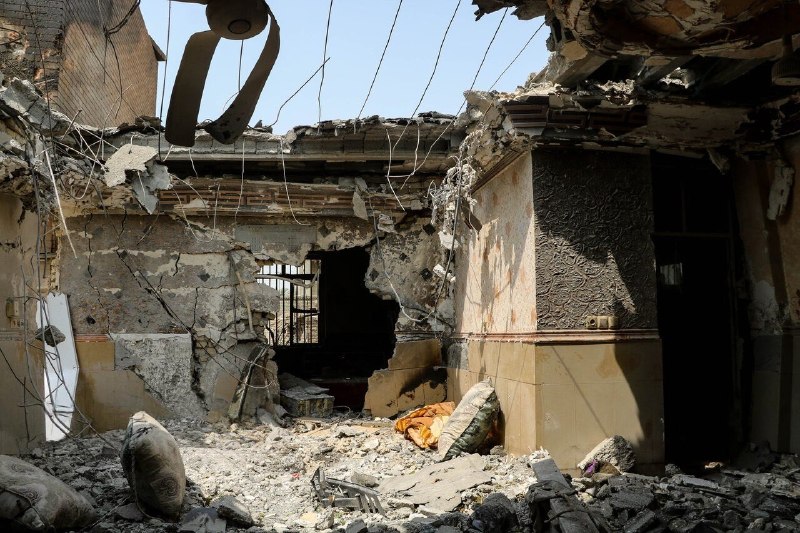
Sometime in the small hours of 11 June 2026, the world's most important energy corridor stopped being a maritime commons and became a theatre of war. Iran's joint military command announced the closure of the Strait of Hormuz to oil tankers and commercial shipping, hours after US forces carried out strikes on multiple Iranian targets in retaliation for the downing of a US helicopter over the waterway. President Donald Trump said Washington would continue to bomb Iran "very hard," and described a previously undisclosed mission that he said had enabled roughly one hundred million barrels of crude to transit the Strait.
What began as a tactical exchange over a single helicopter has, in less than twenty-four hours, become a structural test of whether the United States can keep the Persian Gulf's sea lanes open by force, and whether Iran can credibly deny them. The answer to that question will not be settled in the Gulf. It will be settled in the price of Brent crude, in the cost of insuring tankers, in the political survival of governments from New Delhi to Tokyo, and in the strategic calculations of Beijing and Moscow, which import the bulk of the oil that transits Hormuz.
A night of escalation, told in pieces
The sequence, as it can be reconstructed from wire reports, began on the evening of 10 June, US time. At 16:11 UTC, President Trump said he was going to continue bombing Iran "very hard" after the Islamic Republic shot down a US helicopter over the Strait of Hormuz. Two hours later, at 18:19 UTC, the president added that the United States had executed what he called a "secret mission" in the Strait, a campaign that, in his telling, had allowed one hundred million barrels of crude to cross through. The framing — that Washington was simultaneously striking Iran and protecting the very flow of oil the strikes were endangering — was an early signal that the White House intended to manage the escalation as a story of American control, not American risk.
By the early hours of 11 June the situation had shifted. At 03:50 UTC, Reuters reported that Iran had announced the closure of the Strait of Hormuz. At 04:00 UTC, CGTN carried a parallel account under the headline that the US had attacked multiple targets in Iran after the helicopter incident and that the Strait was now closed. At 04:14 UTC, the Ukrainian outlet TSN aggregated the night's main developments — the Iranian closure, the US strikes, and continuing missile attacks on Ukraine — into a single bulletin, a useful reminder that the world's two most acute flashpoints are now operating on overlapping news cycles. By 04:16 UTC, the X account Unusual Whales was carrying a statement attributed to Iran's top joint military command declaring the Strait closed to oil tankers and commercial ships.
The official US account, as relayed by Trump, is that the United States is escalating in order to keep Hormuz open. The official Iranian account is that the Strait is closed precisely because the United States escalated. Both cannot be fully true at once. The shape of the next forty-eight hours will depend on which framing prevails inside the region's chancelleries, and inside the trading floors of Singapore, London and Houston.
What "closure" actually means
The Strait of Hormuz is narrow — at its tightest, the shipping lanes are only a few kilometres wide on each side, separated by a buffer zone. Roughly a fifth of all seaborne crude oil, and almost a third of the world's liquefied natural gas, transits it every day. There is no realistic pipeline alternative at scale. Saudi Arabia's East-West Pipeline can move some crude to Red Sea terminals, and the UAE's Habshan-Fujairah pipeline bypasses Hormuz entirely, but together they cover only a fraction of normal Gulf exports. If Iran can credibly threaten the waterway, it can threaten the global economy.
A formal declaration of closure is not the same as a complete halt. In past confrontations, Iran has detained individual tankers, seized commercial vessels, conducted boarding operations, and harassed shipping with fast boats and anti-ship missiles. What is being reported on 11 June is closer to a hybrid threat: a public announcement of closure combined with the implicit warning that any vessel attempting transit does so at its own risk. Insurers will read that signal first. Within hours of Iran's announcement, war-risk premiums for tankers in the Gulf typically rise by an order of magnitude; some owners will simply decline to sail. Even a partial drop in throughput tightens the seaborne market almost immediately, because there is no slack in the system.
The Iranian announcement is also a diplomatic instrument. By framing the closure as a response to US aggression, Tehran places the burden of de-escalation on Washington. Gulf states that have spent two decades positioning themselves as reliable energy suppliers to Asia now face the awkward prospect of being seen, by their own customers, as the source of risk. Saudi Arabia, the UAE, Kuwait, Iraq and Qatar all export through Hormuz; their production and fiscal plans are exposed.
The American frame, and its limits
The Trump administration's public argument, as expressed in the 10 June statements, is that the United States is asserting control of a chokepoint that hostile forces have threatened for years, and that the campaign has, in fact, secured the free flow of oil. The 100-million-barrel figure attached to the "secret mission" is doing considerable rhetorical work. It implies that the operation has already achieved one of its central objectives and that further strikes are a continuation of a successful campaign rather than a widening of it.
The limits of that frame are visible in the market reaction that the Iranian closure is already producing. The story of American control is hard to sustain if the price of crude spikes, if insurance markets withdraw coverage, or if allied governments begin quietly urging restraint. The story is also hard to sustain if the Iranian response expands beyond the waterway — to bases hosting US forces in the Gulf, to Israeli territory, to Iraqi militias, or to the Houthi network in Yemen, which has its own track record of disrupting Red Sea shipping. Each of these is a known Iranian capability, and each is now a live option rather than a hypothetical one.
There is also a domestic political dimension. The framing of a muscular, successful mission in Hormuz plays well with a US audience that has been primed by two decades of Gulf coverage to see the waterway as a US lake. It plays less well if the same operation is reported in Asian capitals as the proximate cause of an energy shock.
Who wins, who loses, and on what timetable
The most immediate winners are the producers outside the Gulf who can substitute for disrupted supply at the margin: Norway, Brazil, Guyana, and to a lesser extent the United States itself, which is now the world's largest crude exporter. Refiners in Asia — China, India, Japan, South Korea — are the most immediate losers. Roughly 70 percent of China's seaborne crude imports, and a similar share for India and Japan, transit Hormuz. Even a partial disruption of two to three weeks would draw down strategic reserves, force emergency diplomatic engagement with Tehran, and accelerate the political case for alternative pipelines and overland corridors from Russia and Central Asia.
The second-order winners are countries that have positioned themselves as mediators or alternative suppliers. Russia, which has built its wartime economic strategy around discounted crude sold outside Western enforcement, gains leverage with every barrel of Gulf crude that becomes harder to deliver. The argument that European and Asian buyers should treat Russian oil as a reliable alternative is harder to make when Russian volumes are themselves sanctioned, but the practical case for some form of Russian return to global energy markets strengthens in any sustained Hormuz crisis.
The second-order losers are the Gulf monarchies themselves. Saudi Arabia's Vision 2030 diversification plan, the UAE's positioning as a financial and logistics hub, and Qatar's enormous LNG investments all depend on the Gulf being perceived as a stable, insured, predictable place to do business. A closure — even a partial one — punctures that perception in a way that will take years to rebuild, regardless of how the underlying military conflict ends.
Over a longer horizon, the structural question is whether the episode confirms or erodes dollar-denominated oil pricing. The United States' principal leverage in the Gulf has historically rested on the so-called petrodollar arrangement: oil is sold in dollars, excess revenues are recycled through US financial markets, and the US provides security in return. The credibility of that bargain depends on the US being seen as the guarantor of sea-lane security. A crisis in which the US is both the dominant military actor and the proximate cause of the disruption to the corridor it claims to guarantee is a stress test of that arrangement. If Asian buyers emerge from the episode looking for ways to insure themselves against US-driven volatility — through yuan-denominated contracts, payment systems outside SWIFT, or alternative supply routes — the long-term cost of the present escalation will be measured not in barrels but in the slow erosion of an unwritten contract that has underwritten US financial power for half a century.
What remains uncertain
The sources available in the early hours of 11 June do not yet clarify several material questions. The exact nature of Iran's closure order — whether it is a formal blockade under international law, a directive to the Islamic Revolutionary Guard Corps Navy to interdict shipping, or a political statement with operational ambiguity — is not specified in the wire copy. The number, location and target set of US strikes on Iranian territory have been described in general terms but not itemised by US Central Command in the materials reviewed here. The fate of the downed US helicopter crew is not confirmed in the thread. The 100-million-barrel figure associated with the president's "secret mission" has not been independently corroborated; the framing suggests it is a cumulative total of oil moved since the operation began, but the underlying calculation has not been disclosed.
There is also genuine disagreement about causation. The US frame holds that Iran precipitated the crisis by downing a US helicopter, and that closure is retaliation. The Iranian frame, as reported by Iranian state media and amplified by outlets that frame the US role in the Gulf as occupation, holds that the US strikes were the initiating act, and that closure is a defensive measure consistent with the UN Charter's recognition of self-defence against armed attack. Western legal analysis will, in the coming days, weigh in on whether a public closure announcement is itself a casus belli, an act of war, or a permissible act of sovereign control over territorial waters — but that argument will run alongside, not ahead of, events on the water.
What is not in doubt is that the world's most important oil chokepoint is now, as of 11 June 2026, a contested military space rather than a commercial common. The financial, diplomatic and security consequences of that single fact will be worked through over weeks and months, by governments and market participants who are, as of this writing, still reading the first reports.
This publication framed the closure as the central event and the US strikes as the immediate trigger, rather than the reverse. The wire lede at 03:50 UTC put Iran's announcement first; Monexus treats the announcement and the strikes as a single escalation cycle and weighs Iran's closure order as the more consequential of the two for global energy markets.
Wire provenance
This editorial synthesis draws on the following public wire/social posts:
- https://x.com/reuters/status/0
- https://t.me/TSN_ua
- https://x.com/cgtnofficial/status/0
- https://x.com/unusual_whales/status/0
- https://x.com/unusual_whales/status/0
- https://x.com/unusual_whales/status/0
- https://x.com/unusual_whales/status/0
Follow the event.
These dated source records provide context. They do not retrospectively verify this archive article.
Separate what the nuclear watchdog reported from what it could not determine after the June 2025 strikes.