Strait of Hormuz under pressure: what Tehran's closure order actually changes
Iran's reported closure of the Strait of Hormuz and a US E-3 Sentry circling the Gulf collided with markets on 11 June 2026. The traffic through the chokepoint matters more than the rhetoric.
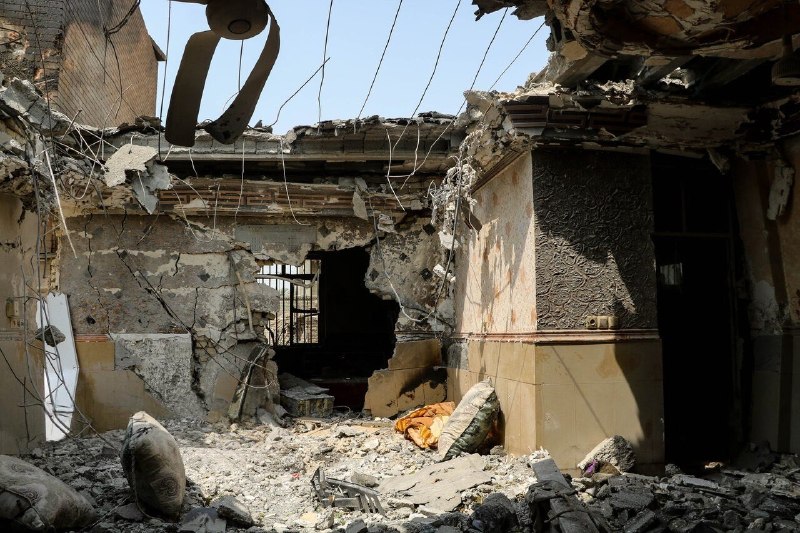
On the evening of 11 June 2026, the world's most consequential oil chokepoint stopped being an abstraction. Citing informed sources, Iran's state broadcaster IRIB reported that the source of unexplained explosions in the area was "likely related" to Iran's closure of the Strait of Hormuz, a waterway through which roughly a fifth of global seaborne crude and a meaningful share of liquefied natural gas ordinarily transits. Within minutes of the IRIB item appearing on Telegram channels and wire monitors, a US Air Force E-3B "Sentry" airborne early warning and control aircraft — a Boeing 707-based AWACS platform — was being tracked circling in the airspace adjacent to southern Iran and the strait, its orbit visible on open flight-tracking dashboards. By 13:41 UTC the same day, Bitcoin was tagging $63,200, having largely shrugged off the day's higher-than-expected US producer-price inflation; the headline it shrugged off, per Cointelegraph's market write-up, was the Hormuz closure itself.
The story that is actually moving through the world's markets on 11 June 2026 is not about a single incident. It is about whether the world's oil insurance and routing architecture — the Lloyd's-listed war-risk premiums, the Saudi and Emirati East-West pipeline diversions, the Indian SPR drawdowns, the Chinese crude stockpile releases that have become routine since 2023 — can absorb a closure order issued by a government that controls the northern shore of the chokepoint. The market reaction captured in the bitcoin ticker, in other words, is not irrationality. It is a market reading the risk correctly and concluding that the marginal buyer of oil is already long.
What is known, hour by hour
The IRIB report appeared on Telegram channels monitored by geopolitical open-source accounts at 21:35 UTC on 11 June 2026, attributing the cause of the explosions to a closure decision and citing informed sources without naming them. Seven minutes earlier, at 21:28 UTC, the same cluster of channels had noted a US Air Force E-3B Sentry — callsign and tail not yet published in the open thread — on a holding pattern adjacent to southern Iran and the strait. The Sentry is a long-endurance surveillance platform, not a strike aircraft; its presence is consistent with US Central Command positioning for situational awareness, but it is also the kind of asset that gets orbited into a theatre when a customer in Washington or Al Udeid wants continuous radar coverage over an unfolding event.
Cointelegraph's market note at 13:41 UTC — earlier in the day, before the IRIB item — frames the closure as already in the market's price. Bitcoin's move to $63,200 came against a backdrop of the highest US producer-price inflation reading since October 2022, which on a normal day would have rattled risk assets. The framing of the piece — that BTC "ignored" the inflation print but absorbed the Hormuz story — tells readers the order of importance the market itself is assigning to the two events.
Three points of fact can be stated cleanly from the source cluster. First, Iranian state media has publicly tied the closure to the reported explosions. Second, US military airborne surveillance is actively operating in the airspace next to the closure. Third, the global crypto market — an imperfect but increasingly referenced real-time sentiment barometer for traders who have already moved oil and FX — has not broken. The interesting question is what would change that.
The counter-narrative: a closure that is half-real
Western wire reporting on Iran's strait posture has, for two decades, oscillated between two poles: alarmist claims that Tehran will close the waterway at any provocation, and the more cautious view that doing so would be an act of economic self-harm. The cautious view has the better track record. Iran's own crude exports transit the strait; the country's refining and downstream complex depends on imported feedstocks that arrive the same way; the IRGC Navy's asymmetric capability — fast boats, mines, anti-ship missiles along the Band-e Lengeh and Konarak coastline — is real, but it is built to threaten, not to actually sustain, a multi-week closure against a US Fifth Fleet that has spent fifteen years rehearsing exactly this scenario.
A third reading is more consistent with the IRIB item as it actually reads. The Iranian English-language framing of "closure" in past episodes has often turned out, on inspection, to mean a partial enforcement posture: a specific set of vessel categories restricted, an inspection regime imposed on inbound traffic, a no-transit window for tankers linked to adversaries. The phrase in Persian and the phrase in English are not always the same phrase. The IRIB sourcing — "informed sources" rather than a named official, and a causal hedge ("likely related to") attached to the explosions — is consistent with a calibrated escalation that leaves Tehran room to dial back without losing face if the diplomatic off-ramp becomes available.
The piece of evidence that complicates the cautious view is the E-3B orbit. AWACS coverage of a non-event is rare; the platform is expensive to fly and is not a peacetime presence. Whatever the Sentry is watching, the United States appears to be watching it actively enough to keep an E-3 on station. That is a meaningful data point, and the open-source flight trackers that captured the orbit are now the closest thing the public has to a primary source on US force posture in the Gulf.
What sits behind the chokepoint
The structural reality is that the Strait of Hormuz is the narrowest pinch in a global system that has spent a decade diversifying around it. Saudi Arabia's East-West Pipeline can move roughly five million barrels a day to Yanbu on the Red Sea, bypassing the strait entirely. The UAE's Habshan-Fujairah pipeline carries around 1.5 million barrels a day from Abu Dhabi's onshore fields to the Gulf of Oman. Iraq has run its crude north to Ceyhan, Turkey, since the 2010s, with sporadic interruptions. These bypasses are not capacity-equivalent to the strait at full flow, and they are not all available simultaneously under stress — but they exist, and their existence is the reason the marginal reaction in spot crude on a closure order is measured in single-digit percentages rather than the 30-to-50 percent shock that textbook models would predict.
The other structural change is the Asian buyer's room. China's crude imports from Iran have, since 2023, been laundered through Malaysian and UAE re-export hubs, Malacca Strait transshipments, and a sprawling dark fleet of tankers operating outside Western insurance regimes. Indian refiners have built a parallel architecture for sanctioned and discount barrels. South Korea and Japan keep strategic petroleum reserves calibrated in part to the assumption that the strait can be unreliable for periods measured in weeks. The closure order, in other words, lands on a market that has been quietly preparing for it for years.
The corollary is that the dominant Western framing — that an Iranian closure would constitute a shock to a system that depends on Hormuz — is half-true. The system does depend on Hormuz, but the dependency has been thinned by capital investment in bypass pipelines, by the rise of sanctioned-crude trading routes, and by strategic-stockpile policy in every major Asian importer. What the system has not been thinned against is a closure that lasts longer than the existing SPR drawdown windows, or one that coincides with a kinetic event that triggers Lloyd's to withdraw war-risk cover in the Gulf of Oman and the Western Indian Ocean. That is the scenario the E-3 is, plausibly, being orbited to watch for.
The Iranian position, in its own register
Tehran's framing of the strait, when offered in Persian and through official channels, has consistently rested on three pillars. The first is the legal argument that the strait is not, in Iranian doctrine, a pure international waterway for the purposes of belligerent transit, and that Iran retains rights consistent with the UN Convention on the Law of the Sea to manage passage in defined circumstances. The second is the threat argument, articulated through IRGC Navy commanders and the state-aligned press, that any attempt to keep the strait open against Iranian action will impose costs on the intervening force, and that the cost calculus favours Iran. The third is the linkage argument, more commonly heard in Western academic and policy writing than in Iranian briefings but still present, that the strait is a bargaining chip in a wider negotiation over the nuclear file, sanctions architecture, and the IRGC Quds Force's regional posture.
These arguments, taken seriously on their own terms, are not the rantings of a regime that has lost strategic literacy. The legal argument is contested but has a basis in the navigational provisions of UNCLOS. The threat argument is a real deterrent that the US Navy's own war games have, in the past, struggled to model with confidence. The linkage argument is structurally similar to the leverage Russia has periodically claimed over European gas markets — and, like that leverage, it is more credible as a negotiating tool than as a sustained policy.
The point of steelmanning the Iranian position is not to endorse it. It is to refuse the lazy analysis that treats any Iranian move in the Gulf as a spasm rather than as a deliberate signal inside a calculation. The IRIB item, with its careful hedging about "informed sources" and the "likely" causal link, reads as a signal. Signals can be dialled up or down. The market reaction, and the US airborne posture, are the response to the signal; both are calibrated.
Stakes and the next forty-eight hours
The losers from a sustained closure are obvious and concentrated. Gulf producers whose crude transits the strait — Iraq above all, Kuwait, Qatar's LNG, the UAE's offshore production that still requires Fujairah's terminal to reach its full export footprint — absorb the immediate revenue hit. Asian importers with thin SPRs, principally Thailand and the Philippines but also parts of South Korea, face the worst exposure. Western consumers see the price at the pump, with a lag of two to three weeks, and the political pressure that follows.
The winners are less obvious. Saudi Aramco and the operators of the East-West Pipeline see their bypass infrastructure priced into the market in a way it has not been for years. US shale producers, already producing at the high end of their range, see realised prices lift on the global benchmark. Russia, whose own crude now flows east to Asia through pipelines and the Arctic without Hormuz exposure, has a small but real relative benefit — the same dynamic that made Moscow's export volumes less sensitive to Western price caps than the framing assumed. And, in a way that does not get discussed in Western policy circles, the Iranian leadership can claim, plausibly, that it has reminded a global audience of the country's continued strategic weight in a region where it has otherwise been out-manoeuvred by the Abraham Accords architecture of the early 2020s.
The next forty-eight hours will turn on three observables. First, whether the IRIB framing of "closure" is operationalised through an IRGC Navy enforcement order to commercial traffic, or whether it remains a public posture. Second, whether the E-3B orbit is joined by additional US Navy surface presence, particularly a carrier strike group operating in the Gulf of Oman — the force posture that has historically signalled a US decision to keep the strait open by force. Third, the price action in Brent and Dubai crude at the Asian open on 12 June, which will be the first real market verdict on whether traders believe the closure is a signal or a fact.
What remains uncertain
The source cluster behind this piece is short and recent — four items, three channels, all dated 11 June 2026 — and that fact should be set down plainly. The IRIB item attributes the cause of the explosions to a closure decision, citing "informed sources" without naming them; the same IRIB item, in the Persian original, may carry different framing nuance than the English-language translations circulating on the Telegram channels. The E-3B orbit is verified through open flight trackers but the callsign, the operating unit, and the mission tasking are not in the public source set. The Cointelegraph market note is a real-time read on trader sentiment, not a forecast of where the price will settle if the closure is operationalised.
What is not in dispute, on the evidence available at 22:00 UTC on 11 June 2026, is the sequence: an Iranian state-media claim of closure, a US airborne surveillance response, and a global market that has priced the risk in advance. Whether the sequence becomes an event or a posture is the question the next forty-eight hours will answer. The honest analytical position is that both outcomes remain live, and that the calibrated ambiguity in the Iranian framing is the deliberate design of a state that has learned, over four decades, to keep its adversaries guessing without crossing the threshold that triggers the response it cannot afford.
Monexus framed this against the wire default of "Iran threatens Hormuz" — a passive construction that flattens agency. The reading here is that the IRIB item is a signal, not a spasm, and that the structural changes in Asian buying and bypass-pipeline capacity have already thinned the strait's leverage below the levels that the 2010s-era models predicted. The piece holds that the immediate market reaction is rational, that the US force posture is appropriate to the ambiguity, and that the E-3 orbit is doing exactly what airborne early warning is built to do: buy time for decision-makers who are not yet ready to decide.
Wire provenance
This editorial synthesis draws on the following public wire/social posts:
- https://t.me/GeoPWatch