The Strait of Hormuz Is the New Front Line of an Oil-Priced Confrontation
Tehran says the world's most strategic oil chokepoint is shut. Washington says its ships are untouched. The truth, as ever, sits in the spread between the two claims — and in the price of crude.
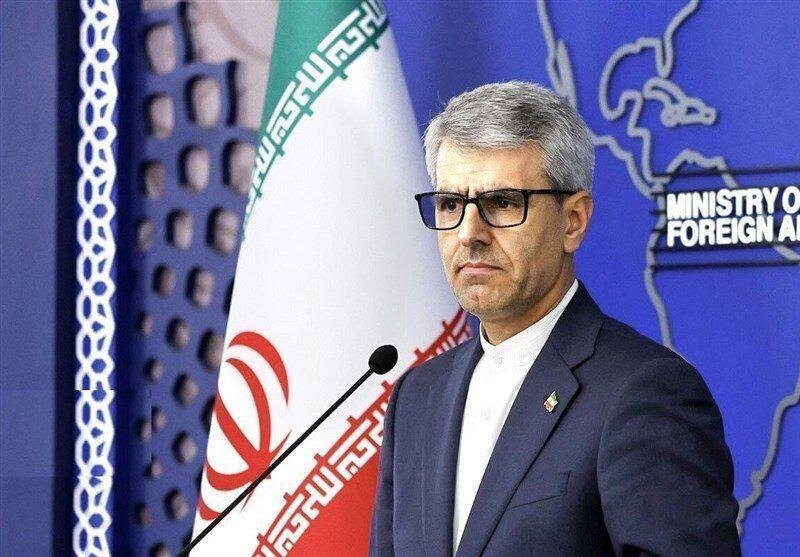
At 04:16 UTC on 11 June 2026, Iran's joint military command announced that the Strait of Hormuz — the narrow waterway through which roughly a fifth of the world's traded oil normally passes — was closed to oil tankers and commercial shipping. Within five hours, Iran's official line hardened to a full closure "until further notice." By mid-morning in Europe, the United States Central Command was on the wire insisting that none of its warships in the waterway had been struck. Both statements cannot be entirely true at once. The gap between them is where the next oil shock is being priced.
The strategic point is not which capital is lying. It is that a chokepoint of planetary importance is now being treated as a rhetorical weapon by both sides, and that the price of crude is the only honest broker in the room. A closure, even a partial one, is the kind of event that moves Brent by tens of dollars a barrel in a session, and the markets — not the spokespersons — will tell us which side's version of events is holding.
The Iranian declaration, and what it claims to authorise
According to Telegram channels carrying statements from Iran's top joint military command, Tehran has declared the strait closed to all vessels, with explicit warnings that any ship attempting passage will be fired upon. The earlier 10 June declaration, also carried via Cointelegraph's newsdesk feed, framed the closure as a measure against commercial traffic, with a follow-up escalation on 11 June extending it "until further notice." The pattern is consistent with Iran's own doctrine of "strategic patience" in the waterway: it has historically threatened closure as a retaliatory lever rather than imposed a sustained physical blockade, because the second option invites a coalition naval response that Iran cannot survive.
The relevant question is not whether Iranian fast boats and shore-based anti-ship missiles could harass a tanker; they demonstrably can. The question is whether Tehran is prepared to make that harassment a sustained, around-the-clock posture, or whether the announcement is itself the weapon, designed to spike insurance rates and freight costs in the hope of extracting a price elsewhere — in negotiations, in sanctions relief, in the slow war of attrition the regime is waging for domestic legitimacy.
Washington's counter-version: warships untouched, the corridor open
The US military line, as relayed by Reuters at 09:05 UTC on 11 June, is that none of its warships in the strait have been struck. That statement, carefully read, does not assert that traffic is flowing normally. It does not deny that commercial tankers have been warned off, that insurance underwriters have already re-rated the waterway, or that Iranian Revolutionary Guard Corps Navy vessels have been visible on radar. It says only that American hulls have not been hit. The implicit claim — that the corridor remains operationally usable for the US Navy, and therefore for any flag the United States chooses to escort — is the load-bearing piece, and it is doing the political work.
The previous evening, 10 June at 18:05 UTC, President Trump had publicly claimed that US military operations had already helped more than 100 million barrels of oil and over 200 commercial ships transit the strait safely. He framed the US posture as a continuing bombing campaign, telling supporters that the United States would keep "attacking them and attacking them very hard" after Iran was reported to have shot down a US helicopter over the waterway. The framing — Iranian provocation, American escalation, oil kept moving — is internally consistent. It is also, on the public record, impossible to verify against the military side of the ledger.
The structural frame: an oil chokepoint as a messaging instrument
What the world is watching, put plainly, is a great-power contest being fought through the price mechanism of a single stretch of water between the Persian Gulf and the Gulf of Oman. Roughly 20% of globally traded oil moves through that corridor in normal conditions, and any serious disruption repriced that flow within hours. This is the architecture of dollar-denominated energy trade at its most exposed: a commodity priced in US dollars, shipped through a chokepoint the United States Navy has policed since the 1980s, now subject to a competing authority's claim of command.
Two structural facts sit underneath the headlines. First, the United States and Iran have been conducting a slow-motion shadow war for the better part of four decades, in which oil flows have been one of the few shared interests. Both sides benefit, in narrow terms, from a chokepoint that is open enough to move crude and tense enough to justify military budgets. Second, any move to weaponise the strait in earnest — to actually close it for days rather than hours — is an act that locks in a long-term strategic cost, because the coalition response, once triggered, does not unwind. Tehran knows this. The question is whether the current Iranian leadership has decided that the cost of a sustained closure is lower than the cost of not closing it.
Stakes, and what remains unresolved
The immediate stakes are concrete. A sustained closure of the strait would push Brent above $130 a barrel within days, force emergency SPR releases from Washington and its allies, and tip several petrostate budgets — Iraq above all, but also Kuwait, the UAE, and Qatar's LNG exports — into acute crisis. Asian importers, led by China, India, Japan, and South Korea, would face a freight and insurance market that stops behaving like a market. A partial, episodic closure — the more probable path — would still burn several dollars a barrel off the global growth forecast and hand Iran a continuing bargaining chip without forcing a full naval showdown.
What remains unresolved, on the evidence currently in the public record, is threefold. It is not clear that Iranian forces have, in fact, interdicted a commercial vessel; the rhetoric is louder than the verifiable action. It is not clear that the US Navy has, in fact, kept the corridor open under sustained Iranian harassment; the claim that ships are transiting "safely" is a political claim, not a logistical one. And it is not clear whether the two sides are converging on a back-channel de-escalation, or whether this is the opening of a longer confrontation. The markets will give the first honest read within the next trading session. Until then, the strait is what it has been for decades: the place where the rhetoric of great powers, and the price of a barrel, are the only two things telling the truth.
This publication has steered clear of the official-language reflex on both sides. The Iranian framing — closure as deterrent — and the US framing — open corridor under fire — are both paraphrased and treated as claims to be tested, not facts to be relayed. Readers should watch the Brent tape, not the press conferences, for the next datapoint.
Wire provenance
This editorial synthesis draws on the following public wire/social posts:
- https://t.me/s/cointelegraph
- https://t.me/s/unusual_whales
- https://t.me/s/insiderpaper
- http://reut.rs/4uN5fER
- https://t.me/s/cointelegraph
- https://t.me/s/unusual_whales