The Strait That Wasn't Closed: Reading the Hormuz Information War
The Strait of Hormuz has not been closed and has not been reopened, but both sides are claiming the other has already conceded. The shipping data is thin; the readouts are not.
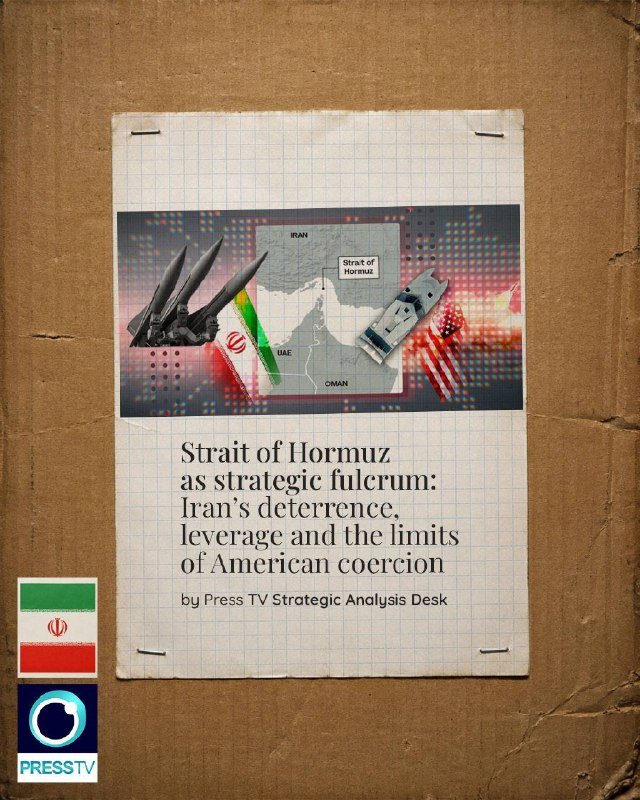
On the evening of 13 June 2026, the Strait of Hormuz was the world's most photographed waterway and its least described one. A senior US administration official told Fox News that Washington had concluded a "very good and strong" agreement under which Iran would reopen the strait without imposing transit fees. Within hours, Iran's Tasnim news agency put its editor-in-chief on state television to urge the public to distrust that very claim. By Saturday night, Tehran had not publicly confirmed any deal at all. The water, in other words, looked the same as it had the day before. The information did not.
The gap between those two facts is the story. Coverage of the Hormuz dispute over the past 72 hours has not really been a story about a waterway, a tanker, or a customs regime. It has been a story about readouts: who is allowed to claim what, on which platform, and at what hour. The shipping data points that US Central Command has circulated appear, on inspection, in summarised form across the wire. Vessel-level verification is something a reader has to do themselves, against commercial trackers. That asymmetry, not the closure itself, is what is worth dissecting.
The American readout, in one paragraph
The US version is crisp. A senior administration official told Fox that the proposed agreement is "fantastic and very strong," and that it commits Iran to reopen the strait without transit fees, according to a post circulating on the World Financial Witness channel. Donald Trump separately told reporters the deal was set for Sunday, Middle East Eye reported late on Saturday, citing the timing dispute as the live problem: Tehran had not confirmed. The American position, in other words, is that the deal exists, the text is favourable, and the only outstanding variable is the moment of signature.
The Iranian counter-readout
Tehran's signal is messier, and that messiness is itself a kind of answer. Pro-principlist posters in Persian have appeared criticising the silence of Ayatollah Mojtaba Khamenei on the negotiations, with one sign reading, in translation, "Even for a plane tree [you speak], but for the nuclear file you are silent," according to a Telegram post from the same channel on 13 June. Tasnim's editor-in-chief told IRIB that Iran should not trust the US, and characterised public anxiety about the negotiations as a healthy sign of resistance. Ultra-conservative MP Amirhossein Sabeti announced he would register an impeachment motion against Foreign Minister Abbas Araghchi over the foreign minister's televised remarks on the nuclear deal. The pattern is not confusion. It is bargaining in public, with three domestic audiences addressed simultaneously.
What the OSINT layer actually shows
The open-source channels that monitor the strait day-to-day have, by and large, not produced a smoking-gun shipping chart. The Telegram channels tracking the dispute, World Financial Witness, OsintLive, Bellum Acta, and GeoPolitical Watch, have carried the duelling readouts and the political theatre around them. What they have not carried is a confirmation, from commercial vessel tracking, that Hormuz traffic has returned to its pre-crisis baseline. That is the absent centre of the story. Without that confirmation, "reopen" is a diplomatic verb rather than a maritime one, and the difference matters to anyone pricing freight, bunker fuel, or war risk premia from now until the next news cycle.
The information contest, plainly
What we are watching is a hegemonic transition inside a single news cycle. One capital asserts a deal. Another refuses to ratify it on camera. A third channel amplifies Russian-origin material into a US domestic political fight, with Laura Loomer accusing DNI Tulsi Gabbard of recycling Russian intelligence as an official American document, per an OsintLive aggregation on 13 June, days before Gabbard's reported departure. The Hormuz file is the foreground; the control of the readouts is the actual contest. Shipping follows. Narratives lead. And the chyrons are outrunning the tonnage by about a week.
What to watch on Sunday
Three filings are due in roughly the same window. Tehran's formal confirmation, or its conspicuous absence. A CENTCOM update with vessel-level data rather than summary percentages. And a reaction from the Iranian principlist hardliners, whose impeachment threat against Araghchi is, in effect, a vote of no confidence in the negotiation track itself. If the strait reopens on the American clock and the Iranian clock does not move, the next 48 hours will tell us whether the last week was a deal or a demonstration. Either way, the water will be the last thing to know.
Sources:
- https://t.me/wfwitness/, Fox readout on proposed agreement, 13 June 2026
- https://t.me/wfwitness/, Pro-principlist sign criticising Khamenei silence, 13 June 2026
- https://t.me/FarsNewsInt, US official claims "very good and strong" agreement, 13 June 2026
- https://t.me/osintlive/, Loomer aggregation on Gabbard/Russian intelligence claim, 13 June 2026
- https://t.me/DDGeopolitics/, Tasnim editor-in-chief IRIB remarks, 13 June 2026
- https://middleeasteye.pulse.ly/uakvi…, Trump says Iran deal set for Sunday; Tehran has not confirmed, 13 June 2026
- https://t.me/BellumActaNews/, Monitoring thread on Hormuz information contest
- https://t.me/GeoPWatch/, Geopolitical monitoring of US-Iran track
Desk note: Monexus reads this as an information-contest story first and a maritime story second. The wire has tended to lead with the American readout; we have led with the disagreement between the readouts, because the disagreement is the document.
Follow the event.
These dated source records provide context. They do not retrospectively verify this archive article.
Separate what the nuclear watchdog reported from what it could not determine after the June 2025 strikes.