The Strait Closes, the Headlines Don't: What Tehran's Hormuz Play Tells Us About a 2026 Oil Shock
Tehran has declared the Strait of Hormuz closed to all shipping, threatening fire on any vessel that attempts passage. The 2026 oil shock has begun — but the framing war matters as much as the barrels.
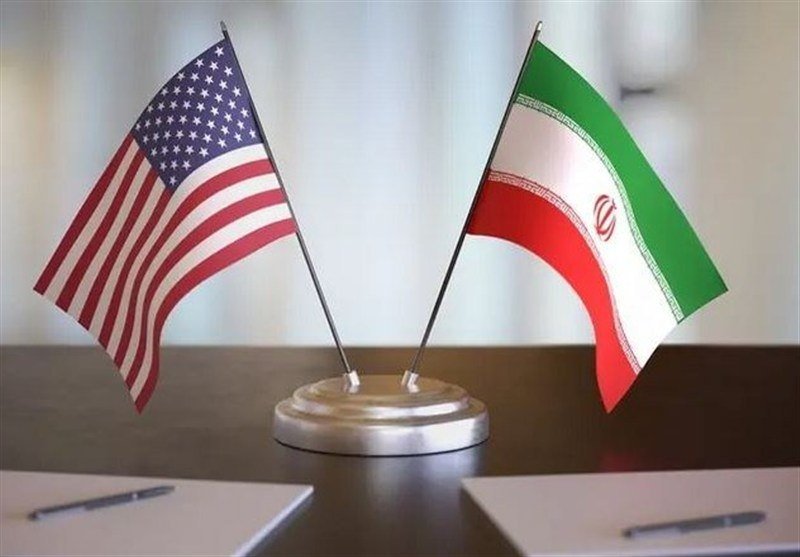
At 23:43 UTC on 10 June 2026, Iran's military command declared the Strait of Hormuz closed to all vessels, warning that any ship attempting passage would be fired upon, according to a Cointelegraph wire summary circulating on Telegram roughly an hour later. By 01:16 UTC on 11 June, an Al Alam Arabic urgent bulletin, sourcing Reuters, framed the same announcement as the trigger for a fresh oil-price rally. Within ninety minutes, the same set of facts had been packaged twice: once as a kinetic security event, once as a market event. The framing is the story.
What the market is actually digesting is a 21-mile-wide chokepoint that handles a fifth of all seaborne oil being declared, in Tehran's words, off-limits. The economic implications are obvious. The political ones are more interesting. The Western wire is racing to translate an Iranian move into a price chart; the Iranian move itself is a response — to what, in the Iranian telling, was a US attack on Iranian assets or interests in the days running up to the announcement. Until that prior act is properly sourced and dated, the closure is being narrated as aggression when it may also be escalation-as-reaction.
What the wire is saying
Reuters, picked up by Al Alam Arabic at 01:16 UTC on 11 June 2026, framed the closure as the proximate cause of an oil-price rally. The Cointelegraph report, filed at 23:43 UTC on 10 June, led with the kinetic content: Iranian fire-on-sight orders, a blanket closure, the formal language of interdiction. Two different verbs — rose and declared — and two different implied actors: markets, and a sovereign military command. Both can be true; the question is which one a reader meets first.
President Donald Trump, for his part, claimed on 10 June 2026 that recent US military operations had helped more than 100 million barrels of oil and over 200 commercial ships safely transit the Strait of Hormuz, per a Cointelegraph brief published at 18:05 UTC. The claim is the predicate. Without it, the closure reads as a unilateral provocation. With it, the closure reads as a counter-move in a sequence that began, in the White House's account, with American protection of commerce in the strait. Both sides are now telling a story that begins with the other's aggression.
The counter-narrative Tehran is building
Iran's framing apparatus — Al Alam Arabic, state media, and a network of aligned outlets — has been consistent since the 10 June reports: the closure is a response, not a first move. The sequence on the Iranian side runs: US military operations, escalating pressure on Iranian assets, an Iranian announcement calibrated to the threat. The sequence on the US side runs: Iranian provocation, an American president acting to defend shipping, a closure that vindicates the American posture.
The structural point is that the same set of facts — closure, transit volume, military posture, price reaction — can be sequenced in either direction. The first verb in a sentence does enormous work. Iran closed the strait and the strait closed after US operations describe the same news with opposite political weight.
Why a 21-mile chokepoint is a structural weapon
The Strait of Hormuz is not a battlefield. It is a corridor, and corridors belong to the country that can credibly deny passage. Iran has spent the better part of two decades building the layered capability to do exactly that: fast-attack craft, anti-ship missiles arrayed along the coast, naval mines, and the political will to use them. A closure threat, even a partially credible one, is a structural lever — it moves the Brent benchmark before a single round is fired, and it forces every oil-importing economy to do the cost-benefit math on Tehran's grievances whether the rest of the world frames them as legitimate or not.
What we are watching is not a single decision but a use of geography as leverage. The Western instinct is to read the closure as a binary — open or shut, peace or war. The Iranian posture is more sophisticated. A threat that is partially believed, partially enforced, and partially priced in is more useful to Tehran than a clean closure. It allows Iran to extract concessions, signal resolve, and test the world's tolerance, all while the global oil complex reprices around the probability of escalation rather than the fact of it.
The stakes, and what remains genuinely uncertain
The honest read at 02:00 UTC on 11 June 2026: the sources available do not yet specify the trigger event on the Iranian side. Trump's 10 June claim frames the US posture as protective of commerce, but the specific prior action that Iran is responding to has not been independently confirmed in the thread material. Nor has the Iranian closure been verified by a Western military source; the language is presently coming from Iranian military command, summarised by crypto-and-market wires, and visualised by Arabic-language state media. The Brent move is real, but the underlying claim sequence is being assembled in real time.
The stakes are concrete. If the closure holds even partially, every energy-importing economy outside the Gulf pays for Tehran's grievances. If it is rolled back in hours, the credibility of Iranian interdiction threats drops for a generation. If it is answered by US force, the regional war everyone's been pricing as a tail risk becomes the base case. The oil market, in the meantime, is doing what oil markets do: discounting the worst version of the headline, and waiting to see which version of events the rest of the world decides to believe.
This publication read the wire on the Strait of Hormuz as a sequencing question, not a binary one. The facts — Iran's closure declaration, Trump's transit-protection claim, the Reuters-led price rally — are not in dispute. The order in which a reader meets them is, and the order is the politics.
Wire provenance
This editorial synthesis draws on the following public wire/social posts:
- https://t.me/alalamarabic
- https://t.me/cointelegraph
- https://t.me/cointelegraph
Follow the event.
These dated source records provide context. They do not retrospectively verify this archive article.
Separate what the nuclear watchdog reported from what it could not determine after the June 2025 strikes.