Strait of Hormuz in the balance as Trump touts Iran deal, Tehran warns of 'severe response'
A day of duelling signals — Trump's claim that a 'great' settlement will reopen the waterway within days, Tehran's threat of a 'severe response' to any renewed strike, and a UN call to lock the ceasefire in place before it slips.
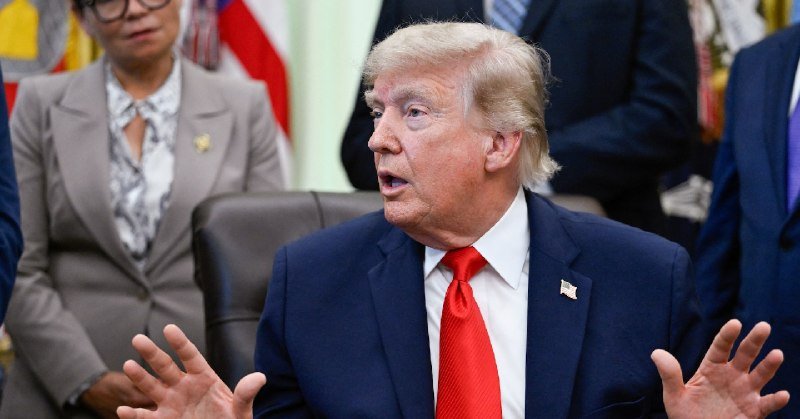
At 20:35 UTC on 11 June 2026, UN Secretary-General António Guterres called on Washington and Tehran to "return to" the US-Iran ceasefire, the clearest signal yet that the United Nations sees the arrangement as already in force — and already at risk of collapse. The appeal landed in the same hour as Iran's top joint military command warned of "a severe response" to any renewed US strike, and as President Donald Trump told reporters that a "great" settlement with Iran would trigger the reopening of the Strait of Hormuz "as early as Saturday or Monday."
The choreography is familiar from past US-Iran escalations: a public diplomatic track, a military warning track, and a media environment in which the two run on parallel rails. What is unusual is the speed. Within roughly twenty minutes on Thursday evening, the same news cycle carried an Iranian threat of retaliation, an American claim of imminent normalisation, and a UN plea to preserve a ceasefire that, on the Iranian side, was being rhetorically framed as already violated.
The economic stakes are not abstract. The Strait of Hormuz is the maritime chokepoint through which the bulk of Gulf oil and liquefied natural gas transits. Any sustained closure — or, more plausibly, any prolonged insurance and routing disruption short of a formal closure — moves the price of crude and the price of protection within hours. Trump's offer to convert a "great" settlement into the waterway's reopening is, in effect, a bid to convert a security event into a market event in reverse: to use the prospect of resumed flow to discipline Tehran's behaviour at the negotiating table.
What each side is actually saying
Tehran's official position, as reported by Reuters at 20:25 UTC on 11 June, is that "the US will receive a severe response if it attacks again." The language is a direct warning, delivered by Iran's top joint military command — the body responsible for coordinating action across the regular army, the Islamic Revolutionary Guard Corps, and the country's missile and air defences. The phrasing is calibrated: it conditions a response on a future US action, rather than claiming that any action has been taken since the ceasefire was announced. That conditional is doing diplomatic work. It preserves Iran's ability to claim compliance with whatever arrangement was brokered, while reserving the right to retaliate if Washington tests the line.
Trump, speaking earlier the same day, framed the choice in inverse terms. According to a Telegram channel post carried by Clash Report at 20:18 UTC on 11 June, the US president told an audience: "You want to see turmoil? You want to see death and destruction? Let Iran have a nuclear weapon." The argument — that a nuclear-armed Iran would be more destabilising than the costs of the current pressure track — is the rhetorical spine of the American negotiating position. It also sets up a familiar two-step: maximise the cost of non-compliance, then offer relief as a prize.
On the economic deliverable, the claim is more concrete. A separate Telegram post at 20:08 UTC on 11 June, attributed to GeoPWatch, has Trump stating that other countries have agreed to a memorandum of understanding and that the Strait of Hormuz will reopen "as early as Saturday or Monday." The post is unverified by a primary outlet, but Reuters reported at 20:15 UTC on 11 June that Trump has publicly tied a "great" Iran settlement to the waterway's reopening. The two reports are consistent in substance, even if the channel provenance is mixed.
The UN's narrow lane
Guterres's intervention at 20:35 UTC is the kind of statement a UN secretary-general makes when the institution's standing is being used to lock in a status quo that the parties might otherwise be tempted to test. By calling for a "return" to the ceasefire, the UN is doing two things at once. It is asserting that a ceasefire exists — a frame that obliges both parties to be seen as either inside or outside it. And it is asking both to come back to it, which concedes that one or both may have stepped away in word or in deed.
The narrowness of the UN's lane matters here. Guterres cannot enforce the ceasefire, can only nudge the parties, and depends on the United States and Iran both choosing to keep the arrangement intact. The statement is therefore best read as a marker — a public record that, at 20:35 UTC on 11 June 2026, the international system's principal diplomatic backstop was on the record in defence of the deal.
What the framing leaves out
The dominant Western framing of the moment — Trump as deal-maker, Tehran as the conditional party, the UN as honest broker — is not the only read. From Tehran's vantage point, the sequence of events in the days before 11 June has been one in which US strikes, not Iranian retaliation, did the disrupting. A framing built around Iran's threat of "severe response" can read, in that light, as a defensive warning rather than an escalatory one: a state signalling that a further strike will be met, not that a strike is being prepared.
The waterway itself is also a two-sided instrument. Trump is offering reopening as a reward. Iran, and the small set of states whose leverage flows from the strait's geography, can credibly threaten that any deal can be reversed if the underlying political arrangement is not honoured. The Strait of Hormuz is, in this sense, not just a transit route but a hostage — in the older diplomatic sense of the word, a condition whose release is contingent on counterpart behaviour.
What remains uncertain
The sources available on the evening of 11 June 2026 do not specify what "other countries" Trump claims have signed a memorandum of understanding, nor do they reproduce the text of any such document. They do not confirm whether the Strait of Hormuz has been formally closed, formally reopened, or has remained technically open with elevated insurance premia and routing changes. They do not specify the exact condition under which Iran's top joint military command has said it would respond, beyond the broad criterion of a renewed US attack. And they do not record the contents of any direct US-Iran channel beyond Trump's public remarks.
What is clear is the shape of the next forty-eight hours. The Saturday-to-Monday window Trump has named for a reopening is the horizon on which the market, the diplomats, and the military planners will be watching. If the waterway is treated as open by shippers, insurers, and reflagging states, the political signal is that the deal is holding. If it is not, the conditional language on both sides — Iran's "severe response," Trump's "great" settlement — will start to be read as a countdown rather than a posture.
For now, the most that can be said with confidence is that on 11 June 2026, in the space of a single news cycle, the same hour produced a UN plea to preserve a ceasefire, an Iranian threat of retaliation, and an American claim that the strait will be back to business within days. Each of those statements is consistent with the others in the sense that they are all attempts to define the moment before the moment defines them.
This publication reads the 11 June signals as a single negotiation playing out across three podiums — UN, Iranian military command, and the White House — rather than as three separate stories. The wire line and the channel line agree on the timing; they disagree on whose framing of events is the operative one.
Wire provenance
This editorial synthesis draws on the following public wire/social posts:
- http://reut.rs/4vGrQn0
- http://reut.rs/4voue2p
- http://reut.rs/4vgOF0M
Follow the event.
These dated source records provide context. They do not retrospectively verify this archive article.
Separate what the nuclear watchdog reported from what it could not determine after the June 2025 strikes.