Live Wire
05:50ZTASNIMNEWSHead of Judiciary: The problem of the American leaders is that they still do not understand the concept of Ir…05:48ZENGLISHABUIran strikes military bases with US presence in three countries05:46ZENGLISHABUIran strikes military bases with US personnel in three countries after American attack05:46ZENGLISHABUU.S. Central Command Strikes Targets in Iran with Tomahawk Cruise Missiles05:45ZGAZAENGLISIsraeli aircraft strike house in Hanawiya, southern Lebanon; warships fire toward area05:45ZTWOMAJORSRussian air defenses destroyed 330 Ukrainian drones over 11 hours05:45ZENGLISHABUUS Central Command struck targets in Iran with Tomahawk cruise missiles05:42ZRYBARINENGUkraine drones strike Crimea, Sevastopol overnight05:50ZTASNIMNEWSHead of Judiciary: The problem of the American leaders is that they still do not understand the concept of Ir…05:48ZENGLISHABUIran strikes military bases with US presence in three countries05:46ZENGLISHABUIran strikes military bases with US personnel in three countries after American attack05:46ZENGLISHABUU.S. Central Command Strikes Targets in Iran with Tomahawk Cruise Missiles05:45ZGAZAENGLISIsraeli aircraft strike house in Hanawiya, southern Lebanon; warships fire toward area05:45ZTWOMAJORSRussian air defenses destroyed 330 Ukrainian drones over 11 hours05:45ZENGLISHABUUS Central Command struck targets in Iran with Tomahawk cruise missiles05:42ZRYBARINENGUkraine drones strike Crimea, Sevastopol overnight
Markets
S&P 500725.43 1.58%Nasdaq25,170 1.98%Nasdaq 10028,508 1.98%Dow500.25 1.80%Nikkei89.29 1.83%China 5034.75 0.17%Europe86.69 1.35%DAX41.27 1.83%BTC$62,584 2.13%ETH$1,648 1.38%BNB$594.32 1.54%XRP$1.11 0.24%SOL$65.04 1.58%TRX$0.3215 0.13%DOGE$0.0849 1.70%HYPE$55.29 0.33%LEO$9.5 0.15%RAIN$0.0133 5.87%QQQ$693.69 2.00%VOO$667.05 1.57%VTI$358.04 1.55%IWM$282.05 1.04%ARKK$73.01 2.65%HYG$79.47 0.19%Gold$374.58 4.15%Silver$57.66 2.29%WTI Crude$134.3 2.28%Brent$51.46 1.98%Nat Gas$11.54 1.32%Copper$37.72 2.28%EUR/USD1.1539 0.00%GBP/USD1.3382 0.00%USD/JPY160.49 0.00%USD/CNY6.7807 0.00%S&P 500725.43 1.58%Nasdaq25,170 1.98%Nasdaq 10028,508 1.98%Dow500.25 1.80%Nikkei89.29 1.83%China 5034.75 0.17%Europe86.69 1.35%DAX41.27 1.83%BTC$62,584 2.13%ETH$1,648 1.38%BNB$594.32 1.54%XRP$1.11 0.24%SOL$65.04 1.58%TRX$0.3215 0.13%DOGE$0.0849 1.70%HYPE$55.29 0.33%LEO$9.5 0.15%RAIN$0.0133 5.87%QQQ$693.69 2.00%VOO$667.05 1.57%VTI$358.04 1.55%IWM$282.05 1.04%ARKK$73.01 2.65%HYG$79.47 0.19%Gold$374.58 4.15%Silver$57.66 2.29%WTI Crude$134.3 2.28%Brent$51.46 1.98%Nat Gas$11.54 1.32%Copper$37.72 2.28%EUR/USD1.1539 0.00%GBP/USD1.3382 0.00%USD/JPY160.49 0.00%USD/CNY6.7807 0.00%
CLOSEDNYSEopens in 7h 38m
themonexus.
Vol. I · No. 162
Thursday, 11 June 2026
05:51 UTC
  • UTC05:51
  • EDT01:51
  • GMT06:51
  • CET07:51
  • JST14:51
  • HKT13:51
← back to Saturday edition◉ LIVE ON THE WIREfollow this thread in real time
Opinion

The Strait of Hormuz is the story the world is trying not to look at

Overnight US strikes on Iran and a contested closure of the Strait of Hormuz have turned the world's most important oil chokepoint into a live crisis — with the White House insisting the US, not Tehran, controls the waterway.
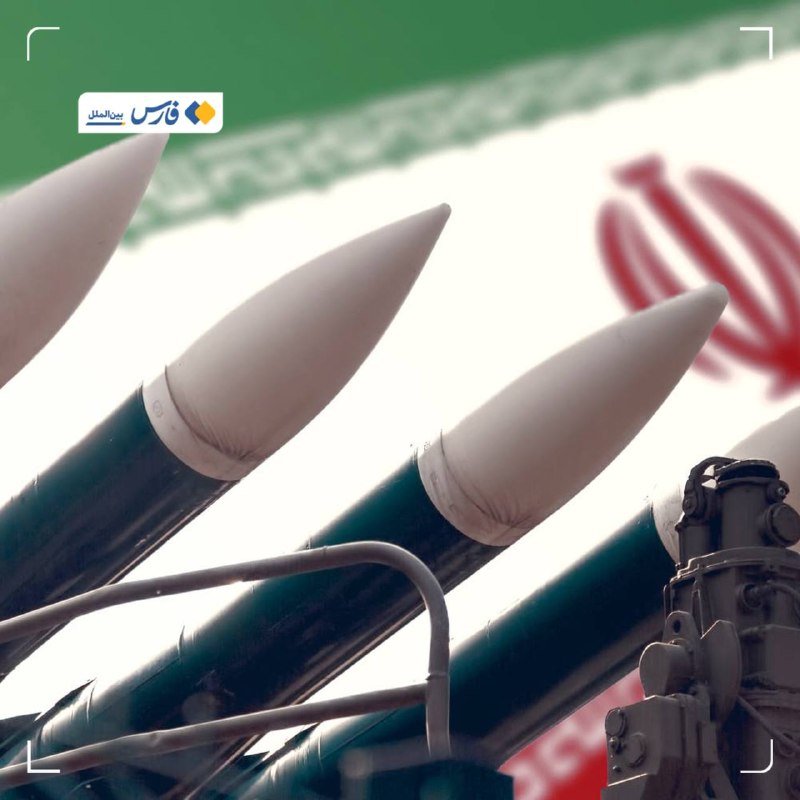
/ Monexus News

The contradiction is the story. Two governments are simultaneously asserting ownership of the same twenty-one-mile-wide corridor through which roughly a fifth of the world's seaborne oil normally passes. One of them has the carrier groups; the other has the anti-ship missiles lined up on its own coastline. For the first time in a generation, the assumption that Hormuz is an apolitical sea lane — policed in practice by the US Fifth Fleet but navigable by anyone — has been suspended in plain sight.

What the sources actually show

The picture assembled from overnight reporting is fragmentary, and worth laying out cleanly. The US military confirmed new strikes on multiple Iranian targets; Trump, in remarks captured on social media, vowed further attacks if no peace deal is reached. [1] Iranian authorities announced the Strait's closure; Washington, in a written statement, rejected the announcement as a fiction. [2] [3] A separate Trump statement claimed a successful "secret mission" that allegedly enabled 100 million barrels of crude to transit the chokepoint — a number large enough, if accurate, to represent more than a full day of global oil demand. [4] None of the available reporting, including the wire services and the X posts aggregated in the public thread, has independently confirmed the 100-million-barrel figure, and the helicopter-downing claim originates with Trump's own remarks rather than with a Pentagon readout. [1] [5]

That matters. The news cycle is being driven less by confirmed events than by competing claims of fact — claims that, by design, cannot both be true. If Iran has genuinely closed the Strait, then oil markets in London, Singapore and Houston are repricing in real time; if the White House is correct and the closure is rhetorical, then traders are being invited to ignore a warhead. Either reading carries enormous consequences, and the public record at 02:25 UTC does not adjudicate between them.

The pattern, in plain language

Hormuz is not a new fault line. It is the oldest one in the modern oil economy, and the one the global system has been quietly subsidising with US naval power for decades. The implicit arrangement — Tehran refrains from weaponising the Strait, Washington refrains from fully strangling Iran's export routes, and the rest of the world looks the other way — was always unstable. It rested on the assumption that the cost of disruption was high enough on both sides to make restraint rational. What the past twenty-four hours reveal is that the assumption no longer holds on at least one side.

The deeper story is about leverage. Iran's economy is partly insulated from a closure of the Strait by the fact that its own oil cannot leave through Hormuz under current sanctions; the cost of disruption falls on buyers in Asia, on refiners in India and China, and on Gulf producers who share the same waterway. The US, by contrast, is selling the closure as a victory it is imposing — the language of "control" repeated three times in a single White House statement is not a description, it is a deterrent. [3] The two sides are therefore running different calculations, and the market, which is used to discounting both, is now being asked to price in the worst of both at once.

What the wires are not yet saying

Mainstream coverage, such as it has stabilised overnight, is leaning on the US framing — strikes, retaliation, presidential vow — and treating the Iranian closure announcement as one data point among several. The structural read is largely missing. There is no settled reporting yet on what the helicopter incident actually involved, on whether commercial tankers have been ordered to hold position, on what the IRGC Navy is doing, or on how Gulf states from Oman to Saudi Arabia are positioning themselves. A closure announcement from Tehran is one thing; the operational reality on the water — mine-laying, fast-boat activity, drone surveillance of tankers — is another, and the available sources do not yet distinguish them.

The Global-South read is also largely absent from the wire. For a major Asian importer, the question is not whose flag flies over the Strait but whether a 220-million-tonne-a-year hydrocarbon artery stays open at all. Beijing and New Delhi have, in the past, treated unilateral US enforcement of Gulf "freedom of navigation" with a certain amount of reserve; that reserve is not yet visible in the overnight reporting, but it is the obvious place the diplomatic story will migrate next.

Stakes

If the closure holds for even a week, the Brent benchmark will move by tens of dollars a barrel, refining margins will swing violently, and several emerging-market importers will face immediate balance-of-payments stress. If it does not hold — if the US naval presence in the Gulf and the wider Fifth Fleet footprint are doing what the White House claims — then the episode will be written down as a test of nerve that Washington won, and the diplomatic bill for the strikes will be paid elsewhere, in sanctions, in nuclear talks, in the slow erosion of the norms that have kept the Gulf navigable since 1988. The helicopter is the human cost on one side; the civilians absorbing whatever was struck overnight in Iran are the cost on the other, and neither has yet been counted.

The honest position at 02:25 UTC is that the public record does not yet let a reader say which of those two futures is being entered. What it does let a reader say is that the Strait of Hormuz has stopped being a backdrop and become the headline — and that the two governments now trading claims about it are not, on the evidence so far, telling the same story.

The Monexus desk treats this as an active story: claims from either capital that cannot be independently corroborated are flagged as such, and the article will be updated as the wire record firms up.


  1. https://x.com/reuters/status/* — Reuters on X, "US launched new strikes against multiple targets overnight in Iran" — 11 June 2026, 02:25 UTC.
  2. https://t.me/TSN_ua/* — TSN Ukraine via Telegram, "Iran announced the closure of the Strait of Hormuz: the United States denies" — 11 June 2026, 02:14 UTC.
  3. https://x.com/unusual_whales/status/* — Unusual Whales on X, "The UNITED STATES of AMERICA CONTROLS the Strait of Hormuz, NOT Iran" — 10 June 2026, 20:43 UTC.
  4. https://x.com/unusual_whales/status/* — Unusual Whales on X, "Trump says executed a 'secret mission' in the Strait of Hormuz, resulting 100 million barrels of crude to cross through" — 10 June 2026, 18:19 UTC.
  5. https://x.com/unusual_whales/status/* — Unusual Whales on X, Trump remarks on continuing to bomb Iran "very hard" after a US helicopter was shot down over the Strait — 10 June 2026, 16:11 UTC.

Wire provenance

This editorial synthesis draws on the following public wire/social posts:

  • https://t.me/TSN_ua
© 2026 Monexus Media · reported from the wire