Strait of Hormuz under contested closure as IRGC and US Central Command issue duelling claims
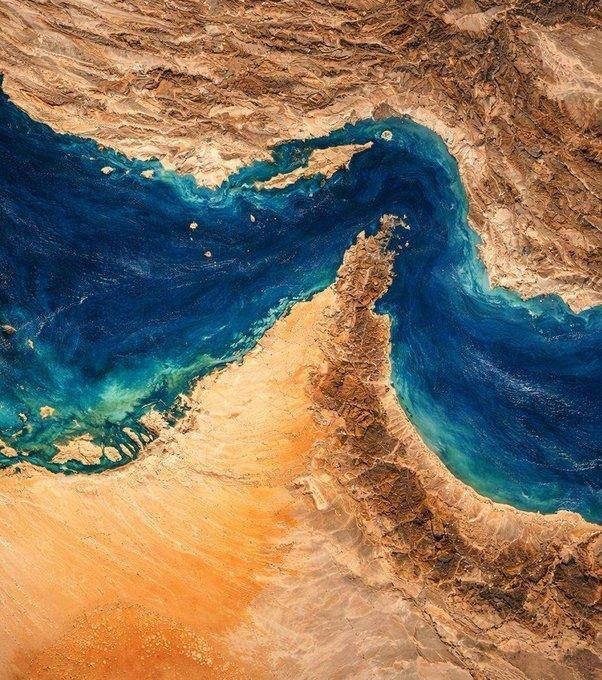
Two claims about the same stretch of water collided in the public record within roughly half an hour late on 10 June 2026. At 23:37 UTC, US Central Command (CENTCOM) declared that the Strait of Hormuz was not closed, and that commercial vessels were continuing to transit in and out of the choke point. Eighteen minutes later, at 23:58 UTC, Iranian state outlet Mehr News reported that the Islamic Revolutionary Guard Corps Aerospace Force had carried out the first phase of an offensive missile-and-drone operation, highlighting what it described as the dispersion of launch origins and the breadth of the target bank. By 00:07 UTC on 11 June, CENTCOM had formally denied Iranian claims of a closure. The Strait of Hormuz — the narrow waterway through which a substantial share of seaborne crude and liquefied natural gas ordinarily passes — is now the site of an information war as much as a military one.
The duelling statements matter because the gap between them is the story. Neither side has, in the materials available at the time of writing, produced evidence that a third party — a major maritime authority, an independent tanker tracker, or a recognised commercial shipping association — has corroborated in real time. Until that happens, the public is being asked to choose between two official narratives with limited independent verification.
What CENTCOM actually said, and what it did not
The CENTCOM line, repeated through its official channels and amplified by an account posting from @sprinterpress on X at 23:37 UTC, is narrow but categorical. Commercial ships are continuing to transit in and out of the Strait of Hormuz tonight; the waterway is not closed. That is a status report on commercial traffic, not a description of military activity overhead. It does not, on its own, rule out the launch of Iranian missiles or drones in the general vicinity. It does not address whether any vessel has been warned off, whether insurance underwriters have raised war-risk premiums, or whether shipping companies have voluntarily rerouted. Each of those questions will be settled, if at all, by Lloyd's List, by the Joint Maritime Information Centre, and by the daily AIS-derived flow data published by commercial trackers — none of which had, as of the time of writing, issued public figures for the night in question.
The framing on the US side is also consistent with a long-standing posture: Washington has an interest in keeping commercial traffic moving precisely because the Strait is a global commodity artery, and any suggestion of effective Iranian control over transit is a political as well as a military fact.
What Iranian state media is claiming, and the sources behind it
The Iranian claim — that the IRGC Aerospace Force has begun the first phase of a missile-and-drone offensive, with dispersed launch sites and a broad target set — comes via Mehr News, an outlet affiliated with state-aligned media architecture in Iran. It has been relayed by channels including GeoPWatch and War Footage Witness on Telegram, with the earliest dated item in the thread context appearing at 23:58 UTC on 10 June. The language used is characteristically declarative: phase one, offensive operations, target bank. The detail that the IRGC is highlighting — dispersion of launch origins, breadth of the target set — is the kind of operational vocabulary that, if accurate, implies a salvo designed to complicate interception rather than a single symbolic strike.
Iranian state-aligned sources are not, on this publication's reading, a stand-alone factual basis for claims about military outcomes. They are, however, a legitimate primary source for what the Iranian state is choosing to say, in its own voice, to its own and to foreign audiences. The same caveat that applies to any state press organ applies here: the words are real, the underlying events are claimed.
Two narratives, one waterway
The structural pattern is familiar from previous Gulf flashpoints. State actors on each side of a confrontation issue maximalist claims at the same moment, and the gap between claim and reality is filled, in the first hours, by market reaction and by social media circulation. Oil futures, shipping insurance rates, and regional equity indices will respond to the more alarming framing even before any independent confirmation lands; that response, in turn, becomes evidence for the framing. The Strait of Hormuz is the world's most consequential chokepoint precisely because the financial reflex to a closure claim is itself a price-moving event.
A plausible alternative read of the available material is that the IRGC conducted a salvo — of drones, of ballistic missiles, or of both — at targets on its own soil, at a facility, or at a symbolic site, and that Tehran's communications apparatus has framed the operation in maximalist terms to project reach. Under that read, CENTCOM's denial of a closure of the Strait would be technically accurate even as Iranian missiles were in the air, because the two claims address different objects: one describes shipping on the water, the other describes projectiles overhead. That is not a reconciliation of the accounts; it is a hypothesis about how both can be true at once.
What remains unverified, and what to watch
The sources available at publication do not specify a target list, a casualty count, an interception record, or a duration. There is no independent confirmation, in the thread context, of damage to any named facility, of disruption to any named vessel, or of any third-party state's diplomatic posture in the immediate wake of the salvo. The most that can be said with confidence is that two official narratives are now in public collision, and that the next several hours will likely be settled by traffic data, by satellite imagery of launch sites and impact craters, and by the speed at which regional governments choose to call in ambassadors, close airspace, or reroute commercial flights.
For markets, the operative question is not whether the Strait is closed in a literal sense — the early CENTCOM guidance suggests it is not — but whether underwriters and operators will treat it as closed for pricing purposes. That distinction is, in practice, the only one that moves crude. For policymakers, the question is whether the salvo, if it occurred as described, is a one-off signalling event or the opening move of a sustained campaign. The first reading is consistent with the historical pattern of Iranian military signalling; the second would mark an escalation of a different order.
This publication will update the public record as independent verification — from commercial trackers, from regional authorities, and from on-the-ground reporting — becomes available. The two accounts above are the inputs; the conclusion is not yet on the wire.
— Monexus desk note: Both CENTCOM and Mehr News are treated here as primary sources for what their respective institutions chose to say, in their own voice, at a specific UTC timestamp. The article does not adjudicate which is closer to physical reality; the source set does not yet permit that judgement. Readers are advised to treat the contradiction itself as the headline.
Wire provenance
This editorial synthesis draws on the following public wire/social posts:
- https://t.me/sprinterpress
- https://t.me/GeoPWatch
- https://t.me/GeoPWatch
- https://t.me/wfwitness
- https://t.me/osintlive