Strait of Hormuz, Open Secret: Trump’s ‘Escort Mission’ and the Price of Reopened Water
The president says a covert operation moved 100m barrels of crude and 200 ships past Iran. Markets aren’t convinced — and neither, yet, are the sources. The story is mostly what hasn’t been said.
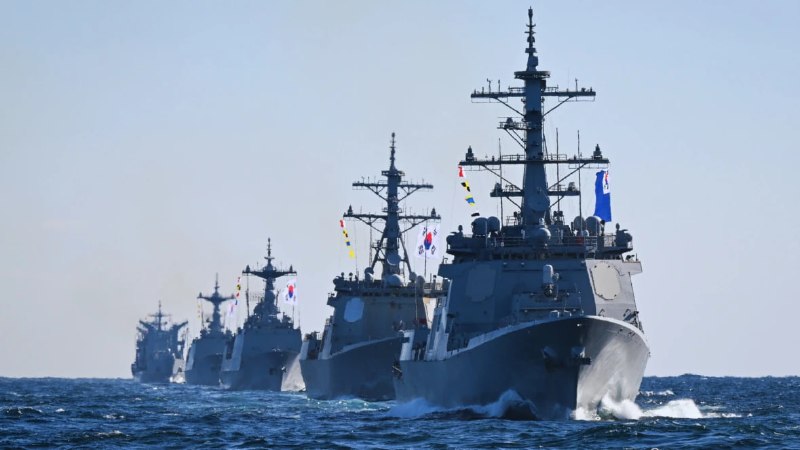
On 10 June 2026, in remarks carried first by X posts from financial commentators and then amplified across wire feeds, US President Donald Trump asserted that American forces had quietly escorted more than 200 commercial vessels and approximately 100 million barrels of crude oil through the Strait of Hormuz — a 21-mile-wide corridor between Iran and Oman through which roughly a fifth of the world’s seaborne oil normally passes. The claim, framed by Trump as a “secret mission,” came wrapped in a wider set of statements about Iran: that the country had agreed not to develop a nuclear weapon and needed only to “sign the paper,” that he would continue bombing Iran “very hard” after a US helicopter was shot down over the waterway, and that his birthday wish was “peace for the world.” [Source: 18:19 UTC, 10 Jun 2026, x:unusual_whales; 18:05 UTC, 10 Jun 2026, telegram:Cointelegraph; 18:29 UTC, 10 Jun 202ales, x:unusual_whales; 16:11 UTC, 10 Jun 2026, x:unusual_whales; 22:31 UTC, 10 Jun 2026, x:unusual_whales; 04:30 UTC, 11 Jun 2026, x:cgtnofficial].
The political claim, the military claim and the market claim are now all in the same room. That is the news.
The framing — a covert, ongoing, oil-clearing operation that has unlocked the world’s most consequential energy chokepoint — is being delivered to a public that has, for the better part of two years, watched tanker traffic in the Gulf throttled, insurance rates on Hormuz transits spike, and benchmark crudes whipsaw on every Iranian statement. Whether the announcement is the announcement of a victory, the announcement of a deal, or the announcement of an operation that has been running long enough to be un-secret is the more consequential question — and it is the one the available sources do not yet answer.
What was actually said
Trump’s remarks, as captured in social media and translated into Chinese state-media coverage on 11 June, lean heavily on the rhetoric of the staged reveal. “They have agreed not to have a nuclear weapon, all they have to do is sign the paper,” he told reporters, according to a financial-trader X account that frequently posts direct quotations from Trump appearances. “It’s fully negotiated.” [Source: 18:29 UTC, 10 Jun 2026, x:unusual_whales]. Two hours later, a separate post on the same channel reported the helicopter-downing and the president’s “very hard” threat against Iran [Source: 16:11 UTC, 10 Jun 2026, x:unusual_whales].
The escort claim itself, repeated almost word-for-word by Cointelegraph and CGTN, has a different texture. It does not read as a boast in the moment; it reads as a settled fact being made public. The number — 100 million barrels, more than 200 commercial ships — is specific, and the framing — “secret mission,” “safely transit” — implies a campaign that has been running beneath the surface for some time. [Source: 18:05 UTC, 10 Jun 2026, telegram:Cointelegraph; 04:30 UTC, 11 Jun 2026, x:cgtnofficial].
What is conspicuously absent is the operational detail. Which US vessels. Which Iranian forces. Which dates the convoys transited. How many Iranian intercepts were deterred, and how. Whether the “escort” refers to over-the-horizon air cover, actual surface-escort formations, or something in between. The public record at the moment of writing contains the political claim and the market implication; the operational record, in the available sources, is a blank page.
What the market is pricing in
The other piece of evidence is a market. Polymarket, the prediction venue, has the question of when — or whether — Hormuz traffic returns to normal at a 22 percent implied probability of a return to normal flow by 31 July 2026. [Source: 22:47 UTC, 10 Jun 2026, x:polymarket]. That is not a market that believes the chokepoint is open for normal business. A tradable crowd putting seven-to-one odds against normality is a tradable crowd that has heard this kind of claim before and wants to see ships.
The tension is instructive. The official framing is: the strait is now safe enough that the United States can move hundreds of commercial transits and a hundred million barrels of crude without mishap, and therefore the blockade or near-blockade of the past two years is effectively broken. The market’s framing is: traffic is still throttled, transit is still priced for risk, and the “open” claim is either premature, partial, or both. The two can be simultaneously true — a US military escort operation can be running successfully while commercial traffic remains depressed because insurers, charterers, and flag states have not yet re-priced the corridor back to peacetime rates. The market is not denying the escort; it is asking whether the escort has produced normality, or merely visibility.
The political and military frame
Iran and the United States, on the public record of the past 48 hours, are communicating in two registers at once. The first is escalation: a US helicopter shot down, a presidential promise to “attack them and attack them very” hard, and an Iran that continues to be described in hostile terms by the commander-in-chief. The second is closure: a deal “fully negotiated” on the nuclear file, an Iran that has “agreed not to have a nuclear weapon,” a paper that needs only a signature. [Source: 18:29 UTC, 10 Jun 2026, x:unusual_whales; 16:11 UTC, 10 Jun 2026, x:unusual_whales].
The pattern is familiar from the long history of US-Iran back-channel diplomacy. Statements of imminent deal and statements of imminent bombing are often delivered into the same news cycle when a closing window is being managed. The escort mission, in this reading, is the credible signal: it is the action a US administration takes when it wants to give the other side a face-saving victory (the strait is open, the blockade is over) while reserving the right to resume maximum pressure (the helicopter is real, the bombing threat is real) if signature does not arrive.
That reading is the dominant one in the available wire material. It is not the only one.
What the available sources do not say
This publication finds the claim structure credible but underdetermined. The sources cited above establish that Trump made the statements, that they were repeated by Cointelegraph and CGTN, and that prediction markets are pricing the operational reality with notable scepticism. The sources do not establish:
• that the escort mission has been publicly acknowledged by the Pentagon, US Central Command, or any element of the US Navy other than the president’s own mouth; • that Iranian state media have acknowledged, confirmed, or denied the mission; • that any named commercial counterparty — a refinery in Singapore, a trading house in Geneva, a state oil buyer in Asia — has confirmed receipt of the barrels under the conditions described; • that any independent tanker-tracking service has recorded the transit volumes cited; • that the 100-million-barrel figure is reconcilable with the publicly observable decline in Hormuz traffic over the past two years.
These are not accusations of fabrication. They are the standard evidentiary gaps that arise when a sitting US president announces a covert, multi-month military operation in off-the-cuff remarks and the world’s wire services have to decide how much to take on attribution. The 22 percent Polymarket price is, in this light, not bearish — it is appropriately cautious.
Stakes
The stakes are not difficult to describe. The Strait of Hormuz, on most days, transits somewhere between 17 and 21 million barrels of oil per day, and a meaningful share of global liquefied natural gas. A persistent closure or throttle is the difference between a soft global recession and a hard one. Insurance premiums for tankers transiting the strait have, in recent reporting cycles, run at multiples of peacetime levels. If Trump is right — if a US escort operation has, in fact, shepherded 100 million barrels and 200 ships through the chokepoint — then the second-order effects begin at the gas pump and end at the sovereign-bond yield curve.
If the market is right, and the chokepoint remains constrained, then the announcement itself is a pressure tactic. It tells Iran what normal looks like, and what a continued refusal to “sign the paper” will cost in terms of being denied access to that normal. It tells Gulf allies what an American security guarantee actually buys. It tells Beijing and Brussels what the United States considers an acceptable use of its naval primacy in a corridor that carries their oil too.
The third possibility — that the operation is real, the barrels have moved, and normality has not yet returned because the financial plumbing of maritime insurance and tanker charter has not caught up — is the most interesting and the least commented. In that case, the bottleneck is not military. It is institutional. The ships have moved. The pricing has not.
This publication framed the escort claim as a presidential assertion, not as a verified military outcome, because the publicly available sources do not yet establish the latter. The market’s scepticism, as priced by Polymarket at 22 percent probability of a normal return to traffic by 31 July 2026, is treated as a relevant signal in its own right.
Wire provenance
This editorial synthesis draws on the following public wire/social posts:
- https://t.me/s/cointelegraph
- https://x.com/unusual_whales/status/HKeNfs5aMAA1gwB
- https://x.com/unusual_whales/status/HKgKh7ZboAAKrQ9