Strait of Hormuz under fire: Trump escalates against Iran as inflation and oil risk converge
US Central Command has launched fresh airstrikes on Iran and Tehran says it struck ships in the Strait of Hormuz. With a downed US helicopter and inflation already at a three-year high, the economic and strategic costs are colliding in real time.
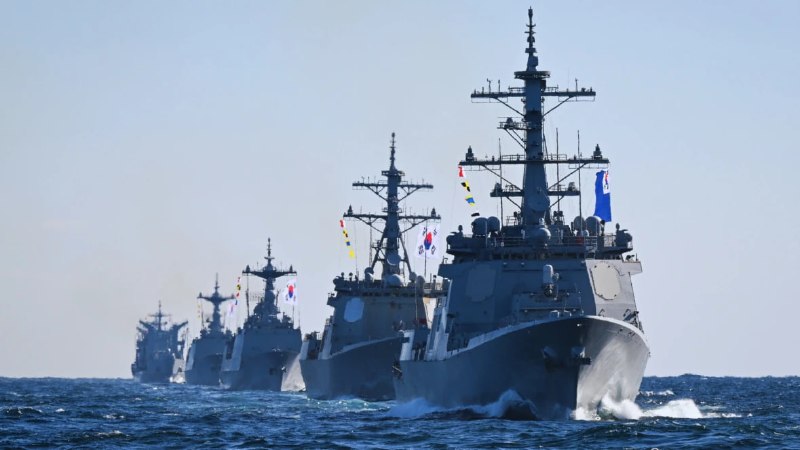
The escalation arrived in pieces, and the pieces do not fit together neatly. In the early hours of 11 June 2026 (UTC), US Central Command (CENTCOM) confirmed a fresh round of airstrikes on Iran, framed by Washington as a response to what it called "unwarranted and continued aggression" from Tehran. Hours earlier, Iranian forces had said they struck commercial vessels in the Strait of Hormuz after what they described as American provocations in the waterway. The backdrop is a US helicopter shot down over the strait — acknowledged by President Donald Trump, who on 10 June said the United States would "be attacking them and attacking them very hard," per a post on X by @unusual_whales timestamped 16:11 UTC that day. Each statement feeds the next, and the corridor that carries roughly a fifth of the world's seaborne oil sits at the centre of it.
What is unfolding is not a contained exchange. It is a direct kinetic contest between the United States and Iran on one of the most economically consequential stretches of water on the planet, conducted in the same news cycle in which US consumer prices rose at their fastest annual rate in three years. The two facts are connected: a sustained closure or even a serious threat to the strait would push crude sharply higher, feed that inflation further, and force a domestic political reckoning inside an administration that has so far insisted price pressures are transient and even welcome. The political risk and the strategic risk have stopped being separable problems.
What was said, and by whom
CENTCOM's 01:38 UTC statement, carried by BBC News, framed the latest strikes as retaliatory: the US was responding to "unwarranted and continued aggression" from Iran. The same bulletin reported that Iran claimed it had struck ships in the Strait of Hormuz, a claim that, if substantiated, would mark a sharp escalation from the pattern of harassment and drone activity that has characterised Iranian behaviour in the waterway for years. Iranian state-aligned outlets have framed the strikes as defensive and as a direct response to US actions at sea; Western wires have carried Tehran's claims with the same sourcing caveats applied to any combatant statement, neither endorsed nor dismissed.
President Trump's posture, as relayed via @unusual_whales on 10 June at 16:11 UTC, was unusually explicit: the US would continue bombing Iran "very hard" following the downing of a US helicopter over the strait. The phrasing matters. It is not the language of a calibrated de-escalation; it is the language of a president publicly committing to a sustained campaign. Within roughly nine hours, that posture had been operationalised in the CENTCOM strikes.
The domestic backdrop: inflation as a war variable
The second story of the cycle, also timestamped 01:38 UTC, is not military but economic. BBC News reported that US consumer prices rose at their fastest pace in three years, and that President Trump, in remarks to reporters, said he "loves the inflation." The line, characteristically elliptical, is best read not as a celebration of price rises but as a deflection — an attempt to reframe a politically toxic data point as evidence of economic strength. Either reading is consequential. If Trump genuinely believes rising prices are a positive signal, the political permission structure for sustained military action is broader than markets have assumed, because the administration has internalised the cost. If he is performing indifference, the gap between White House rhetoric and household budgets is widening faster than the Federal Reserve can close it.
Either way, the political ceiling on a long Iran campaign is lower than the rhetoric suggests. US gasoline prices respond to Brent and WTI within weeks; any sustained move in crude from a Hormuz disruption would land at the pump during a period when voters are already registering the cost in their grocery bills. The administration is, in effect, fighting a war of choice while a domestic cost-of-living crisis is the dominant backdrop — a configuration that historically narrows the window for any operation that does not produce quick, visible results.
Why the Strait of Hormuz is the structural fault line
The strait is narrow — roughly 33 nautical miles at its choke point — and disproportionately consequential. A meaningful share of global seaborne crude and a significant fraction of LNG transit through it. Iran does not need to close the strait to weaponise it; the credible threat of closure, or a series of attacks on individual tankers, is enough to push insurance rates up and force shippers to reroute around the Cape of Good Hope, lengthening voyages and tightening supply. The market does not wait for an actual closure. The premium is paid on the risk.
This is the structural frame that the wire headlines do not always make explicit. The US and Iran are not simply trading blows; they are negotiating, by force, the price of energy security in a corridor whose physical geography gives a determined defender leverage that no carrier strike group can fully neutralise. Iran's strategy in the strait for two decades has been to make transit costly without provoking a full-scale response. The downing of a US helicopter and Iran's claim of strikes on shipping suggest Tehran has judged that the threshold has shifted, and that the cost of escalation is now worth paying. The CENTCOM strikes suggest Washington has made the inverse calculation.
The counter-narrative, and why it does not hold yet
There is a read of the cycle in which the rhetoric outruns the reality. Iranian claims of striking ships are not independently verified in the available reporting; the helicopter shootdown is confirmed by the US president but not by CENTCOM in the materials we have. It is possible that the exchange is narrower than the headlines imply — that both sides are performing escalation for domestic audiences (Trump for a base that wants strength; Tehran for a public wearied by sanctions and isolation) without yet having crossed into a war of sustained attrition.
The reason that counter-narrative is incomplete is the sequence. An Iranian claim of shipping strikes, followed within hours by a CENTCOM strike package, followed by an explicit presidential commitment to continue bombing "very hard," is not the cadence of managed tension. It is the cadence of a spiral that is still tightening. The question is not whether either side wanted this round; the question is what de-escalation looks like from here, and neither side has yet articulated one.
What the sources do not resolve
The available reporting leaves several things genuinely uncertain. The number of vessels struck in the strait, their flags, and the extent of damage are not specified. The nationality and circumstances of the downed US helicopter crew — whether there are casualties — are not in the materials we have. The size and target set of the CENTCOM strikes is described in general terms but not enumerated. Iran's specific losses, if any, are not addressed in the wire reporting. These gaps are not editorial failures of the wires; they are the fog of the first hours of an active exchange. The picture will sharpen, and what it shows will determine whether this reads in the history books as a contained cycle or the opening of a longer war.
Stakes, in plain terms
If the trajectory continues, three sets of actors absorb the costs first: oil importers outside the Gulf, who see the supply premium rise; consumers in the US and Europe, who meet that premium at the pump and in utility bills; and the Iranian and American publics, who carry the human cost of any sustained bombing campaign. The beneficiaries, in the short term, are oil producers with spare capacity outside the strait — a map that does not include Iran — and, more durably, the political coalitions in Washington and Tehran that profit from the perception of resolve. The structural shift, if the strait becomes reliably contested, is a re-rating of energy security risk across the global economy, with the heaviest burden falling on import-dependent emerging markets that have no fiscal space to absorb a sustained price shock.
The administration's political room to continue depends on whether the inflation line — the one Trump says he loves — breaks the right way soon enough to fund a longer fight. The markets' room to absorb a shock is constrained by the same data point. Iran's room to escalate is constrained by a military balance that still favours the US, but only at a cost the American public has not yet been asked to price in. The next 72 hours will tell which of these constraints binds first.
— Monexus framed this as a single story, not two. Wire desks largely split the military and inflation lines across different beats; the analytical point is that they are the same beat, and the corridor is the hinge.
Wire provenance
This editorial synthesis draws on the following public wire/social posts:
- https://t.me/BBCWorldoffl
- https://t.me/BBCWorldoffl