Strikes on the Gulf: What the Sirik and Bushehr Reports Actually Tell Us
Four overnight posts from open-source intelligence channels point to a new US strike package against southern Iran. The reporting is consistent, the sourcing is thin, and the consequences are not.
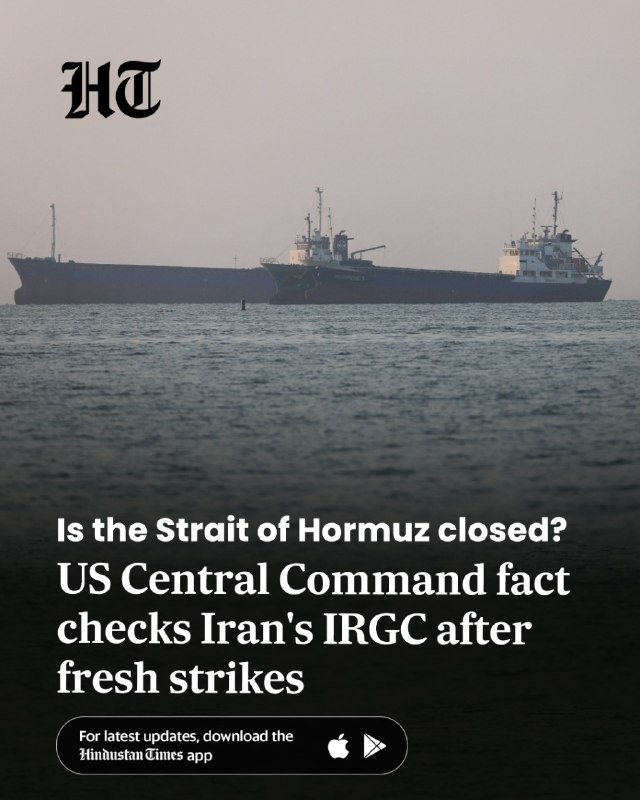
In the small hours of 11 June 2026, four open-source intelligence accounts posted, within roughly an hour of each other, that the United States had struck targets in southern Iran. The geography was consistent across the posts: the coastal area around Sirik, in Hormozgan province; the Dashti heights in the Bushehr region; and what one account described as the vicinity of Bushehr itself. None of the four posts carried official confirmation from Washington or Tehran. All four came from accounts that specialise in tracking strikes, flight activity and conflict geography rather than from wire correspondents on the ground.
The pattern matters more than any single post. When four independent trackers converge on the same coordinates inside a tight window, the signal is real even if the noise around it is loud. What remains unclear is the scope, the target set, and the political authorisation — and those are exactly the details that will determine whether this is a calibrated continuation of an existing campaign or the opening move of a wider one.
What the trackers are saying
The earliest of the four posts, timestamped 22:22 UTC on 10 June, located the activity in the Dashti heights of the Bushehr region, a mountainous stretch of coast running south of the city of Bushehr and the Bushehr Nuclear Power Plant. Five minutes later, a second account placed strikes on the coastal area of Sirik and the vicinity of Bushehr. A third, at 00:20 UTC on 11 June, reported two explosions near Sirik. A fourth, at 00:26 UTC, framed the activity in explicitly bilateral terms — new US strikes on Iran — without naming the target set.
Read together, the posts describe at least two geographic clusters: one around Sirik, a small port town on the Strait of Hormuz that has appeared in previous strike tracking, and a broader one across the Bushehr coast, which hosts both the Russian-built Bushehr Nuclear Power Plant and a substantial conventional military presence. The first cluster is consistent with a continuing pattern of pressure on Iran's asymmetric naval and fast-attack capabilities in the strait. The second is harder to read without naming a specific facility, and none of the four posts does so.
What the trackers are not saying
Equally notable is the silence. There is no casualty count, no Iranian state-media confirmation, no Pentagon readout, no reference to a specific weapons system, no identification of a specific IRGC or regular-army installation. The posts describe effects — explosions, strike packages, geographic coordinates — without describing causes. In open-source tracking, that asymmetry is normal in the first hours of a strike cycle: effects are visible on flight trackers, on social media, and on satellite imagery well before the political and military principals on either side confirm them.
It also means the dominant frame right now is the trackers' frame. The reporters who dominate the news cycle on a US-Iran strike are the ones who post first and post often. That produces a real-time picture that is often accurate on coordinates and often thin on intent, and it leaves the interpretive work — what was struck, why, and what comes next — to whoever speaks loudest in the hours that follow.
The structural backdrop
A strike package against southern Iran does not occur in a vacuum. The Strait of Hormuz carries a disproportionate share of seaborne crude, and any sustained disruption there moves oil benchmarks within minutes. Sirik sits inside that strait; Bushehr sits on the Gulf coast just to the northwest. A campaign aimed at the asymmetric naval assets that threaten commercial traffic looks different from a campaign aimed at the nuclear complex. The geography reported overnight is more consistent with the first than the second.
That distinction matters for the global economy. Targeting IRGC fast boats, anti-ship missile batteries, and mine-laying capacity narrows the operational risk to shipping and lifts insurance premia but does not necessarily close the strait. Targeting the nuclear complex changes the question entirely — from deterrence and containment to regime strategy, with consequences for non-proliferation diplomacy across the wider Middle East. The sources available at publication do not let this publication distinguish between the two.
What we do not yet know, and what to watch for
Three things will clarify the picture in the next 24 to 48 hours. First, a US official readout — Pentagon, Central Command, or White House — naming the target set and the legal authority. Second, an Iranian response, whether rhetorical from the foreign ministry or operational from the IRGC, that signals how Tehran intends to calibrate escalation. Third, a market reaction beyond the initial move: sustained Brent crude action above a clear threshold, or a quiet return to pre-strike levels, will tell traders what they think the operational risk actually is.
Until then, the responsible read is narrow. Coordinates have been reported and they triangulate. Intent, scale and consequence remain underdetermined. The pattern of strikes on southern Iran is consistent with a continuing pressure campaign along the Gulf coast; it is not yet evidence of a strategic escalation. The difference between those two readings is the difference between a manageable crisis and one that redraws the region's risk map.
This publication treats the four open-source posts as a coherent first-pass signal on coordinates and timing, not as confirmed reporting on targets or intent. Confirmation will be issued as wire outlets publish and as official readouts emerge.
Wire provenance
This editorial synthesis draws on the following public wire/social posts:
- https://t.me/Middle_East_Spectator
- https://t.me/GeoPWatch
- https://t.me/AMK_Mapping
- https://t.me/rnintel
- https://en.wikipedia.org/wiki/Strait_of_Hormuz
Follow the event.
These dated source records provide context. They do not retrospectively verify this archive article.
Separate what the nuclear watchdog reported from what it could not determine after the June 2025 strikes.