Trump Floats Public Stake in AI Giants as Oracle Dips on $20bn Raise and Hormuz Crisis Deepens
A presidential pitch for a US citizen stake in AI companies, a $20bn Oracle capital raise that punished the share price, and a widening Hormuz crisis collided in a single 24-hour window — exposing the gap between Washington's AI industrial policy and the cost of keeping the energy it runs on flowing.
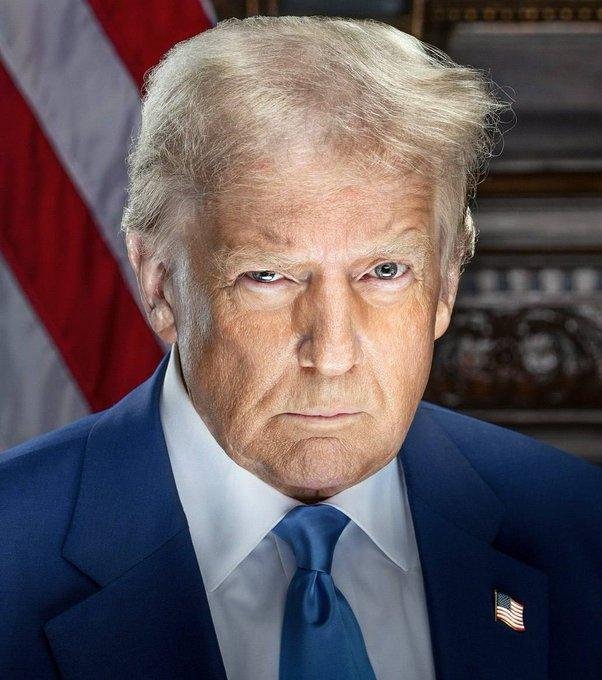
In the space of roughly twelve hours on 10–11 June 2026, the Trump administration sketched out three of the most consequential economic claims of its second term, each pointing in a different direction. At 02:29 UTC on 11 June, Cointelegraph reported that President Donald Trump had announced he would "soon meet with top AI executives to discuss giving Americans a stake in AI companies' wealth," telling supporters, "If we do that, the public will become very rich." At 21:15 UTC the previous evening, the same wire had logged a 7% after-hours drop in Oracle shares, even as the company beat earnings and revenue estimates, after disclosing plans to raise an additional $20bn to fund AI expansion. And at 18:05 UTC, Trump claimed U.S. military operations had shepherded more than 100 million barrels of oil and over 200 commercial ships safely through the Strait of Hormuz — a boast that sat uneasily with his own earlier statement, carried at 16:11 UTC by Unusual Whales, that he would "continue bombing Iran 'very hard'" after Tehran shot down a U.S. helicopter over the same waterway.
The thread binding the three announcements is the unresolved cost of running the AI economy. Washington wants public participation in the upside of artificial intelligence; Wall Street is repricing the capital intensity required to build it; and the U.S. military is being asked to keep the energy — and the undersea fibre, the rare-earth shipments, the Gulf hydrocarbons — flowing into the data centres that will host the model. Each announcement, taken alone, sounds like a discrete policy beat. Read together, they describe an industrial bargain in formation, one in which the American state, the American household, and the American energy-supply chain are being asked to underwrite the same bet in three different currencies.
The pitch: a sovereign-wealth model for AI
Trump's proposal to give Americans a direct equity-style claim on AI companies does not yet have a name, an instrument, or a statutory vehicle. The Cointelegraph item describes it as a meeting the president says he will convene with unnamed "top AI executives," in language that fuses two distinct policy traditions. The first is the Alaska Permanent Fund model, in which a share of state resource revenues is distributed to residents as a dividend. The second is the sovereign-wealth-fund model pioneered by Norway and the Gulf states, in which a nation accumulates equity in productive assets on behalf of its citizens.
The combination is unusual because the assets in question are not state-owned resources but private corporations. That raises a series of questions the announcement does not answer: whether the mechanism would be a direct distribution of shares, a fund into which companies would be required to contribute equity, a tax-and-rebate scheme, or a vehicle financed by federal borrowing. The president has not, on the evidence available in the source items, named the mechanism, the agencies that would administer it, or the legislative pathway. Cointelegraph's report is restricted to the campaign-style framing: meet executives, give the public a stake, watch them get rich. The political economy of the proposal is therefore the politics of the photo opportunity, not the regulatory architecture. That matters, because the markets read the gap.
The market verdict: Oracle's $20bn ask
Oracle's reaction is the most concrete data point in the bundle. According to Cointelegraph's report at 21:15 UTC on 10 June, Oracle shares fell 7% in after-hours trading despite the company beating earnings and revenue expectations, on the news that it intends to raise an additional $20bn to fund AI expansion. The move is a clean illustration of the cost-of-capital regime the AI build-out now operates inside. A beat on the top and bottom lines — the traditional reward signal in U.S. equity markets — was insufficient to offset the dilution arithmetic of a $20bn secondary raise.
The market is, in effect, repricing AI capex. Investors are no longer rewarding the promise of large model deployment on the implicit assumption that hyperscale capital expenditure will compound into free cash flow; they are demanding a clearer path from token economics to operating margin. A 7% after-hours decline on a $20bn raise is also a signal about the depth of the capital pool. The same equities that the president wants ordinary Americans to own are, in the next breath, asking the same ordinary Americans — through their pension funds, their 401(k)s, and their index trackers — to absorb an additional $20bn of equity issuance at a discount to the prevailing price. The two policies are not necessarily contradictory, but they sit on a spectrum of risk allocation that the administration has yet to articulate.
The energy bill: Hormuz as an AI input
The third leg of the story is the one with the shortest fuse. Trump's claim, reported by Cointelegraph at 18:05 UTC on 10 June, that U.S. military operations had enabled the safe transit of more than 100 million barrels of oil and over 200 commercial ships through the Strait of Hormuz is, on its face, a triumphalist framing of a crisis. The contradiction is on the same wire. At 16:11 UTC, Unusual Whales reported the president saying he would "continue bombing Iran 'very hard'" after Iranian forces shot down a U.S. helicopter over the strait. The framing is that the strait is open because the U.S. Navy is imposing a cost; the underlying fact is that the strait is contested because Iran has demonstrated the ability to close segments of it.
For AI economics, this is not a foreign-policy sidebar. A non-trivial share of the marginal energy that will power U.S. and Gulf data centre build-outs in 2026 and 2027 is priced off Middle East crude and LNG flows. A sustained disruption to Hormuz transit — even a partial one that does not block the waterway but lengthens voyage times and raises insurance premia — flows directly into the operating cost of every model served from a Gulf-adjacent facility. The market read of the 10 June sequence is therefore the correct one: a 7% after-hours move in Oracle is the equity market's quiet acknowledgement that the AI capex curve cannot be planned in isolation from the energy-supply curve. The president's pitch that the public should own a slice of AI is, in this light, a proposal to share the upside of an industry whose marginal cost is being set, in part, by the U.S. military's posture off the Iranian coast.
What the three announcements do not say
Several material questions are unanswered in the available reporting. The Cointelegraph item on the public-stake proposal does not name the AI executives the president intends to meet, the date of the meeting, or the specific mechanism under discussion. The Oracle item cites the size of the raise ($20bn) and the share-price reaction (down 7% after-hours) but does not detail the form of the issuance or the identity of the lead underwriters. The Hormuz item quotes a figure (100 million barrels, 200 ships) attributed to the president without an independent operational tally. The Unusual Whales report of the helicopter shootdown does not, in the available text, specify the type of aircraft, the circumstances of the engagement, or the casualty status of its crew.
The press of the 24-hour window is itself the story. A presidential pitch that asks the public to underwrite AI, a $20bn capital raise that asks the public to underwrite AI, and a kinetic military operation that asks the public to underwrite the energy that powers AI all arrived in the same news cycle. The connective tissue is implicit. Whoever ends up owning the equity — whether through a sovereign-style fund, a direct distribution, or simply by absorbing more secondary issuance through index funds — will also, in effect, be underwriting the security guarantee that keeps the kilowatt-hours flowing into the model. That is the deal on the table. It has not yet been written down.
Wire provenance
This editorial synthesis draws on the following public wire/social posts:
- https://t.me/s/cointelegraph
- https://t.me/s/cointelegraph
- https://t.me/s/cointelegraph
- https://t.me/s/unusual_whales
- https://t.me/s/cointelegraph