Trump pulls back from Iran strike, claims framework for talks approved on both sides
At 17:48 UTC on 11 June 2026, Donald Trump announced he had cancelled strikes on Iran scheduled for that evening, citing approval of a negotiating framework at the highest level of Iranian leadership. The post reads less as a de-escalation than as a tactical pause — the war machine deferred, not disarmed.
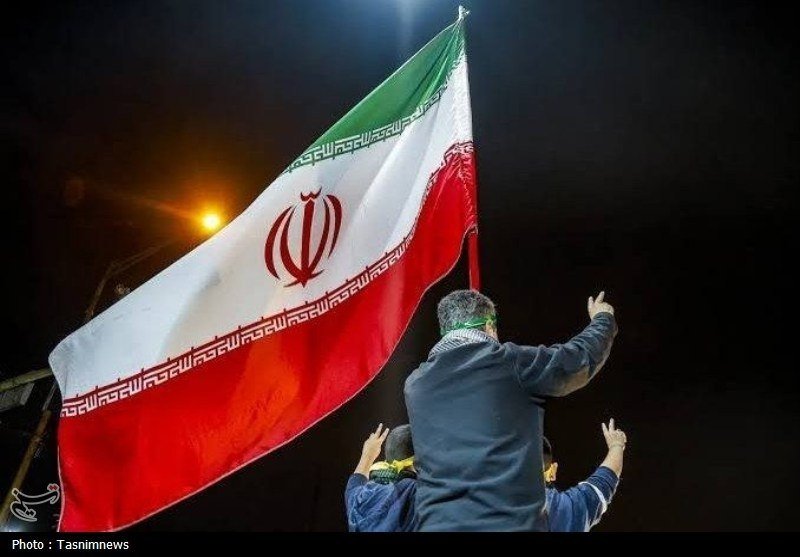
At 17:48 UTC on 11 June 2026, U.S. President Donald Trump announced on his Truth Social platform that he had cancelled military strikes against Iran that had been scheduled for later that same evening. The stated reason, in his words, was that "discussions with the Islamic Republic of Iran have been brought to the highest level of Iranian leadership and approved" — language carefully constructed to suggest not a pause under pressure but a concession extracted by an American president. The strike package, by Trump's own account, was loaded, sequenced, and ready to fire. He chose not to pull the trigger.
The announcement amounts to a tactical de-escalation framed as a diplomatic victory. The question for the next 72 hours is whether the framework Trump referenced is a real document, with named points and reciprocal obligations, or a verbal scaffold erected in the gap between the targeting cycle and the launch order. Iranian state-aligned outlets, including PressTV, immediately amplified the claim as a U.S. climb-down, while Western-allied channels treated the same words as an opening bid. Both reads cannot be right. One will be.
What was actually cancelled
Reuters reported at 17:48 UTC, in the same news cycle as Trump's post, that the President "said he canceled strikes against Iran that had been scheduled for later today." That is the only concrete operational fact in the public record: ordnance that was going to fly tonight, will not. The Middle East Spectator's Telegram channel, an aggregator that lifts from U.S. and Israeli media, framed the announcement as Trump "no longer going to bomb Iran tonight" and noted a parallel claim that "a framework for negotiations with Iran has been approved by both sides." Status-6, a war-and-military-news channel, carried the same text almost verbatim, underscoring how narrow the sourcing base remains — a single presidential statement, paraphrased downstream.
What the public record does not yet show: the contents of the framework, the name of the Iranian counterpart who allegedly approved it, the strikes that were on the targeting list, or the military assets that had been readied. Trump's language — "the highest level of Iranian leadership" — is conspicuously impersonal. It does not name Ayatollah Khamenei, does not name Foreign Minister Abbas Araghchi, and does not name Masoud Pezeshkian. That absence is itself a tell. A confirmed deal, even a framework, would normally be paired with at least one named interlocutor, lest the credit be contested.
The Iranian read
Iranian state media moved faster than the Western wire to claim the outcome. PressTV, the English-language arm of the Islamic Republic's broadcasting establishment, ran the headline that Trump "claims to have called off the planned strikes" — note the verb "claims," which is not a translation artefact. It is an editorial choice, signalling that Tehran regards the announcement as a contested statement, not an agreed fact. The framing matters: in Tehran's telling, the U.S. prepared to attack, Iran held firm, the strikes were called off, and the Islamic Republic enters any talks from a position of demonstrated deterrence. That read is structurally convenient and not, on the available evidence, falsifiable.
What is harder to square is the symmetry PressTV implies. If a framework has been "approved by both sides," as Trump's own statement asserts, then the Iranian state would have a strong interest in owning that approval publicly — to validate the deterrence narrative and to lock the U.S. into a negotiating track that constrains Israeli options. The relative silence from the Iranian foreign ministry in the first hour after the post, as represented in the Telegram cluster, is more consistent with Iran's leadership wanting to read the U.S. text cold before endorsing it than with a deal already concluded.
The structural read
Strip the rhetoric and the move looks familiar. A U.S. president stages a maximum-pressure posture, builds the visible architecture of war — carrier movement, B-2 forward deployment, public rhetoric about red lines — and then converts that posture into a negotiating chip at the moment of maximum leverage. The pattern is not new. It is the same playbook that produced the 2018 Singapore summit with North Korea, the 2020 Abraham Accords moment, and the May 2025 turn with Tehran that briefly raised expectations before they collapsed. In each case, the war machine was readied publicly and deferred privately. The deferral is the diplomacy. The readiness is what makes the deferral legible as a concession rather than a defeat.
The risk on the Iranian side is that this same architecture, reversed, has been used against Tehran before. U.S. talks have collapsed twice in five years — in 2019 after the Soleimani strike, and in 2023 over the JCPOA's revival path. Each collapse was preceded by an American statement that a framework had been "approved." Tehran has been here. It knows the value of an American concession made in a Truth Social post, in the hour before a strike package lands, and it knows how quickly the political weather in Washington can reverse that concession.
What the sources disagree on
The Telegram cluster that surfaced this story is unusually thin for an event of this weight. There is no on-the-record comment from the Iranian foreign ministry, no Pentagon background briefing, no read-out from a Gulf intermediary, no Israeli cabinet statement, no IAEA confirmation. The Reuters wire, the single most authoritative source in the cluster, carries only the bare claim that Trump said the strikes were off. PressTV's framing of "claims" and the Middle East Spectator's "framework approved by both sides" are not independent corroborations — they are restatements of the same American sentence. The most that can be said with confidence on the available record is that a U.S. strike planned for the evening of 11 June 2026 did not launch, and that the President attributed the cancellation to Iranian approval of a negotiating framework whose contents have not been disclosed.
That is also the source of the danger. A framework that is real will, in the next 48 hours, produce a named Iranian counterpart, a leaked set of bullet points, and a third-party verification from Oman, Qatar, or Switzerland — the three channels that have historically carried U.S.-Iran traffic. A framework that is rhetorical will produce silence, then a new American demand, then a return to the targeting cycle. The Telegram cluster does not yet let a reader tell the two apart. Anyone who tells you otherwise is selling certainty the wire does not have.
Stakes
For Tehran, a confirmed framework would be the first formal U.S.-Iran diplomatic architecture since the collapse of the 2015 nuclear deal's revival talks — a path to sanctions relief, frozen assets, and a measurable cap on enrichment. For Washington, it is a way to defer a military confrontation that the U.S. defence establishment has not, on the public record, been preparing the logistical depth to sustain. For Israel, whose government has not been named in the available sources, the calculus is whether an American framework leaves room for an Israeli strike on Iranian nuclear infrastructure — a question the public Telegram cluster does not answer. For oil markets, the absence of a strike is a near-term floor under the price; the presence of a real framework is a ceiling. The next 72 hours will tell which of those binds first.
This article draws on the Telegram-cluster wire feed for 11 June 2026. Where the available sources carry only the American side of the announcement, the piece says so; the Iranian foreign ministry's own read-out, the Pentagon's posture statement, and any third-party verification from Gulf intermediaries were not yet in the public record at time of filing.
Wire provenance
This editorial synthesis draws on the following public wire/social posts:
- https://t.me/Middle_East_Spectator
- https://t.me/presstv
- https://t.me/osintlive
- https://t.me/GeoPWatch
- https://t.me/wfwitness
Follow the event.
These dated source records provide context. They do not retrospectively verify this archive article.
Separate what the nuclear watchdog reported from what it could not determine after the June 2025 strikes.