Trump cancels evening strikes on Iran as deal appears near, blockade holds
On the evening of 11 June 2026, US President Donald Trump called off strikes he had earlier announced against Iran, citing progress on a written agreement, while a US naval blockade remained in place pending signature.
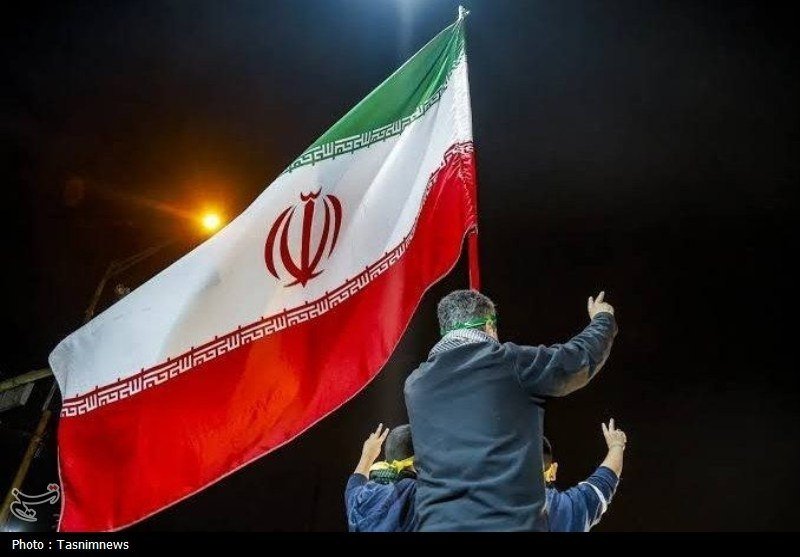
At 18:25 UTC on 11 June 2026, multiple outlets reported that US President Donald Trump had announced the cancellation of strikes against Iran that he had publicly telegraphed earlier in the day, citing what he described as an approved framework agreement with Tehran. Reporting from the X account @sprinterpress, from the Telegram channel englishabuali, and from the Telegram relay of The Epoch Times all converged on the same core fact: the air action was off, and a written deal was the stated reason. A separate Iranian state-media feed, PressTV, framed the same episode as a US climb-down, with Trump "claiming" to have called off the strikes after the "final points" of an agreement were approved. The blockade of Iranian shipping, by contrast, remained in force until the agreement is formally signed, according to englishabuali.
The episode compresses several weeks of escalation into a single evening. Trump had announced, earlier in the day, that US forces would strike Iranian targets that night; by the early evening, that posture was reversed. The official explanation — progress on a deal — leaves the underlying military capability intact and the naval interdiction unchanged, two facts that sit in tension with the language of cancellation.
What was announced, and what was not
The cancellation, as reported across the four source feeds, is narrowly defined. Trump called off the evening strikes; he did not call off the broader coercion campaign. englishabuali's report is explicit that "the blockade will remain in effect until the agreement is signed," meaning the lever most likely to bring Iran back to the table is being held in reserve. The Epoch Times' Telegram relay, in turn, characterised the move as a deferral rather than a reversal: Trump "called off his planned evening strikes against Iran as a deal appears to be near."
The PressTV framing went further. The Iranian state outlet described the episode as a unilateral US cancellation following Iranian approval of "the final points of an agreement," a sequence that puts Tehran, not Washington, in the position of having consented to a final text. The reading is not implausible: in a deal driven by Iranian acceptance of a US-drafted framework, the moment of consent is technically Iranian. The framing, however, inverts the underlying power asymmetry — a US naval blockade remains operational — and should be read with that caveat in mind.
The blockade as the binding instrument
A blockade is a slow weapon. It does not produce the visual signature of a strike — no craters, no overnight cable-news loop of intercepts — but it accumulates pressure on the target's balance of payments, on its ability to import refined petroleum, and on its negotiating partners' willingness to maintain trade. The decision to keep the blockade in place while cancelling kinetic action suggests the administration is treating the written agreement as the more valuable objective and the blockade as the more reliable instrument for extracting it.
This is consistent with the pattern visible across earlier US-Iran episodes in which the threat of force and the imposition of economic isolation have been sequenced rather than substituted for one another. The evening's reversal does not unwind that sequence; it adjusts the timing of one component while leaving the other untouched.
The credibility question
The credibility cost of telegraphed-and-cancelled strikes is the more durable consequence. The X account @sprinterpress, in two posts at 18:25 UTC, characterised the reversal as "bluffing and retreating," an editorialising summary that nevertheless captures a structural concern: if a president announces an evening attack, and the attack does not occur, the next announced attack is read against that baseline. Adversaries discount; allies hedge; markets recalibrate the probability of US action downward.
That effect is real but bounded. The same US administration retains the naval instrument, the diplomatic channel, and — unless it has been formally relinquished — the strike option. The evening's reversal is therefore best read not as the abandonment of a coercive posture but as a re-pacing of one. The capacity has not been retired; only the schedule has slipped.
What remains uncertain
The reporting available at 18:25 UTC does not specify the text of the agreement Trump referenced, the parties who negotiated it, the timeline for signature, or the conditions under which the blockade will be lifted. Iranian state media and Western-aligned channels agree on the existence of progress and disagree on who authorised it; the underlying document, if it exists, has not been published in the four feeds this article draws on. The blockade's exact geographic scope, the list of vessels or cargoes affected, and the legal basis under which it is being enforced are likewise not specified in the source material.
What is documented is narrower but consistent: Trump announced strikes, then announced their cancellation, citing an agreement; a naval blockade remains in force pending that agreement's signature. The rest is inference and caveat. Readers should treat tonight's reversal as a pause inside an ongoing campaign, not as the end of one.
This article was filed by Monexus staff and draws on a four-source wire cluster at 18:25 UTC on 11 June 2026. Where Iranian state media and US-allied channels diverged on framing — particularly on which side authorised the deal — both versions are recorded above; the document itself has not been published in the inputs reviewed.
Wire provenance
This editorial synthesis draws on the following public wire/social posts:
- https://x.com/sprinterpress/status/
- https://t.me/englishabuali
- https://t.me/epochtimes
- https://t.me/presstv
Follow the event.
These dated source records provide context. They do not retrospectively verify this archive article.
Separate what the nuclear watchdog reported from what it could not determine after the June 2025 strikes.