Trump's Hormuz 'escort' claim and the diplomacy that may or may not have happened
A presidential phone call, an Iranian state broadcaster calling it a 'pure falsehood,' and an oil chokepoint that does not negotiate with the news cycle.
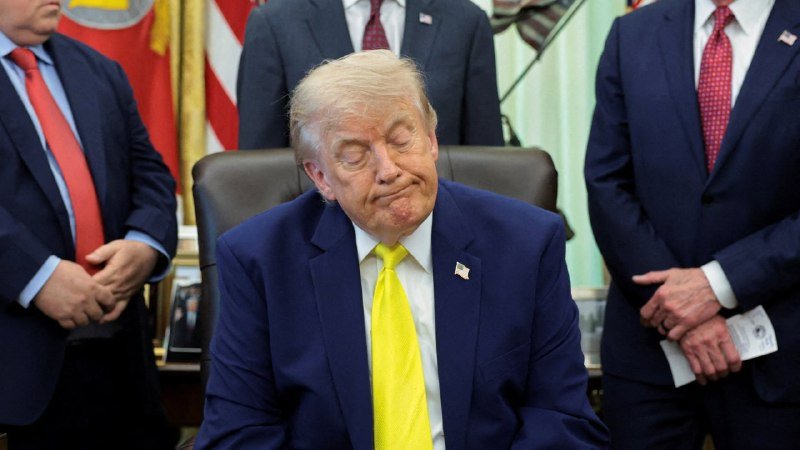
At 23:26 UTC on 10 June 2026, a string of wire dispatches put the United States and Iran back at the centre of the global energy story. President Donald Trump told Fox News that US fighter jets were operating over Iran and that he had spoken directly with Iranian officials, who, he said, "asked for the US attacks to stop, so they will stop soon." Within minutes, Iranian state broadcaster IRIB denied the conversation had taken place, calling the claim a "pure falsehood" (per telegram channels citing IRNA-style attribution).
Strip away the choreography and two claims are in direct contradiction. The White House account says a backchannel produced a de-escalation request from Tehran. The Iranian account says no such call occurred. Both cannot be true in the same register; both can be true in the sense that each side is performing for a different domestic audience. The market question — whether oil tankers will be safely escorted through the Strait of Hormuz, as Trump separately claimed on 10 June — sits downstream of which version the next 48 hours ratify.
A presidential phone call that the other side denies
The pro-Trump account, as relayed across Telegram monitoring channels and Fox News framing, runs like this: direct US-Iranian contact at the highest level, a request from Tehran to halt strikes, and an imminent wind-down. Trump separately called the present moment "the most violated ceasefire in the history of the world," a phrasing that implies a ceasefire that has been repeatedly broken, a notable claim given that no formal US-Iran ceasefire has been publicly signed or verified by a third-party monitor.
The Iranian counter-narrative is the one that will most unsettle oil traders. State media, picking up an unnamed "senior Iranian official," described Trump's claim as fabricated. If Tehran genuinely did not request a halt, the framing of US magnanimity — Washington pulling back in response to a plea — collapses, and so does the implicit timeline for de-escalation. The contradictory statements suggest that if there is diplomacy underway, it is not yet mature enough for either side to acknowledge on the record.
The Hormuz escort claim and what markets will actually price
In a separate exchange also on 10 June, Trump said the US would escort oil through the Strait of Hormuz. The narrowness of the chokepoint — roughly 21 nautical miles wide at its tightest, with shipping funnelled into two-mile-wide lanes in each direction — means that an escort policy is less a military operation than a signalling exercise. About a fifth of the world's traded oil, and close to a third of its liquefied natural gas, transits Hormuz. Even a partial closure, or the credible threat of one, moves the Brent benchmark in single trading sessions.
Al Jazeera's overnight analysis made the point bluntly: an escort promise is not a risk discount. Insurance underwriters price transit risk on the basis of recent incident data, naval posture, and the political relationship between coastal states and the flag state of the escorting vessel — not on the basis of a presidential assurance delivered on cable news. The market can accept that the US Navy has the capacity to run a tanker corridor; it cannot price a guarantee that Iran will tolerate one without further incident.
Why both stories sit inside the same news cycle
There is a pattern here that has nothing to do with Iran and everything to do with how 24-hour diplomacy now travels. A single phone call is reported as a fact by one side, denied as a fact by the other, and the wire infrastructure — Telegram channels, Twitter syndication, Fox News framing, IRIB rebuttals — carries all of it into the same feed in the same hour. The reader is left to assemble a picture that the principals themselves have not agreed on.
This is the new normal for high-stakes crises that pass through a single broadcaster. When both sides want the same thing — a step back from the edge, room to negotiate, an off-ramp that does not look like surrender — they will use a Fox interview and an IRIB denial as parallel tracks. One buys time for Tehran. One buys time for Washington. Neither commits either capital to a position they cannot later disown.
What the next week will tell us
The structural question is whether the contradiction resolves into a deal or into another round. A genuine de-escalation would, within days, produce: a verifiable pause in strikes, a third-party readout (Oman, Qatar, Switzerland have historically carried messages), and a measurable reduction in tanker insurance premia. None of those have appeared in the dispatches available at 23:55 UTC on 10 June 2026. The oil futures curve will be the first honest teller of which version the market believes; the diplomatic cable traffic will be the second.
The Iran file is also, on this evidence, an AI policy file. The same evening, in an unrelated exchange, Trump said he expected AI companies to agree to "giving back" to the public. The two stories share a feature: a single principal making big claims in a single forum, with the cost of those claims paid in a different venue — Gulf chokepoints in one case, capital allocation in the other. The pattern recurs because the format works in a fragmented media environment. It does not, on the evidence so far, produce outcomes that the rest of the wire can verify.
Monexus framed the Fox/IRIB contradiction as the story; the Hormuz escort claim is a separate strand that the markets will price on its own merits.
Wire provenance
This editorial synthesis draws on the following public wire/social posts:
- http://reut.rs/4ey8SJE
- https://t.me/ClashReport
- https://t.me/ClashReport
- https://t.me/AMK_Mapping
- https://t.me/GeoPWatch
- https://t.me/rnintel
- https://t.me/Middle_East_Spectator
- https://t.me/wfwitness