Trump on Iran: bigger bombs, no deal, and the limits of theatrical escalation
As US bombs resume over Iran, the president's televised escalations are outrunning the policy that would have to follow them. The strategic ambiguity is now the strategy.
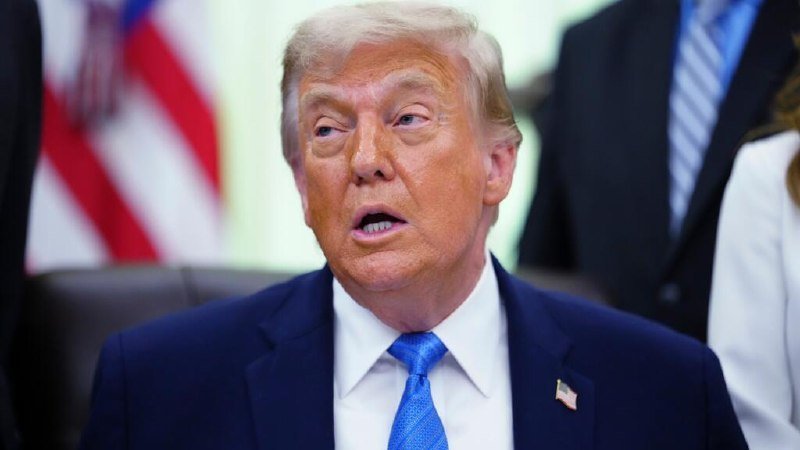
The escalation, on the White House's own terms, has just begun. At roughly 14:09 UTC on 11 June 2026, US President Donald Trump told Fox News that further strikes on Iran "will be — bigger, bigger, more powerful," and that the United States has already "knocked out" a tranche of targets he did not enumerate on air. A reporter's question minutes earlier, captured on the same pool feed, had pressed the President on whether infrastructure — bridges, power plants — would be next; the President did not disavow the prospect. By the early afternoon UTC, a separate feed from the BRICS News wire had already compressed the line into a four-word summary: Iran "is finished."
Strip away the volume and the picture is more confused than the broadcast suggests. A negotiator who claims the other side is "dying to make a deal" while also promising a heavier bombardment tonight is not running a strategy that ends cleanly. He is running a mood. The risk for Washington — and for everyone who flies through the Strait of Hormuz, refiners from Singapore to Rotterdam, and Iranians who have no say in either capital's choreography — is that the mood becomes the policy.
The theatre of submission
The phrases that travel furthest from the 11 June interview are not policy positions but postures. Iran, Trump said, is "very good at publicity, but they're not good at fighting." The United States, he added, dropped "$250 million of bombs on them last night — they're really in submission."
There is a logic to that framing, and it is worth taking seriously on its own terms. The administration's argument is that maximum kinetic pressure shortens wars: a sharp blow now produces a pliable negotiating partner later. It is the same logic that has animated US coercive diplomacy from Cuba 1962 to the cruise-missile strikes of 1998, and it has a respectable lineage in American statecraft.
But coercion only works when the target reads the threat as bounded and the alternative as worse. A presidency that promises each evening a fresh, larger round of bombing makes the threat unbounded by definition. The same interview in which Trump announced tonight's strikes also refused to rule out bridges and power plants — the kind of dual-use infrastructure whose destruction crosses from coercive signalling into collective punishment. Tehran's incentive, in that case, is not to fold but to wait out an American public whose tolerance for sustained Middle East operations has historically decayed faster than the President's news cycle.
The Iran the interview does not name
Trump's accompanying message to "the Iranian people" — that they are "afraid because they have no guns, and the other side has guns" — flattens a country of roughly 88 million into a tableau of cowering civilians facing a faceless state. That is a useful frame for a domestic US audience. It is not an accurate description of a society that has, by every independent account, sustained mass protest movements against its own rulers in successive waves since 2017, and that absorbed Israeli and US strikes in 2024 and 2025 with neither regime collapse nor a Casablanca-style accommodation.
The structural reality is that Iran's regime has its own coercive toolkit — plainclothes militias, the IRGC, the Basij — and its own survival arithmetic. Treating that regime as a half-step from disintegration, on the evidence of one evening's television, is the kind of forecast that has cost the United States badly in this region before.
Where the escalation actually lands
The most consequential audience for the 11 June performance is not in Tehran. It is in the energy market, in the insurance markets that price Strait of Hormuz transit, and in the Gulf monarchies that have spent two decades hedging between Washington and a nuclear-armed Iran they do not want. Brent crude has historically spiked several dollars per barrel on the kind of headline-tier language the President used today; insurance war-risk premiums for tankers transiting the Strait move on the same news tick.
There is a counter-narrative worth airing: that the President's volatility is itself a negotiating posture, designed to convince Tehran that no deal is available, which in some readings tightens the regime's decision window. Iranian state-aligned outlets have framed the same strikes as a US bid to extract unilateral nuclear concessions in a deteriorating domestic moment for the administration. The two readings are not mutually exclusive, and the markets, more than the cable-news panels, will price both at once.
What the sources do not yet tell us
The 11 June pool feed does not, on the evidence available to this publication, name the targets struck in the previous 24 hours, confirm the dollar value of ordnance used, or specify whether the escalation was coordinated with regional partners whose airspace and basing the campaign depends on. The "$250 million of bombs" figure is the President's own characterisation; independent verification from Pentagon or OSD readouts was not in the materials reviewed for this piece. Iran's official response, in the channels available to Monexus at the time of writing, had not yet been captured at length. The story is, plainly, still moving faster than the paperwork.
That is the real lesson of 11 June 2026. The White House has chosen a cadence of escalation it can deliver in prime time. The harder question — what an Iran that refuses to perform submission looks like a week from now — has not yet been answered, and the President's own remarks do not suggest he has decided.
Monexus has foregrounded the President's own quoted language from the 11 June Fox News pool as primary material, treated Iranian state-aligned framing as a legitimate counter-read, and avoided both the triumphalism of the US cable line and the catastrophism of opposition accounts until the targeting and diplomatic picture firms up.
Wire provenance
This editorial synthesis draws on the following public wire/social posts:
- https://t.me/wfwitness
- https://t.me/wfwitness
- https://t.me/bricsnews
- https://t.me/wfwitness
- https://t.me/wfwitness
- https://t.me/wfwitness
Follow the event.
These dated source records provide context. They do not retrospectively verify this archive article.
Separate what the nuclear watchdog reported from what it could not determine after the June 2025 strikes.