Twelve hours of contradictions: parsing Trump's birthday-week ultimatum to Iran
In a single news cycle the US president told Fox that Israel had no role in strikes on Iran, threatened new bombing within 24 hours, declared the campaign would soon end, and said he loved rising inflation. The contradictions are not gaffes. They are the operating manual.
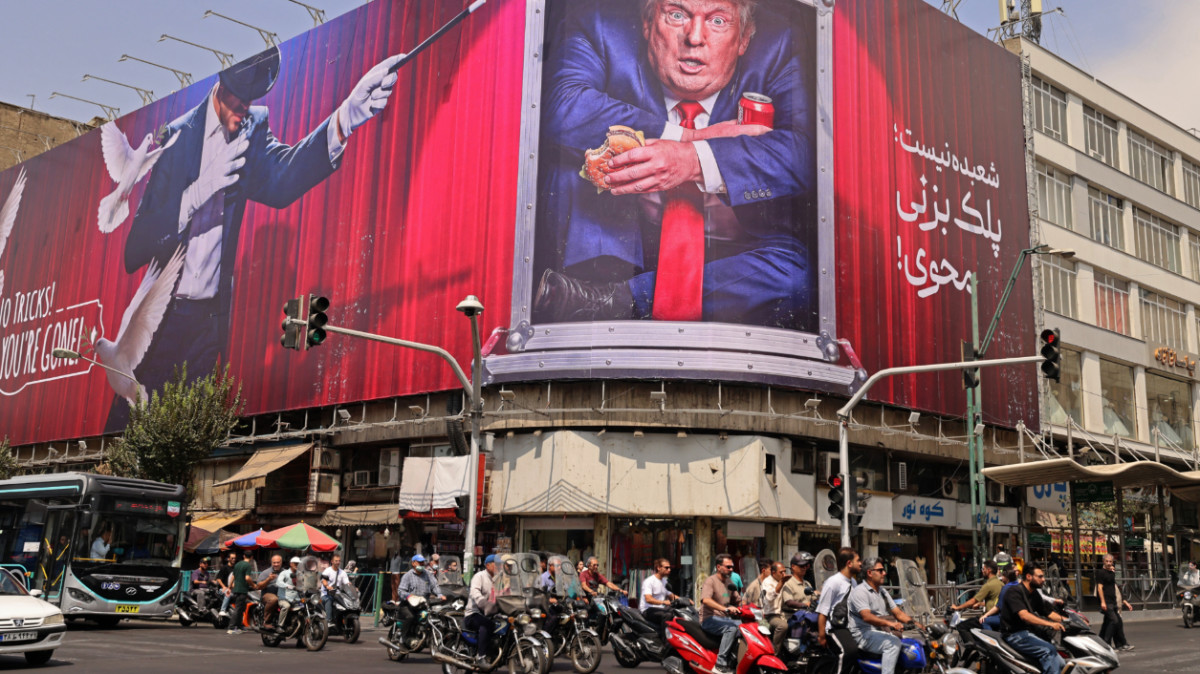
In the twelve hours between 22:31 UTC on 10 June 2026 and the close of his primetime phone interview with Fox News, US President Donald Trump told the American public four things that cannot all be true at once. He told Fox that Israel was not involved in the latest US strikes on Iran. He told the Middle East Spectator feed that, absent a deal, "we'll bomb the shit out of them tomorrow again." He told the X account sprinterpress that "the bombings will soon stop." And he told the White House press pool, in a brief exchange captured by Unusual Whales, that he was not concerned about the morning's inflation print — in fact, that he "love[d] the inflation." On the same day, a Unusual Whales post noted, he told reporters that his birthday wish was "peace for the world."
Taken individually, each statement is newsworthy. Read together, they describe a deliberate posture rather than a series of slips. The contradictions are not gaffes; they are the operating manual. What is being sold, to several audiences simultaneously, is the message that only the president can tell each audience what it most wants to hear — and that the contradictions are the price of admission.
The strike, the denial, and the second strike threat
The triggering event, according to the Telegram channel WarMonitors, was a fresh US air operation against targets inside Iran. Reporting carried on the same channel at 23:32 UTC on 10 June attributes to Trump the statement, made to Fox News, that "Israel is not involved in the attacks." That formulation is doing more work than it appears to. It does not deny coordination, intelligence sharing, basing, or planning assistance — categories of involvement that have been central to the joint US-Israeli campaign against Iran's nuclear and missile infrastructure. It denies only direct participation in the strikes themselves. The narrow framing is consistent with a US administration seeking to preserve deniability while keeping the operational benefits of Israeli technical and intelligence support intact.
Minutes later, at 23:28 UTC, the Telegram channel Middle East Spectator carried a direct quote attributed to Trump: "If they don't make a deal, we'll bomb the shit out of them tomorrow again." The phrasing — "tomorrow again" — locates the threat inside a specific 24-hour window and ties it explicitly to the absence of a diplomatic deal. This is not the language of a campaign winding down. It is the language of an ultimatum with a public expiry time.
The contradiction with the third statement is sharp. At 23:27 UTC, the X account sprinterpress reported Trump as saying "the bombings will soon stop." That formulation also has a narrow reading: "soon" is undefined, and "the bombings" can be parsed as referring to a specific phase of operations rather than the overall campaign. But the public who encounters the two statements within a minute of each other is not being invited into the parsing. They are being asked to hold two incompatible emotional frames at once — relief and dread — and to associate both with the same man.
"I love the inflation" — and what that tells us about the economic backdrop
At 17:51 UTC on the same day, a Unusual Whales post captured a brief exchange between the US president and the White House press pool. A reporter asked whether he was concerned about "the latest inflation number which came out this morning." His answer: "No, I love it. I love the inflation." The post does not specify which release is being referenced, and the US Bureau of Labor Statistics publishes the Consumer Price Index around the middle of each month. The framing of the question — a single morning's number — is consistent with a CPI release earlier in the day, but the underlying figure is not contained in the source material and Monexus will not speculate on the specific print.
The substantive point does not depend on the number. An incumbent president publicly endorsing rising prices is unusual enough to be its own signal. The conventional political economy expectation is that a White House facing an inflation problem will, at minimum, perform concern. Performative concern reassures markets that policy will be tightened, loosened, or otherwise adjusted in a manner that takes the cost of living seriously. By dispensing with that performance, the president is doing something different: he is signalling to his base that the cost of living is not the metric that matters to him, and that voters who treat it as decisive are free to look elsewhere. Whether this is a calculated re-allocation of attention or a momentary expression of fatigue, the effect is the same: the bond between a Republican incumbent and the inflation-anxious suburban voter, which has been a defining tension of his second term, is being allowed to fray in public.
Birthday-week diplomacy as a media format
The Unusual Whales post from 22:31 UTC captures another beat: Trump told reporters that his birthday wish was "peace for the world." The juxtaposition of that line with the ultimatum to Iran, delivered the same evening, is the story. Birthday diplomacy has been a recurring motif of his public communication. It allows the president to position himself as a man whose personal preferences would resolve the world's problems if only the relevant antagonists would cooperate, and to imply that the obstacle lies with them. It is, in the language of media studies, a frame that exculpates the speaker in advance — any failure of peace is by construction the fault of those who refused the gift.
That frame also explains the contradiction structure. The same audience hears the birthday wish and the ultimatum, the "love" of inflation and the threats to Iran, and is implicitly invited to read them as facets of a single negotiating posture rather than as incoherence. The audience in Tehran hears a threat. The audience in Tel Aviv hears a denial of complicity. The audience in the bond market hears a shrug. The audience in the Trump-leaning primary voter hears a man unbowed. None of these audiences is asked to be the same audience.
The structural frame: coercive bargaining in the age of fractured attention
What is taking place, in plain editorial language, is a form of coercive bargaining that is built for a media environment in which no single viewer sees the full sequence. A coherent diplomatic ultimatum would say: here is our demand, here is the deadline, here is the consequence of non-compliance, and here is the off-ramp. The 10 June communication does not do that. It says, simultaneously, that the strikes are happening, that Israel is uninvolved, that more strikes are coming tomorrow, and that the strikes will soon stop. The most plausible reading is that the sequencing is itself the strategy: each statement is calibrated to a different information silo, and the silos are not designed to be reconciled.
This is not without precedent in the public record. The pattern resembles the bargaining tactics that have surfaced periodically in US-Iran negotiations since 2018, in which the threat of force, the offer of talks, and the denial of coordination have all been kept in simultaneous play. What is novel in the current cycle is the speed and the visibility. Twelve hours of contradictory statements, captured by a dense network of Telegram and X channels, can now be distributed, clipped, and re-framed in real time by every interested party. The bargaining is no longer conducted only between capitals. It is conducted, in significant part, between timelines.
For oil markets the operative question is not whether the threats are credible — they are partly credible by design, since even a small probability of a second strike is enough to move Brent — but whether the off-ramp language will be honoured if a deal is reached. Investors who position for de-escalation are betting that "the bombings will soon stop" will be the line that ages well. Investors who position for escalation are betting that "we'll bomb the shit out of them tomorrow again" is the line that matters. The bid-ask spread on that bet is the new geopolitics.
Stakes: who wins and who loses if the contradictions persist
If the contradictions persist and no deal materialises, the clearest losers are Iranian civilians, who absorb the material consequences of any renewed air campaign, and the US taxpayer, who absorbs the fiscal cost of an indefinite posture in the Gulf. The clearest winners are the defense primes and the energy majors with exposure to a sustained risk premium on crude — a windfall that does not require the strikes to actually escalate, only for the market to believe they might.
If a deal is reached, the winners are the diplomatic factions inside both the Iranian system and the US national security establishment, both of which need a face-saving formula to step back from the brink. The losers are the harder-line constituencies on each side, who lose a grievance that has been useful for mobilisation. The market position that ages best in that scenario is one that was built on the assumption that "soon" is a meaningful word, that "tomorrow again" was contingent on a missing deal, and that the president prefers a closed chapter to an open wound.
The plausible alternative read of the facts is that the contradictions are not strategic at all but rather the product of an undisciplined communications environment in which the president speaks to whoever is in front of him and his staff are left to reconcile the statements afterwards. Monexus finds that reading less convincing on the available evidence, because the statements are sequenced with an attention to audience and timing that is hard to attribute to improvisation alone. But the evidence does not foreclose it. The pattern, on a single day, of a denial of Israeli involvement, a 24-hour ultimatum, a promise of imminent cessation, and an endorsement of inflation is too dense to be accidental. Whether it is designed or merely permitted is a question the public record, as represented in the source material, does not answer.
What remains uncertain, and what this article cannot resolve, is the substance of the deal that would cause the bombings to "soon stop." The source material reports only the threat and the denial, not the underlying terms. Nor does the available reporting specify the scale of the latest air operation, the targets hit, or the casualty figures — figures which, if the pattern of past US-Iran confrontations holds, will be disputed for weeks after the event. Monexus will not import numbers that the source items do not contain. For now, the most accurate description of the situation is also the simplest: on 10 June 2026, in a span of hours, the US president told the world four incompatible things about Iran, about Israel, about inflation, and about peace, and the next twenty-four hours will tell the world which of the four he meant.
Desk note: Monexus frames this as a study in simultaneous multi-audience bargaining, not as a personality profile. Where wire coverage is likely to lead with the most inflammatory quote in isolation, the publication's task is to hold the four statements next to each other and let the structural pattern do the work.
Wire provenance
This editorial synthesis draws on the following public wire/social posts:
- https://t.me/WarMonitors
- https://t.me/Middle_East_Spectator
- https://www.bls.gov/cpi/
- https://en.wikipedia.org/wiki/2025%E2%80%932026_Iran%E2%80%93United_States_relations
Follow the event.
These dated source records provide context. They do not retrospectively verify this archive article.
Separate what the nuclear watchdog reported from what it could not determine after the June 2025 strikes.