Trump says Iran deal is approved. Tehran says it isn't. The blockade stays.
On the evening of 11 June 2026, the US President claimed Iran had approved a memorandum of understanding; Iranian state-linked outlets within minutes said no text had been agreed. The gap between those two accounts is the story.
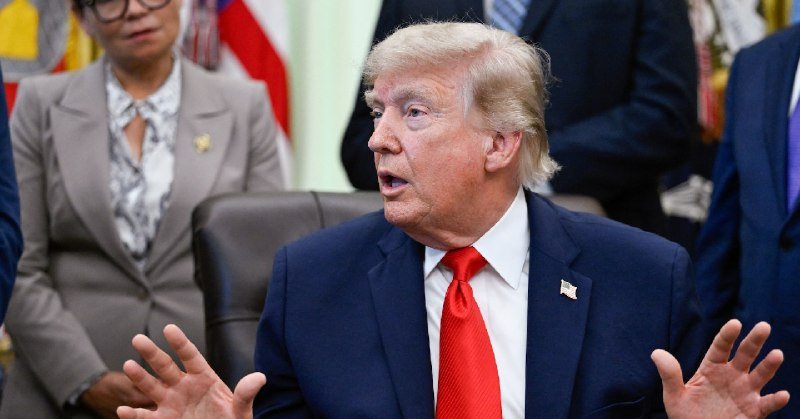
At 18:02 UTC on 11 June 2026, a short statement attributed to the US President began circulating on Telegram channels: because discussions with the Islamic Republic of Iran had been brought to the highest level of Iranian leadership and approved, strikes planned for that night would be called off. Within twenty minutes, an account identifying itself as Abu Ali Express had posted a longer version of the same message, adding that a maritime blockade would remain in force until the agreement was signed in full. By 18:28 UTC, the Iranian outlet Fars News was reporting the opposite: no text had been approved by Tehran, and the President's claim that the Islamic Republic had agreed to a final memorandum of understanding did not reflect the state of play. The blockade stayed. The strikes did not happen. The agreement, on the public record, did not exist.
The substantive question is not who blinked first. It is whether a deal was ever on the table, or whether one side has been performing the choreography of a deal for an audience that includes oil markets, Gulf neighbours, and an Israeli government that has spent the last forty-eight hours demanding clarity. Monexus finds that, as of 18:31 UTC on 11 June, the most that can be said with confidence is that direct contact has reached the Iranian leadership and that the US has unilaterally suspended military action for the night. Everything else is contested.
What was actually said
The English-language message that moved first on Telegram, posted to the @rnintel channel at 18:02 UTC, framed the suspension in transactional terms: discussions had been elevated, those discussions had reportedly been approved at the top of the Iranian system, and the US President was therefore cancelling tonight's attacks. The longer Arabic- and English-language post to @abualiexpress at 18:31 UTC added the second clause — that the embargo would continue until the agreement was signed in full. Both messages carried the same rhetorical signature and the same pre-emptive absolution of the escalatory option.
Fars News, an outlet with deep links to Iran's security establishment, ran the countervailing line at 18:28 UTC. Its informed source said Iran had not approved any text; the President, Fars reported, had claimed Tehran had agreed to the final memorandum, but that claim was not matched in Tehran. A second Fars post at 19:08 UTC, drawing on a separate informed source, said explicitly that "no text for the initial memorandum of understanding with the United States has been approved." The framing there was that the US had walked back from strikes it never had to launch, while the diplomatic substance remained undefined.
The blockade that did not lift
The least noticed part of the President's own message is the part that did not change. The embargo holds. That is the part of the statement the Fars counter-narrative does not contest, because there is no public Iranian claim that the maritime pressure has been lifted. Read in that light, the headline ("Trump backs off strikes") and the operative text ("the blockade continues until signature") describe two different orders of event. The first is reversible by tweet; the second is a sustained, coercive instrument that costs the Iranian economy daily.
This is where the framing in much of the English-language wire coverage is likely to settle into a misleading groove. A strike-cancellation is legible, dramatic, and easily captioned. A continuing embargo is procedural, slow, and easy to forget. The economic cost of an embargo, however, is what produces the kind of leadership-level discussion the President's own statement described. A deal that lifts the embargo is a different kind of deal than the one being performed in the social-media feed.
The credibility problem on both ends
There is a credibility problem in Washington, and there is a credibility problem in Tehran, and on 11 June they cancelled each other out in real time. The US President has an established pattern of declaring outcomes — deals, victories, withdrawals — ahead of the documents that would substantiate them. The Iranian negotiating posture, after a decade of JCPOA collapse and the post-2024 sanctions architecture, has its own reasons to keep any agreement ambiguous until the ink is in the right place, by the right hand, in the right sequence. Neither side has an incentive to let the other define the deal unilaterally.
What this means for outside readers is that the most quoted line of the night — the President's claim that Iran has approved the text — is, as of this writing, the part most under contestation. The least quoted line — the embargo continues — is the part nobody is disputing. That inversion is itself a piece of information about how this particular negotiation is being managed publicly.
What remains genuinely uncertain
The sources do not specify what was elevated, what was approved, or by whom on the Iranian side. "The highest level of Iranian leadership" is a phrase the President's own text uses, and an Iranian denial that does not contradict that phrase is not the same as an Iranian confirmation. The memorandum itself has not been published in any form Monexus has seen. The question of whether Israel — which has its own escalatory logic on the Iranian nuclear file and was the most vocal outside actor during the 2025 exchanges — was consulted, informed, or surprised by the suspension is not addressed in the Telegram material. Gulf states, whose shipping and infrastructure sit inside the embargo's radius, are absent from the public conversation. The sources do not specify how long the strike pause holds, or what the tripwire is for its collapse.
What can be said is that direct communication at the leadership level appears to be live, that the US has chosen, for the moment, the diplomatic track over the military one, and that the economic pressure is the part of the policy that has not moved. The rest is performance — and on a night like this, performance is a large share of the diplomacy.
— Monexus framed this as a credibility contest, not a deal. The wire cycle is likely to lead with "Trump cancels strikes." The operative fact is the embargo that did not lift.
Wire provenance
This editorial synthesis draws on the following public wire/social posts:
- https://t.me/FarsNewsInt
- https://t.me/farsna
- https://t.me/rnintel
- https://telegram.me/abualiexpress
- https://t.me/GeoPWatch
Follow the event.
These dated source records provide context. They do not retrospectively verify this archive article.
Separate what the nuclear watchdog reported from what it could not determine after the June 2025 strikes.