A signature in Europe, a strike in the bin: parsing Trump's 24-hour Iran whiplash
In the space of a single afternoon the President cancelled strikes, floated taking an island, declared talks 'pretty much wrapped up,' and dispatched the Vice President to sign something in Europe. None of those claims agree with each other — and the record is already being laundered into a narrative of momentum.
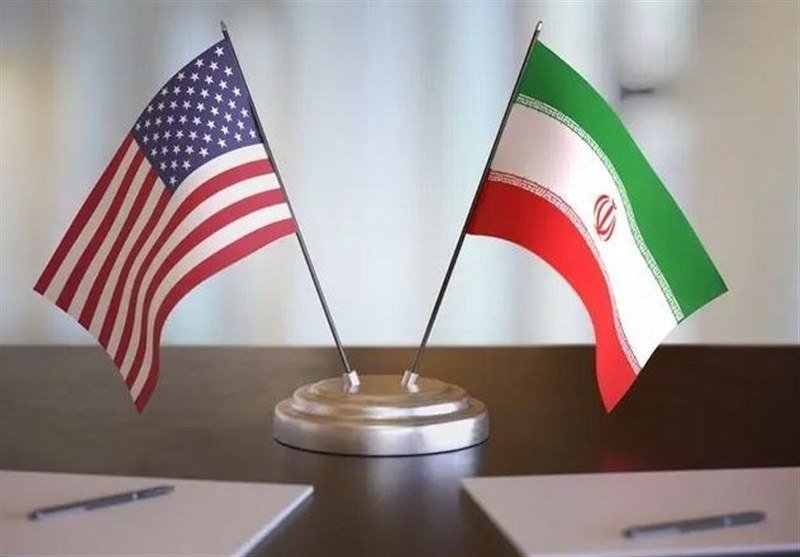
On 11 June 2026, between roughly 13:39 UTC and 19:48 UTC, the President of the United States told reporters, in succession, that the United States would "take Khrag Island from Iran," that scheduled strikes on Iran had been cancelled, that negotiations were "pretty much wrapped up," and that a signing ceremony would take place in Europe over the weekend — with Vice President J.D. Vance flying in because the President himself could not attend. Six Telegram channels carried the same quotes within ninety minutes of each other. The cadence was familiar. The substance was thinner than it looked.
This is a story about diplomatic momentum being manufactured out of contradictions. The most important thing to understand about the past twenty-four hours is that the White House is now narrating a breakthrough that has not been confirmed by the other side, on a timeline that excludes the principal, and in language that mutates every time a reporter asks a follow-up. Each bulletin is true in the narrow grammatical sense — Trump said the things attributed to him — and each one contradicts the one before. That is not a deal. That is a press cycle.
The chronology is the argument
The order matters. At 13:39 UTC, Trump said the US would "take Khrag Island from Iran" — a maximalist claim that, if literal, would amount to a casus belli from a sitting president and the first explicit US articulation of a territorial objective against Iranian soil in living memory. Four hours later, at 17:37 UTC, the same voice announced "scheduled strikes against Iran cancelled." At 18:29 UTC: negotiations are "pretty much wrapped up." By 19:36 UTC the framing had shifted to a "signing" in Europe, with Vance as the signing party, because Trump "won't be able to be there."
Read in isolation, any one of those statements is a headline. Read in sequence, they describe a posture in which the United States appears to be simultaneously preparing to seize territory, calling off military action, claiming victory in talks, and outsourcing the victory lap to the Vice President. None of those moves is incompatible with the others in the realm of press-release diplomacy. All of them are incompatible with a single coherent negotiating position.
The signing that is not yet a deal
"There may be a signing in Europe this weekend," Trump told reporters aboard Air Force One in remarks syndicated through Euronews, Abu Ali Express, Clash Report, and Israeli channel reporter Amit Segal. The qualifier — may — is doing all the work. No counterpart has been named. No text has been circulated. No location has been confirmed. No date has been confirmed. The Vice President's attendance is the only concrete logistics on the record.
This is the pattern worth naming plainly: an administration that has learned to convert presidential utterance into the appearance of progress, in which each statement shifts the goalposts just enough to make the next statement possible. A signing that may happen, of a text that does not exist, between parties who have not agreed, in a venue that has not been chosen, attended by a principal who will not be present. By the standards of any prior nuclear negotiation with Iran — the 2015 framework, the 2013 JPOA, even the failed 2025 round that collapsed in the spring — none of this would be filed as a deal. By the standards of the present news cycle, it is already being filed as one.
What the framing machine is doing
The reason the contradictions land softly is that the press channels that carry the wire — the Telegram aggregators, the social accounts reposting them — are not adjudicating between them. Insider Paper files the signing line as a "BREAKING" alert. Euronews runs it as a hot take. The Unusual Whales account on X runs the strike-cancellation and the island-claim as parallel "BREAKING" items hours apart. The aggregator ecosystem does not have a mechanism for saying: these four claims do not cohere, and we are not going to launder them as if they do.
That is the structural problem. In a healthy diplomatic market, the second statement would force a retrenchment of the first, and the third would force a retrenchment of the second. In the present information environment, each statement simply becomes the next available sentence in a story that auto-generates a headline. The market for diplomatic truth is no longer arbitraged by anyone with standing.
Stakes, and what remains genuinely uncertain
If a deal does materialise this weekend — and the word if is now load-bearing — the substantive questions are: what uranium-enrichment ceiling is on the table, what sanctions architecture is being unwound, what the verification regime looks like, and whether the United States is offering any of the sanctions relief Iran has demanded as the price of restraint. None of those answers is in the public record. The US side has not produced a text. Iran's official outlets have not, in the thread material at hand, confirmed a parallel track.
What is also uncertain — and this is the part the wire will not foreground — is the standing of the strike-cancellation. A president who announces a strike and then cancels it in the same news cycle has consumed the deterrent value of that strike. A president who then announces a seizure of Iranian territory four hours after the cancellation has signalled that the threat inventory is being drawn down rapidly. Iran, watching this, learns that the threat is not credible; it also learns that the deal may not be credible. Both readings push Tehran toward the same conclusion: hedge.
The serious reading is that this is a closing posture — high noise to force a reluctant Iranian delegation to a table, with a VP-level signing ceremony as the on-camera payoff. The other serious reading is that the White House is performing closure it has not achieved, in the hope that markets and allies will price in a deal and the actual negotiation can be back-filled. Both readings are consistent with the record. Neither is corroborated yet.
The reasonable position, on the evidence as it stands at 19:48 UTC on 11 June 2026, is to treat the European signing as an intention by one party, not as an event. The weekend will tell us which.
This publication treats the 11 June announcements as an intention, not a deal, and will not adopt the signing-framing until a text, a counterpart, and a venue are on the record.
Wire provenance
This editorial synthesis draws on the following public wire/social posts:
- https://t.me/amitsegal
- https://t.me/euronews
- https://t.me/abualiexpress
- https://t.me/ClashReport
- https://t.me/insiderpaper
Follow the event.
These dated source records provide context. They do not retrospectively verify this archive article.
Separate what the nuclear watchdog reported from what it could not determine after the June 2025 strikes.