A deal that isn't, struck in a war that still is: parsing Trump's Iran pivot
Within hours of threatening new strikes, the US president announced a near-deal and a stock-market rally. The contradictions are the story.
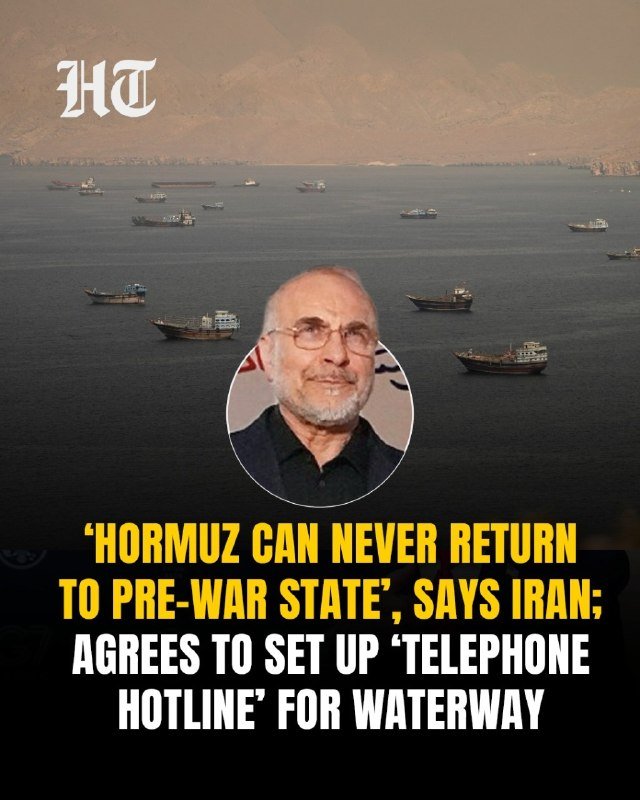
At 22:16 UTC on 11 June 2026, President Donald Trump told reporters that a peace deal with Iran was near, hours after publicly floating new military strikes on the Islamic Republic. By 22:43 UTC, scheduled strikes had been "cancelled," according to Middle East Eye's live blog, and the same outlet reported Trump saying he believed Iran's supreme leader had approved a framework. By 22:52 UTC, the president was on X claiming the "big thing" of the arrangement was that there would be no nuclear weapons, purchased or made. Within an hour, Reuters reported Wall Street indexes jumping on the reversal. The choreography of escalation and de-escalation had completed another full turn, with the markets treating each beat as a tradable headline.
What the public is being offered, in other words, is not a document. It is a sequence of statements, issued under pressure, with no published text and no named counterpart. The risk is that a market rally, a presidential post, and a live blog are taken to substitute for the architecture of an actual agreement — and that the underlying war, which is still killing people in Lebanon, Israel, and Iranian airspace, is treated as a backdrop rather than a condition.
What was actually said
The substantive claim, repeated by Trump in two separate posts on 11 June, is narrow: no nuclear weapons, bought or built, on the Iranian side. Reuters carried the market reaction — index gains, strikes called off — but did not, in the wire item circulating as of 22:45 UTC on 11 June, attach a text, a signing ceremony, or a confirmation from Tehran. France 24's reporting, also timestamped 11 June, framed the reversal the same way: strikes paused, a deal "near," a ceasefire described as "fragile" and worth extending. None of the three major items — Reuters, France 24, Middle East Eye — identified a specific clause, an inspection regime, an enrichment cap, or a sanctions schedule.
That absence is not a small thing. The history of nuclear diplomacy with Tehran — the 2015 Joint Comprehensive Plan of Action and its 2018 American withdrawal — turned precisely on those mechanics. A deal that consists of a single sentence about weapons non-acquisition is not a deal; it is a slogan.
The asymmetry of confirmation
The single most important asymmetry in this episode is the source of the claim that Iran's supreme leader has approved the arrangement. Middle East Eye, reporting on Trump's assertion at 22:42 UTC, put the words in the president's mouth: Trump believes the supreme leader has approved it. Tehran has not, in any of the items on the wire at the time of writing, publicly confirmed the framework. The default editorial practice in this kind of reporting is to mark presidential belief as presidential belief, not as fact — a discipline that frequently gets lost when the same assertion is repackaged across the financial press as "the deal."
There is also an internal contradiction the commentary is not yet addressing. The "big thing" — no nuclear weapons purchased or made — is a commitment Iran has historically denied needing to make, on the ground that its programme has always been civil. To present Iranian non-acquisition as a concession is to assert, against the country's official position, that it had been seeking the weapons in the first place. That framing may be politically useful in Washington, but it is not a neutral description, and it complicates any later verification: what counts as compliance with a commitment the other side says it never required?
Why the markets moved anyway
Wall Street's response, captured in the Reuters item at 22:45 UTC, is the most honest reading of what the public has actually been handed. Equities priced a lower probability of an immediate kinetic event, not the terms of a settlement. That is a perfectly rational trade: the marginal news was the cancellation of strikes, not the text of a deal. The danger is that the price signal migrates into the political signal, and the political signal migrates into the diplomatic record. A ceasefire is not a peace. A paused strike is not a deal. An index move is not an arms-control agreement.
The deeper structural read is older. The United States has spent the better part of two decades oscillating between escalation and de-escalation with Iran, each turn sold to domestic audiences as a decisive moment. The pattern is corrosive: every time the cycle completes, the threshold for what counts as a "deal" quietly falls. A framework that a previous administration would have refused to call an agreement becomes, in a high-volatility news window, the basis for a market rally.
Stakes, and what the sources don't tell us
If the framework holds and inspections begin, the immediate winners are Tehran's regional partners who have been demanding relief from secondary sanctions, and global energy markets which price Gulf risk into every barrel. The immediate losers are the Israeli and Saudi positions that have depended on maximalist American terms; an Iran that retains a civil programme under verified limits is not the same as an Iran under sustained siege. The longer-term loser is the credibility of the non-proliferation regime, which works only when commitments are reciprocal, technical, and verifiable — none of which a single presidential post delivers.
What the sources do not yet establish: whether Tehran has issued any text; whether the International Atomic Energy Agency has been asked to resume or pause inspections; whether the strikes were paused or merely deferred to a longer timeline; whether the "fragile ceasefire" referenced in France 24's framing extends beyond the Iran file to the active exchanges in Lebanon reported elsewhere on Middle East Eye's same live blog. Until those questions have answers, the responsible read is that the United States and Iran are, at most, in a holding pattern — one that markets are free to call a deal, but that the region cannot afford to mistake for one.
This publication treats presidential social-media assertions as presidential social-media assertions until corroborated by named counterparty confirmation, and reports the 11 June reversal as a pause in escalation rather than a settlement.
Wire provenance
This editorial synthesis draws on the following public wire/social posts:
- http://reut.rs/4oxYc15
- https://t.me/sprinterpress
Follow the event.
These dated source records provide context. They do not retrospectively verify this archive article.
Separate what the nuclear watchdog reported from what it could not determine after the June 2025 strikes.