A weekend in Europe: how the Trump-Iran deal got announced before it got agreed
A presidential headline, a naval blockade still in place, and a Friday news cycle that broke faster than the diplomacy it purported to describe.
On 11 June 2026 at 19:35 UTC, a short sentence crossed the wire channels that follow Middle Eastern diplomacy the way sports fans follow a transfer window. President Donald Trump, speaking to reporters, said of the United States' confrontation with Iran: "we just made a great settlement." Four minutes later, at 19:36 UTC, a follow-up dispatch confirmed the venue, sort of: the signing would happen, Trump said, "maybe in Europe." By 19:40 UTC, a third message had moved the picture further still, with the US president saying a deal could be signed "this weekend" and naming Vice President JD Vance as Washington's likely signatory. Within five minutes the contours of a historic announcement had been sketched, and not a single line of any actual agreement was on the page [1][2][3].
This publication's reading of the day's cascade is straightforward. The American side is staging the announcement of an Iran deal as a fait accompli at exactly the moment when the most consequential pieces of any deal — verification of Iranian nuclear activity, the fate of a naval blockade that the same announcement confirmed remained in place, and the question of which European capital would host a ceremony — are still genuinely unresolved. The pattern matters because it has become the defining texture of this administration's crisis diplomacy: a serial rhythm in which a presidential headline travels faster than the underlying text, and in which the gap between the two is itself a tool of leverage.
The five-minute deal
What is actually on the public record as of 19:40 UTC on 11 June 2026 is narrow. Trump, asked about the state of play with Iran, volunteered that a "great settlement" had been reached. He then offered that a signing could take place over the weekend in Europe and that Vice President JD Vance was the US official best placed to attend on Washington's behalf. A second, separate line of reporting from earlier the same day — circulated at 17:45 UTC and attributed to the US president — held that planned US military strikes on Iran had been cancelled, with a US naval blockade left in place pending a final agreement [4][5].
These are the load-bearing facts of the day's story. Everything else is inference, framing, or projection. There is, on the public record circulated to date, no joint text, no signed framework, no third-party confirmation from Tehran that matches the presidential tone. The Iranian side has not been quoted, in the available wires, as concurring with Trump's characterisation of the moment. That asymmetry — a confident American headline sitting next to silence from the other capital — is the single most important fact about the day's news cycle.
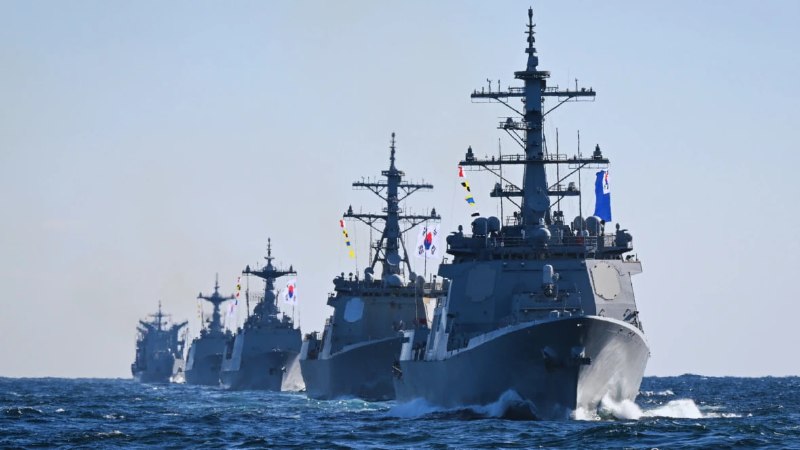
The blockade detail is particularly worth holding in view. The cancellation of strikes is consequential in itself; the decision to keep a maritime blockade running until a "final agreement" is the kind of clause that, in a finalised text, would normally be the most heavily negotiated part of the document. The fact that a blockade can be described as an active measure at the precise moment a deal is being announced as settled tells a reader everything they need to know about which side of the table is currently defining the public narrative.
The counter-narrative the wires do not yet carry
The Western financial press and the regional outlets that picked up the 19:35–19:40 UTC window ran the story as a deal announcement. That is what the available reporting supports: an American president said a deal had been made. But the same window contains a quieter counter-narrative that the headline format cannot accommodate, and a serious reader has to construct it from the gaps.
The first gap is textual. There is no document. The second is bilateral. The Iranian state apparatus — including outlets such as PressTV, IRNA, Mehr News, and Tasnim that the Western wires routinely summarise when relaying Tehran's framing — has not, in the circulated material, confirmed a settlement, a venue, or a signatory list. The third is procedural. A "settlement" whose enforcement mechanism is a continuing naval blockade is, in the technical diplomatic vocabulary, not yet a settlement at all. It is closer to a framework inside which a blockade is being used to keep the parties at the table.
Iranian-aligned messaging over the past several months has consistently framed the US posture as coercive — sanctions as siege warfare, the naval presence in the Gulf as a bargaining chip rather than a defensive posture, and any future deal as something to be assessed against the concrete measure of relief rather than against the tone of American presidential remarks. That framing does not contradict the Trump announcement so much as it makes the announcement intelligible: a deal is being declared from one side of the table, in advance of anything the other side of the table has been willing to call a deal on the record.
What the pattern tells us about the diplomacy
The shape of 11 June 2026 is not new. The defining feature of this administration's crisis-management style — visible in episodes from Venezuela to Ukraine-adjacent negotiations to trade-tariff stand-offs — is the use of a presidential headline as a tactical instrument. The headline is not the conclusion of the negotiation; it is a move inside the negotiation. By saying a deal is done, the American side attempts to shift the burden of proof: the other party is now required to either accept the framing, or to be the one who appears to walk away from a "great settlement."
This is the logic of a media environment in which the most efficient move is no longer the move that actually resolves the dispute, but the move that most rapidly changes the global news cycle around the dispute. Coverage of the announcement will, in the next 24 to 48 hours, run ahead of the announcement's underlying content. Readers will encounter the word "deal" in headlines before they encounter any of the deal's terms. In that gap, leverage is created — and the burden of explaining why the leverage has not produced a document falls on the other side.
Inside that pattern, the choice of Europe as the announced venue, and the choice of the vice president rather than the secretary of state as the announced signatory, are themselves messages. Europe as venue signals that a third-party host is being used to anchor the legitimacy of whatever is signed. The vice president, rather than the cabinet officer with direct portfolio responsibility, signals that the deal is being framed as a presidential achievement rather than as a routine diplomatic deliverable. Both choices are consistent with a settlement that exists, for the moment, more fully as a political object than as a legal one.
The structural stakes
If a document does eventually emerge, its principal substantive content will be located in the places the 11 June reporting has not described. What does Iran retain of its enrichment capacity? What is the inspection regime? What is the sequencing between sanctions relief and verified rollback? On every one of these, the publicly circulated material gives the reader no answer.
The structural stakes, however, are already legible. A US-Iran deal of any kind reshapes the energy map of the Gulf, with knock-on effects on oil-export projections, on the security architecture of the wider Middle East, and on the position of regional actors — Israel, Saudi Arabia, the United Arab Emirates — who have managed their own postures around the assumption that the US-Iran confrontation is durable. The same deal would, in the macroeconomic register, marginally soften the inflationary pressure that a Gulf blockade has been adding to global energy markets, and would marginally ease the dollar-strength tailwind that oil-price spikes have been producing. The market relevance of an actual signed document is therefore not trivial; the market relevance of an announcement in advance of that document is, by contrast, mostly tonal.
For Tehran, the calculation is harder. Accepting a US-defined framework in which a blockade continues to be the price of admission would carry domestic political cost. Rejecting it would carry the cost of being cast as the party that walked away from a "great settlement." The mid-game — accepting a framework in principle while contesting its terms in detail — is the most plausible read of how the next several days will unfold, and it is the read most consistent with the historical pattern of negotiations between these two governments.
What remains uncertain
The strongest claim available to this publication is narrower than the day's headlines. There is a credible report that the US president described an Iran settlement in positive terms, that he named a possible European venue, and that he identified the vice president as Washington's likely signatory. There is a separate, earlier report that planned US strikes on Iran were cancelled and that a naval blockade remains in force pending a final agreement. There is, in the material currently on the record, no joint text, no Iranian-side confirmation matching the American characterisation, and no third-party host government announcement. The blockade's continued operation is itself evidence that, in the technical sense, a final agreement has not yet been reached.
A serious reader should hold two possibilities in mind simultaneously. The first is that a deal is, in fact, imminent, and that the American announcement is the leading edge of a sequence that will produce a signed document inside the next 72 hours. The second is that the American announcement is a pressure move inside a negotiation that is not as close to resolution as the headline suggests, and that the next round of substantive coverage will come from Tehran, from the European host capital, or from a wire confirmation of the document itself. The day's news cycle, in other words, belongs to the headline; the actual settlement, if there is one, will belong to a later news cycle, and a careful reader will not let the first one outrun the second.
This publication framed the 11 June 2026 cascade as an announcement in advance of a document, with the blockade as the principal live signal of unresolved substance. The wires, in contrast, ran the president's characterisation as the headline. The gap between the two readings is itself the story.
Sources
- BRICS News (Telegram) — "JUST IN: 🇺🇸🇮🇷 President Trump says a deal with Iran could be signed this weekend in Europe, US Vice President JD Vance to attend signing" — 2026-06-11T19:40Z. https://t.me/bricsnews
- Insider Paper (Telegram) — "BREAKING: Trump says Iran deal signing 'maybe in Europe'" — 2026-06-11T19:36Z. https://t.me/insiderpaper
- BRICS News (Telegram) — "JUST IN: 🇺🇸🇮🇷 President Trump says 'we just made a great settlement' with Iran" — 2026-06-11T19:35Z. https://t.me/bricsnews
- Cointelegraph (Telegram) — "🇮🇷 JUST IN: President Trump says planned U.S. strikes on Iran have been canceled, with a naval blockade remaining in place pending a final agreement" — 2026-06-11T17:45Z. https://t.me/cointelegraph
- Cointelegraph (Telegram) — Duplicate of source 4 with image attachment — 2026-06-11T17:45Z. https://t.me/cointelegraph
Wire provenance
This editorial synthesis draws on the following public wire/social posts:
- https://t.me/bricsnews
- https://t.me/insiderpaper
- https://t.me/bricsnews
- https://t.me/cointelegraph
- https://t.me/cointelegraph
Follow the event.
These dated source records provide context. They do not retrospectively verify this archive article.
Separate what the nuclear watchdog reported from what it could not determine after the June 2025 strikes.