Trump's Iran signing gambit: deal, theatre, or both?
The President says a deal with Tehran could be signed in Europe this weekend, with Vice President Vance flying in his place. Iranian outlets are amplifying the claim; the substance remains unverified.
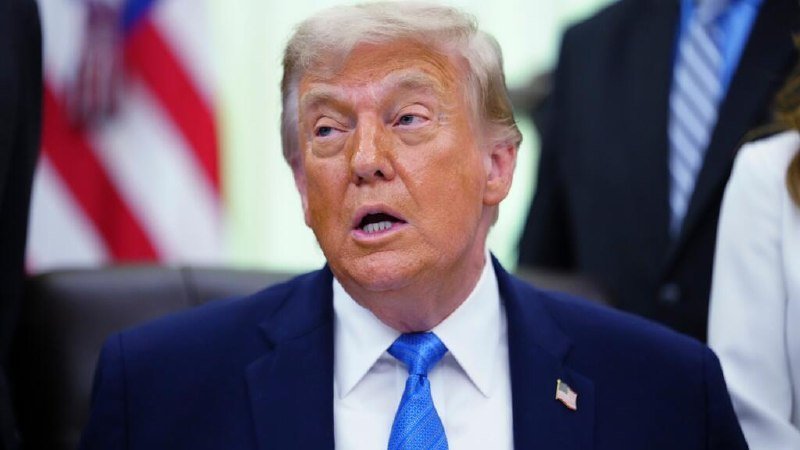
At roughly 20:00 UTC on 11 June 2026, US President Donald Trump told reporters that an agreement with Iran could be signed "over the weekend" in Europe, with Vice President J.D. Vance travelling in his place because "I cannot be there." Within minutes the claim had been echoed by Iranian state-aligned outlets — Press TV, Tasnim, and Fars — and by US-based channels quoting the same remarks. The choreography is familiar; the substance is not. A deal that, by Trump's own account hours earlier, justified a fresh threat of "death and destruction" is now, in the same breath, days from a signing ceremony.
The signalling is moving faster than the paperwork. Trump told reporters the documents are "at an almost final stage" and would be concluded "very quickly," while separately insisting that Iran "will, in no way, shape, or form, build a nuclear weapon or purchase a nuclear weapon." NPR's breaking-news tag on the same afternoon recorded Trump cancelling further strikes and pivoting to a "peace deal will be announced soon" frame. That pivot — from escalation to announcement inside a single news cycle — is the story, not the signature.
What is actually being signed
No text is on the public record. The most that can be said from the source material is that an unspecified draft, which the Fars News Agency says was returned to by the US side, is reportedly approaching final approval in Tehran. Fars is not a neutral arbiter, but its reporting aligns with Trump's own description of the documents as "almost final." The state-aligned framing in Iran has a structural interest in claiming momentum: a deal that survives domestic hardliners in Tehran needs to look inevitable before it is presented as a fait accompli.
Two versions of the agreement are in circulation. The first is the maximalist frame Trump himself has spent the week floating — full constraints on Iranian enrichment, missile work, and proxy finance, with no sunset clauses. The second is the more familiar transactional frame: sanctions relief, IAEA monitoring, a cap-and-rollback structure modelled loosely on the 2015 JCPOA, and quiet de-escalation in Lebanon and Iraq. The fact that Vance — not a regional envoy, not the Secretary of State — is being put forward as the American face of the signing is itself a tell. It is a political delivery, not a technical one.
The counter-narrative, Iranian-style
The Iranian readout is not, for once, reflexively hostile. Tasnim, Fars, and Press TV have all carried Trump's remarks at face value, with minimal editorial overlay. That is unusual. The Tehran press treats Western claims skeptically by default; the absence of caveat suggests either that Iranian authorities have been told to amplify the line, or that they genuinely believe a final text is within reach. The Geopolitical Watcher's 19:42 UTC summary, citing Fars, suggested Iran's proposed draft is now likely to receive "final approval from Iranian authorities" — a phrase that, in Tehran's tightly managed political language, is itself a near-declaration.
The structural read: Tehran needs a deal more than it is willing to admit, and the surest way to lock it in is to make denunciation of the deal look unpatriotic before the text is public. Coverage that defers to the language of official spokespeople — on both sides — should be read as part of the negotiation, not as commentary on it.
Why the European stage matters
Putting the signing in Europe is not a logistical choice. It is a framing choice. A ceremony in Vienna would carry IAEA institutional weight; a ceremony in Geneva would re-annex the Swiss track. A ceremony in a Gulf capital would be read as capitulation. By declining to attend in person and dispatching the Vice President, Trump is buying himself distance from whatever Vance actually signs — a useful ambiguity if the deal collapses on inspection. The pattern is consistent with prior Trump-era moves: announce loudly, sign provisionally, reserve the right to denounce the result. The 2018 JCPOA withdrawal is the relevant precedent; that episode began with a Stage Four rhetorical commitment to a "better deal" and ended with maximalist abandonment. A Europe-hosted signing, without the principal at the table, fits that template.
Stakes, and what remains unknown
If a deal is signed and held, the immediate winners are the Gulf states and the Strait of Hormuz tanker trade; the immediate losers are the Israeli and Saudi intelligence establishments that have spent two decades betting on a US policy of sustained pressure. Iranian middle-class consumers see a path to a more functional rial; Iran's regional proxy network sees a tightening of the financial noose that made it viable. A collapse produces the mirror image: Israeli leverage increases, Iranian enrichment accelerates in the absence of constraints, and the negotiating clock resets to zero.
What the public record does not yet show is the text. There is no published draft, no IAEA verification, no Iranian Foreign Ministry readout that goes beyond the generic. Iranian state media's amplification of Trump's claim is suggestive, but it is not a document. Until the agreement is on paper and countersigned, this remains a performed negotiation — a useful reminder that in 2026, as in 2015 and 2018, the gap between an American presidential statement and an enforceable arms-control arrangement is the entire policy.
This publication has tracked the US-Iran track for months; the wire cycle is currently running on a claim made from a podium, not from a signed instrument. The story is the speed of the pivot, not the certainty of the outcome.
Wire provenance
This editorial synthesis draws on the following public wire/social posts:
- https://t.me/FotrosResistancee
- https://t.me/englishabuali
- https://t.me/ClashReport
- https://t.me/presstv
- https://t.me/abualiexpress
- https://t.me/tasnimnews_en
- https://t.me/GeoPWatch
- https://t.me/FarsNewsInt
Follow the event.
These dated source records provide context. They do not retrospectively verify this archive article.
Separate what the nuclear watchdog reported from what it could not determine after the June 2025 strikes.