Trump vows strikes on Iran and seizure of Kharg Island: what the rhetoric signals and what the oil market is pricing
Three Telegram channels carried near-identical Trump quotes on 11 June 2026 threatening strikes on Iran and the eventual seizure of Kharg Island. The rhetoric is loud, the evidence of a strike tonight is thin, and the oil market is the place to watch.
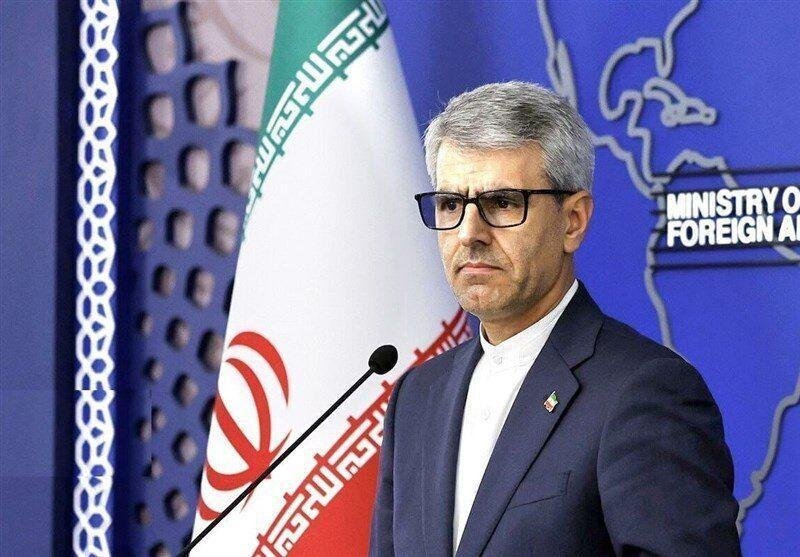
Within a span of two minutes on the afternoon of 11 June 2026, three Telegram channels — Fars News, Fars News International, and the Israeli correspondent Amit Segal — carried near-identical text of a statement in which US President Donald Trump said the United States would "deliver very hard blows to Iran tonight," claimed Iran's navy, air force, radar systems and air defences had been destroyed, and promised that "at some point in the not too distant future" American forces would seize Kharg Island and other Iranian oil infrastructure and take "complete control" of Iran's oil and gas markets. The quoted language is unusually maximalist, even by the standard of this White House, and worth taking seriously precisely because of where it is appearing: an Iranian state-aligned news agency, its English-language sister channel, and an Israeli journalist with a record of accurate readouts of US–Middle East signalling.
The question is not what Trump said. He said it. The question is what the statement actually does, and to whom. The rhetoric serves three audiences at once: a domestic American one that has been primed to expect a kinetic phase of the long-running US–Iran confrontation; a regional one that needs to know whether Kharg Island — the single chokepoint through which the overwhelming majority of Iranian crude exports physically flow — is a live target; and a global energy market that has spent the last several weeks learning to price US–Iran escalation as a recurring, not exceptional, input. None of those audiences hears the same sentence in the same way, and the gap between them is the story.
What the statement actually claims
The Fars wire and the Fars International English wire, both timestamped 12:26–12:28 UTC on 11 June 2026, are the primary carriers of the quoted text. The core claims, in the order they appear, are: (1) "very hard blows" will be struck "tonight"; (2) Iran's navy, air force, radar systems, anti-aircraft and other defence capabilities have already been "destroyed"; and (3) at an unspecified near-future date, the United States will take control of Kharg Island and other oil infrastructure and assume full control of Iran's oil and gas markets. Amit Segal's parallel readout, also at 12:26 UTC, reproduces the Kharg language in English and adds the gloss that Trump "announces again" — a phrase that implies the threat has been made before and is now being repeated as a pressure tactic rather than a first-time warning. The repetition matters: it shifts the line from an opening bid to a stated ceiling, and ceilings in coercive diplomacy are the things that, once named, are hard to step back from without paying a credibility cost.
No Western wire service has, in the materials available to this publication as of the timestamps above, confirmed an imminent strike. The claims about Iran's air defences being "destroyed" are, on the available record, Trump's own characterisation — not an independent military assessment from US Central Command or any of the Western-wire defence correspondents. That distinction is essential. A presidential statement can be a fait accompli, a forecast, or a negotiating posture. Without corroboration from the Pentagon, the Joint Staff, or a US-allied capital, the "destroyed" language is the latter, not the former.
The Kharg question
Kharg Island is not a symbolic target. It is the terminal through which the great majority of Iran's crude exports are loaded, sitting in the northern Persian Gulf roughly 25 kilometres off the Iranian coast in Bushehr province. Seizure, in the sense Trump used, is not a missile strike; it is an amphibious and air-supremacy operation against a defended island in a confined waterway, within range of Iranian coastal anti-ship missiles, fast attack craft, and the wider network of Revolutionary Guard Corps naval bases on the mainland. The threat, if taken literally, implies a commitment of US Marines, carrier aviation, and a logistics tail measured in weeks — not hours. That scale is not what "tonight" describes. The two halves of the statement are not the same operation, and reading them as a single coherent plan strains the language.
The more plausible reading, and the one the Fars wires' choice of words does not contradict, is that "tonight" refers to a punitive air-and-missile strike on Iranian military assets — radar, command-and-control, possibly IRGC naval bases on the Gulf coast — while the Kharg language is the escalatory ceiling intended for both Tehran and the oil market. The structural pattern is familiar from earlier US coercive campaigns: an initial strike calibrated for denial of capability, paired with a public threat of escalation that puts a price on Iranian behaviour. Whether the second half is meant to be executed, or only to be believed, is the question Tehran now has to answer under uncertainty.
The oil market, not the battlefield, is the venue
The most informative reaction to the statement will not be a Pentagon briefing. It will be the Brent and Dubai curves. Kharg handles the bulk of Iranian seaborne exports, and any credible threat of US action against it injects a tail-risk premium into the entire Persian Gulf complex, including Saudi and Iraqi grades that share the same loading infrastructure and the same chokepoint geography. Even a strike that does not touch Kharg itself is read by traders as a step toward a strike that does, and the options market typically prices the second step faster than the first. The Strait of Hormuz, through which all of the above must transit, is the second-order derivative. A signal that the United States is willing to name Kharg as a target is also, implicitly, a signal that Hormuz interdiction is back on the menu of thinkable operations.
For Iran, the calculus is asymmetric in the other direction. Tehran cannot publicly accept the Kharg threat as credible without inviting the strike; it cannot publicly dismiss it as bluster without surrendering the deterrent value of its own Gulf posture. The Fars and Fars International decision to lead their English wires of the day with this story, and to lead with the Kharg language, is itself a counter-signal: by amplifying the threat, Iranian state media ensures the threat reaches the same global oil-market audience that Trump is signalling to, but framed as proof of US aggression rather than as a fait accompli. Both sides are talking to the same trading floor in different languages.
What the sources do not yet establish
Three things remain unverified on the record available at 12:28 UTC on 11 June 2026. First, no independent confirmation that strikes have begun or are imminent; the Fars and Fars International wires are carrying the statement, not reporting the event. Second, no US military or NATO-allied readout corroborating the claim that Iranian air defences have been "destroyed"; that language is, for now, a self-assessment by the US president. Third, no Iranian government response on the record — Fars has carried Trump's statement, but the response, when it comes, will be the variable that tells us whether Tehran is treating tonight's threat as kinetic or as rhetoric. The Israeli-side readout from Segal is the closest thing to a third-party reading available, and it leans toward the threat being a known and repeated pressure tactic rather than a first-strike announcement.
The most plausible near-term outcome is a calibrated strike, limited in target set, with the Kharg language held in reserve for the next round of pressure — not the opening move of a campaign to physically occupy Iranian energy infrastructure. The least plausible, but not zero-probability, outcome is a strike set heavy enough to make the Kharg threat a near-term operational plan rather than a long-term pressure signal. The market will price the gap.
This article is built on three Telegram wire items, all timestamped 12:26–12:28 UTC on 11 June 2026, and treats them as the only primary record available at publication. The wire statement is reported; its operational content is not yet corroborated by US, Israeli, or Iranian independent sources on the record available to this publication.
Wire provenance
This editorial synthesis draws on the following public wire/social posts:
- https://t.me/farsna/
- https://t.me/FarsNewsInt/
- https://t.me/amitsegal/
Follow the event.
These dated source records provide context. They do not retrospectively verify this archive article.
Separate what the nuclear watchdog reported from what it could not determine after the June 2025 strikes.