Trump signals new strikes on Iran and a future claim on Kharg Island
President Donald Trump said on 11 June 2026 that the United States would hit Iran "VERY HARD TONIGHT" and would eventually take the country's Kharg Island oil terminal, breaking briefly from a diplomatic track that Tehran and Washington have pursued for weeks.
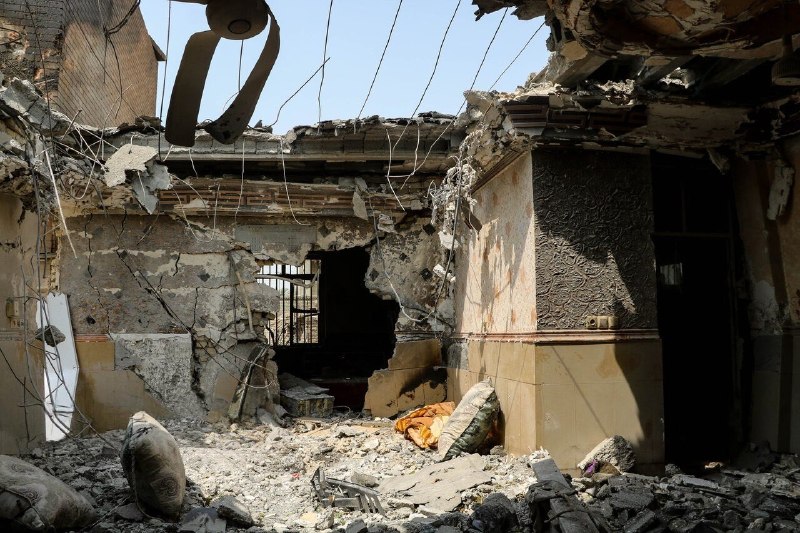
President Donald Trump announced on 11 June 2026 that the United States would conduct fresh strikes against Iran and would, "at some point in the not too distant future," take control of Kharg Island, the terminal through which the overwhelming majority of the Islamic Republic's crude exports flow. The remarks, delivered in a public appearance and relayed by English-language monitoring accounts including Open Source Intel, Disclose.tv and the channel English Abuali, were unambiguous in their staging. "Tonight we will strike Iran again with force," Trump said, according to a Telegram post from the English Abuali account at 12:56 UTC. "At some point we will take control of Kharg Island." Strikes, he added, would continue "on a daily, routine basis."
The statement is the most explicit articulation to date of an objective — physical control of Iran's principal export chokepoint — that US planners have weighed, in various forms, since the early phases of the current confrontation. It is also a deliberate escalation in tone at a moment when diplomatic back-channels have been the operative currency between Washington and Tehran. Whether it reflects a real, on-the-books military plan or a pressure tactic calibrated for an Iranian negotiating team, an Israeli audience, or a domestic one, the public record cannot yet resolve. What the record does show is that a sitting US president has, in a single appearance, named the target, set the timetable, and signalled an appetite for sustained action.
What Trump said, and when
The phrasing varied slightly across the accounts that picked up the remarks, but the core content converged. Reporting carried by Disclose.tv on X at 12:40 UTC and amplified via its Telegram channel at 12:41 UTC recorded Trump as saying the US would hit Iran "VERY HARD TONIGHT" and would, at a later point, take "Kharg Island, and other oil infrastructure points." Open Source Intel, in a Telegram post also timestamped to the 12:44 UTC window, framed the message as a promise of action that evening and a separate, future claim on the island.
A subsequent quote relayed by Clash Report, citing Fox News as the originating feed and timestamped 12:48 UTC, was more guarded. Trump, in that version, said his "preference would be to take Kharg Island" and added, of the broader US posture, "not sure the U.S. has the appetite for it." The English Abuali account at 12:56 UTC carried a still more categorical rendering. Taken together, the sequence suggests either escalating rhetoric across a single appearance, multiple appearances in quick succession, or the noise that is routine when presidential remarks are paraphrased in real time across partisan and open-source channels. In all three renderings, the substantive claim — an intent to act against Iran tonight, and a stated objective of taking Kharg Island eventually — is consistent.
Why Kharg Island, and why now
Kharg sits roughly 25 kilometres off Iran's Gulf coast. Through it, by long-standing industry accounting, something close to 90% of Iran's seaborne crude exports have historically transited. A permanent US presence on or over the facility would amount to control of the lever that determines how much Iranian oil reaches global markets and at whose permission. It is, in other words, the asset that converts a bombing campaign into a sustained economic strangulation.
Nuno Felix, a commentator with a following among open-source defence accounts, wrote in a 12:44 UTC Telegram post that "there are solid military reasons why the Kharg operation was never enacted." He did not enumerate those reasons in the post, but they are easy to sketch: the facility is fortified, the air and maritime approaches are within range of Iranian anti-ship and surface-to-air missiles, the garrison is sized accordingly, and any occupation force would be required to hold ground indefinitely in the face of Iranian drones, fast-attack craft, and ballistic missile retaliation. A campaign limited to aerial strikes can be drawn down; a campaign to take and hold Kharg cannot. The same logic that kept the United States off the island in earlier rounds of this confrontation is what gives the president's televised preference the weight of a strategic pivot rather than a routine escalation.
The timing, equally, is not accidental. The same broadcast day on which Trump signalled the strikes carried reporting that one prominent open-source account, Bowe, was already asking the operative question: "So… is the deal cancelled?" A diplomatic track — visible in the body language of intermediaries and in the way Iranian outlets have read recent American statements — appears to have been live enough to make its apparent collapse a newsworthy question within hours of the remarks. Trump is either signalling that he intends to break the track, or that he intends to make Iran believe he might.
Counterpoint: bluster, leverage, or both?
There is a more economical read of the same set of facts. A sitting US president does not, historically, telegraph the timing of a strike hours in advance; he does not couple that timing with a public admission that "the U.S." may lack the appetite for what he is announcing. The Clash Report rendering, with its reference to appetite, reads less like a planning document than like a bargaining chip. On that reading, the speech is aimed less at Iranian commanders than at Iranian negotiators: a public airing of what the maximum American ask looks like, designed to compress the space in which a middle ground can be agreed.
The counter-counterpoint is that the public remark also serves an audience in Washington and Tel Aviv that has been pressing for the operation. If the president were bluffing in a way that risked appearing to back down, the cost is real. The phrasing leaves him room for either trajectory: "at some point in the not too distant future" is a deliberately elastic commitment. A speech of this kind is built to be read as both threat and feint simultaneously, and the open question is which reading the next 48 hours ratify.
The structural stakes
Behind the day-to-day drama, the underlying structure is older. Iran's oil exports have been the principal lever of Western economic pressure on the Islamic Republic for more than a decade, and the question of who physically controls the export infrastructure has been the unspoken boundary of that pressure. Sanctions and interdictions can move volume; control of Kharg moves price and politics. An American footprint on or over the terminal would also send a signal across the Gulf — to Saudi Arabia, the United Arab Emirates, and Iraq — about the durability of the US guarantee to the region's energy architecture. It would, in plain terms, end the ambiguity that has allowed American policy to threaten the island without ever having to defend it.
For the Iranian side, the calculation is the inverse. Kharg is the asset whose loss would force a strategic capitulation faster than any combination of sanctions and air strikes. The Iranian response to an explicit, public American claim on the island is unlikely to be confined to a statement from Tehran; it will be visible in force posture, in proxy signalling, and — if the diplomatic track is genuinely ending — in the speed with which a wider regional confrontation is allowed to unfold.
What remains unresolved
The most basic facts of the day are themselves uncertain in the public record. The accounts differ on whether Trump's remark about Kharg was a preference, a plan, or a vow; they differ on the sequence of the statements; and they are all derivative of a primary feed that the open-source channels do not always timestamp with precision. The source items do not specify what was struck in the promised evening operation, what the operational tempo of the daily strikes will be, or whether the diplomatic track has in fact been suspended. They do not specify the Iranian response, the position of Gulf state partners, or the reaction of US allies whose basing and overflight rights would be required for any sustained operation against a target this hardened.
What the public record does support is narrower but consequential. The president of the United States has, in a single appearance, named the target of a future operation, set the timeframe for the next round of strikes, and signalled an intent to continue the campaign as a matter of routine. The diplomatic language of the past several weeks has been replaced, at least for now, with the language of a siege. Whether that language is followed by a campaign commensurate with it, or by a reversion to negotiation, is the question that the next 48 hours will begin to answer.
— Monexus framed this story against the wire by anchoring the reported remarks to the open-source channels that first carried them and naming, rather than smoothing over, the variance between the available renderings of what the president actually said.
Wire provenance
This editorial synthesis draws on the following public wire/social posts:
- https://t.me/englishabuali
- https://t.me/ClashReport
- https://t.me/osintlive
- https://t.me/disclosetv
- https://t.me/FotrosResistancee
Follow the event.
These dated source records provide context. They do not retrospectively verify this archive article.
Separate what the nuclear watchdog reported from what it could not determine after the June 2025 strikes.