Trump's Iran pause is a deal-shaped rumour, not a deal
A reported US climbdown, a flurry of presidential phone calls and a 1.7% surge in the S&P 500 — all on the rumour of a US-Iran deal. The market moved faster than the diplomacy.
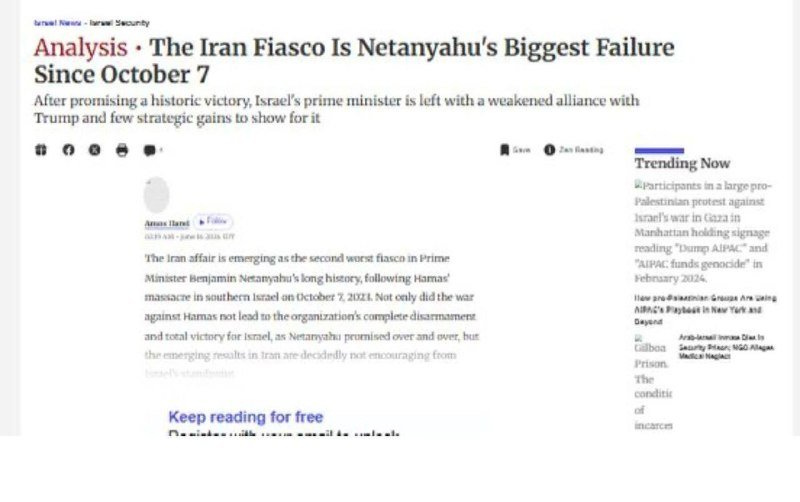
Donald Trump said on 11 June 2026 that he had cancelled planned attacks on Iran, that he had spoken with Prime Minister Benjamin Netanyahu, that he would soon speak with President Recep Tayyip Erdoğan of Turkey, and that the United States and Iran might sign an agreement "in Europe." Within minutes of those remarks, the S&P 500 had rallied 1.7% — its biggest single-session gain in two months — on the assumption that an oil squeeze tied to a US-Iran confrontation was about to ease. The market moved faster than the diplomacy. The diplomacy, in fact, has not really moved at all.
What is on the table on 11 June 2026 is not a deal. It is a deal-shaped rumour: a clutch of presidential phone calls, a possible European signing ceremony, and a self-described "retreat" from a strike that may or may not have been imminent in the first place. Each element is contestable; together they form a familiar pattern in which the price of oil, the level of the S&P 500, and the choreography of Middle Eastern diplomacy are governed less by the underlying policy than by the expectation of policy. That is worth saying out loud, because the market is pricing in a conclusion that has not been written.
What Trump actually said
The remarks, circulated in real time by the War Monitors channel on Telegram, came in rapid sequence. At 19:36 UTC, an Iranian outlet Tasnim reported that Trump had claimed he had ordered the cancellation of planned attacks and bombings — a striking admission by any measure, framed by Tasnim as a "retreat" in the face of Iranian threats. At 19:38 UTC, Trump said he had spoken with Netanyahu; at 19:38 UTC, that he had spoken with the Emir of Qatar; at 19:38 UTC, that he would speak with Erdoğan soon; and at 20:03 UTC, that the signing of an agreement "may be in Europe." The 1.7% S&P 500 rally followed at 20:03 UTC, attached to a headline reading "hopes for a US-Iran deal to get oil flowing again." The sequence is itself the story. A president, an equity index and an anticipated agreement moved in lockstep over roughly half an hour.
The substantive content of those calls, however, was not disclosed. Trump did not name a counterpart on the Iranian side. He did not specify what would be signed, what sanctions architecture would be unwound, what nuclear or missile commitments would be exchanged, or which European capital had offered to host. The phrase "may be in Europe" is a venue, not a treaty. A reader trying to reconstruct the policy from the public record on 11 June 2026 would find, in essence, a single sentence about a possible ceremony and a basket of bilateral courtesies.
The Iranian counter-narrative
The Iranian reading of the same hours is, predictably, the inverse. Tasnim, an outlet aligned with Iran's security establishment, framed Trump's climbdown as a concession extracted under pressure: the headline characterises it as a "retreat after Iran's threats." That framing is not incidental. In Tehran's telling, the United States arrived at the brink, weighed the cost, and stepped back. It is the kind of narrative the Islamic Republic's propaganda apparatus is built to produce, and it should be read with the same scepticism one would apply to a White House communiqué. But it should also be read, because the Iranian domestic audience for these claims is large and the political effect inside Iran is real. A US administration that has spent months threatening strikes and then announces a cancellation is, by any honest accounting, conceding that the threat did not produce the outcome it was designed to produce.
The counterpoint that the Western wire services have so far not carried is this: the United States has, in the past, used the choreography of imminent strikes as a leverage instrument rather than as a plan of action. The November 2024 sequence, in which similar warnings preceded a measurable de-escalation, is the obvious precedent. If the present pause is leverage, then the rumour of a deal is the leverage working. If it is a genuine retreat, the leverage has failed and something else — domestic political cost, oil-market reaction, an Israeli request for time — has intervened. The available reporting on 11 June 2026 does not let a reader tell the two apart.
Why the market moved
A 1.7% move on the S&P 500 in a single session is not trivial. The framing offered in the Telegram wire tied the rally explicitly to "hopes for a US-Iran deal to get oil flowing again." The mechanism is straightforward. Brent and WTI had been bid up in prior sessions on the assumption that a US strike on Iranian energy infrastructure would remove several hundred thousand to perhaps a million barrels per day from a market already described as tight. A deal that lifts or suspends some part of the US sanctions architecture on Iranian crude — or that credibly de-escalates the military track — removes that risk premium. Index futures track oil; oil tracks the headline; the headline tracked Trump.
The structural problem with this is that the market priced a conclusion, not a negotiation. A genuine US-Iran agreement on 11 June 2026 would have to settle, at minimum, the fate of Iran's enrichment programme, the status of Iranian missile exports, the disposition of Iranian-aligned militias in Iraq and Syria, the inspection regime, and the sanctions relief in dollars and time. None of that was on the public record at 20:03 UTC. What was on the public record was a possible European venue and a presidential description of a phone call. The market, in effect, ran ahead of the diplomats and is now exposed to a snap-back if the next 72 hours fail to produce a document.
What the phone calls actually tell us
The Netanyahu, Erdoğan and Emir of Qatar calls are not symmetric. Netanyahu is the Israeli prime minister with the most direct stake in any US military action against Iran and a long history of attempted influence over US decisions in this file. The Emir of Qatar hosts Al Udeid, the largest US air base in the region, and mediates between Washington and Tehran through channels that have, at various points, included the recovery of American hostages and the brokering of the 2023 Saudi-Iranian rapprochement. Erdoğan is a NATO ally with a complex set of relationships across the Gulf, Iran and the Caucasus, and a domestic interest in any pipeline politics that follow. That three calls were made on the same evening, in the same hour, suggests not a settled US position but a White House assembling coalition cover for whatever the next step turns out to be — strike, deal, or a third option that the public record does not yet describe.
The framing the Western wire has so far offered is that a deal is plausible and the market is right to price it. The framing Tasnim has offered is that Iran has extracted a climbdown and the United States is the weaker party. Both framings extract different conclusions from the same thin public record. A third framing, the one this publication finds most defensible on 11 June 2026, is that no deal exists yet, that the market has priced a rumour, and that the next forty-eight hours will determine whether the S&P 500's 1.7% gain is a rational re-pricing or an expensive mistake.
The stakes, plainly stated
If a deal materialises — even a partial one — the immediate winners are oil importers, equity indices with energy exposure, and the Iranian government, which would receive sanctions relief and a political vindication at home. The losers are the Israeli right and the Iranian opposition diaspora, both of whom have invested in the threat of strikes as a policy outcome. If the deal collapses, the snap-back in oil and equities will be severe, and the domestic political cost inside the United States of having visibly climbed down and then climbed back up will be measurable. If the present pause extends into weeks of negotiation without resolution, the market will slowly re-impose the risk premium that the 1.7% rally erased.
What remains genuinely uncertain on 11 June 2026 is whether Trump, in describing a possible European signing, is describing a document that exists in draft, a position the Iranians have privately accepted, or a preferred outcome the United States is hoping to negotiate into existence. The sources available to a reader in public do not specify. Until they do, the honest summary is that the United States paused, the market celebrated, and the deal is a rumour with a presidential accent and a European postcode attached.
Desk note: Monexus is treating the 11 June 2026 Tasnim read of the US pause as a counter-frame of equal standing to the Western wire framing, while flagging that neither side has yet produced the underlying document the market is pricing.
Wire provenance
This editorial synthesis draws on the following public wire/social posts:
- https://t.me/WarMonitors
- https://t.me/JahanTasnim
- https://t.me/WarMonitors/1