Twelve hours from war: Trump's Iran reversal exposes the limits of coercive brinkmanship
On 11 June 2026 the US president announced a full air campaign against Iran, then cancelled it within hours. The reversal says as much about the architecture of American coercion as it does about Tehran.
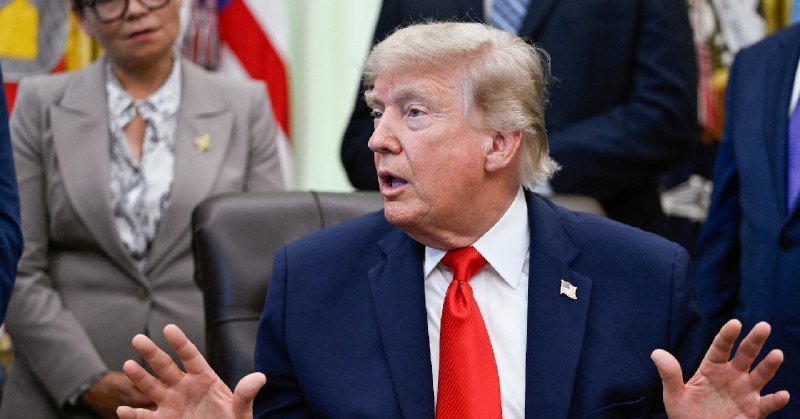
At 17:34 UTC on 11 June 2026, President Donald Trump posted on Truth Social that US forces would "start an all-out aerial campaign tonight" against Iran, with the Marine Corps preparing to seize Kharg Island and other Iranian coastal positions. Twelve hours later, the same account announced the strike had been called off. An agreement, Trump wrote, had been "brought to the highest level of Iranian leadership and approved." A blockade, he added, would remain in force until the deal was signed.
Twelve hours is not a diplomatic round. It is the operational signature of coercive brinkmanship pushed to the edge of the platform and then pulled back. The sequence deserves a closer read than the headlines will give it, because the gap between the two posts is where the actual story lives — and because the reversals are now themselves a policy instrument.
The shape of the day
The first message was unambiguous. According to multiple Telegram channels reproducing the Truth Social post in real time, the president declared that US armed forces would open an all-out air campaign that night, with the USMC tasked to seize Kharg Island, the offshore terminal through which the bulk of Iran's hydrocarbon exports flow. The post was framed as a decision, not a threat. By 17:48 UTC — fourteen minutes later — a second message was already in circulation, announcing a cancellation. The blockade, Trump wrote, would remain in effect "until the agreement is signed."
Reporting from a separate channel identified what it described as the parties that had approved "final points" of an arrangement: the United States, Israel, Saudi Arabia, the United Arab Emirates, Qatar, Turkey, Pakistan, Bahrain, Kuwait, Jordan, and Egypt. The list, if accurate, points to a regional architecture rather than a bilateral fix. Iranian state-aligned outlet Fars framed the reversal in stark terms: "Trump retreated once again." The framing matters — in Tehran, the optic of a US climbdown feeds the same political constituency that hardliners in Washington want to read as weakness.
What the reversal actually means
The cancellation is not the same as de-escalation. A blockade is a wartime instrument. Holding it in place while a deal is "signed" reframes the negotiation as a transaction under economic siege. Iran's export revenue remains constrained; its customers remain uncertain; its insurance and shipping costs remain inflated. Tehran is being asked to commit to terms while the pressure mechanism is still engaged.
This is the architecture that the Trump administration's Iran posture has been building for months: an arrangement in which economic strangulation is the constant, and the diplomatic move is whatever fits the news cycle. The 11 June sequence shows the limit of that approach. To make a threat credible enough to deter — or to compel — the threat must occasionally be carried out. To make a reversal credible as restraint, it must be selective. Doing both in the same afternoon degrades the value of the next threat, and the credibility of the next concession.
The counter-read
There is a plausible alternative read. The two posts can be understood not as a flip-flop but as a single instrument: a public threat designed to force Iranian movement, followed by a public relief designed to give Tehran a face-saving way to accept. In that framing, the blockade is the lever; the Truth Social feed is the lever operator; and the Iranians moved at the last moment. The Fars line about "retreat" then becomes a face-saving translation for a domestic audience rather than a description of a US climbdown.
This publication reads the day more cautiously. The credible version of events is that some kind of late-stage understanding was reached that allowed the strike to be paused. The less credible version is that the architecture is now durable. Twelve hours is too short a window to test whether Iran will actually sign, whether the regional parties listed will hold their positions, and whether the blockade can be enforced without the strike that was meant to back it. The proof of the deal will be in the days that follow, not in the post.
Stakes and what to watch
The losers, if the trajectory continues, are the Iranian civilian population that lives under the blockade regardless of which way the diplomacy breaks, and the credibility of US coercion as a tool that any future administration can pick up. The winners, in the short term, are the Gulf monarchies and regional mediators whose inclusion signals a managed transition rather than a regime-change gambit. Kharg Island — the chokepoint at the heart of the threat — remains the marker. If the Marines are still being readied in three days, the 11 June pause is a tactical delay. If the deal is signed and the blockade lifts, the post is a moment to study rather than a moment to celebrate. Neither outcome is settled at the time of writing. The wire is still moving.
This article reflects reporting from open-source channels and the US president's public Truth Social statements on 11 June 2026. Specific claims about casualties, damage, or the text of any agreement are not made here because none have been independently verified in the source material available to us at the time of publication.
Wire provenance
This editorial synthesis draws on the following public wire/social posts:
- https://t.me/osintlive
- https://t.me/BellumActaNews
- https://t.me/ClashReport
- https://t.me/FarsNewsInt
- https://t.me/abualiexpress
Follow the event.
These dated source records provide context. They do not retrospectively verify this archive article.
Separate what the nuclear watchdog reported from what it could not determine after the June 2025 strikes.