The deal that wasn't, and the war that almost was: parsing Trump's Iran rhetoric on 11 June 2026
A day of contradictory signals — a threatened strike, an absent deal, and a media ecosystem that is performing outrage rather than analysis.
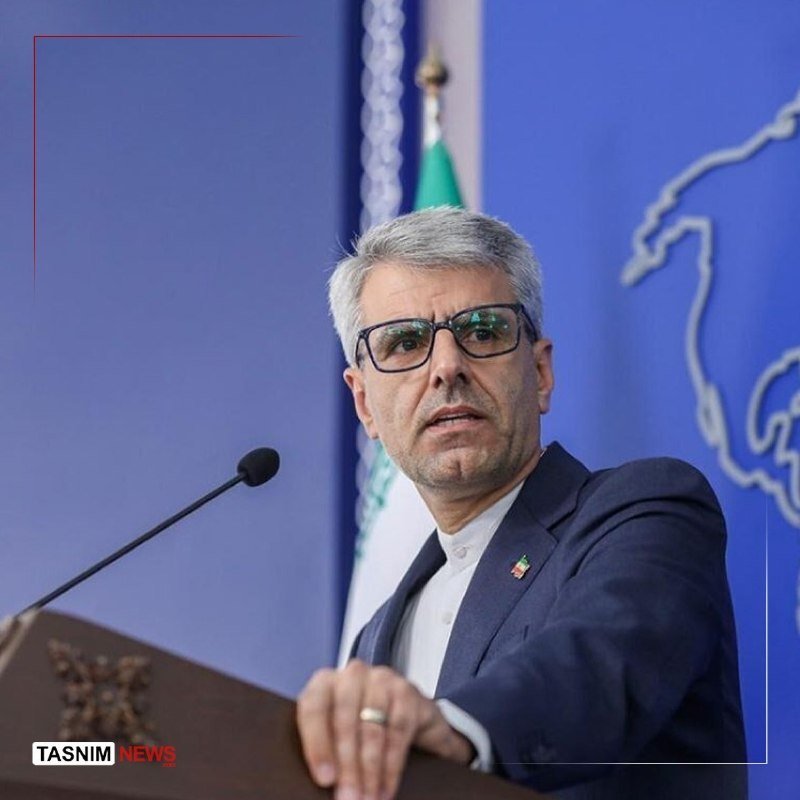
On the morning of 11 June 2026, the United States once again appeared to be on the verge of striking Iran, and once again once again didn't. By 04:59 UTC, the Telegram channel nexta_live was carrying a Trump vow, verbatim, that "We will attack them, and attack them very hard. We will resume bombing. We have the right to this. They shot down our helicopter." The phrasing was a near-verbatim recycling of the rhetoric that has accompanied every escalation cycle of the last eighteen months. The promised strike, as of this writing, is not on the wire. The rhetoric is.
That gap — between the words committed to camera and the ordnance committed to airspace — is now the story. It is also increasingly the only story American cable news is willing to tell about Iran. A serious account of the next phase of US-Iran confrontation has to begin with the recognition that the diplomacy is failing not because the parties cannot agree, but because the public performance of diplomacy has become the product. The deal is content. The strike is content. The failed strike is content. The deal that nearly happened is content. Iran policy, in the second Trump term, has been re-engineered as a media cycle.
The deal that keeps not happening
Tucker Carlson, in a segment captured and posted by Clash Report at 05:50 UTC on 11 June, framed the bind plainly: "If you announce a deal 38 times and it doesn't happen, eventually people are going to stop believing you." The line is a useful one, because it tracks a verifiable record. Announcements of imminent US-Iran understanding have arrived in waves since early 2025; what has not arrived is a signature. Carlson's diagnosis — that the administration is "no diplomat and obviously not a dealmaker" — is harsh, but it points at a real asymmetry. Tehran has survived on managed tension for decades. Washington is now trying to convert that tension into a win that can be edited into a clip. The two incentives are not compatible.
The Iranian counter-position is rarely aired in this cycle. It is also more coherent than the US posture suggests. Tehran's structural interest is in time: every month of "talks about talks" is a month in which sanctions enforcement drifts, in which the Islamic Republic's regional deterrent architecture is not bombed, and in which the price of oil remains elevated enough to keep the state's fiscal position tolerable. The US posture, by contrast, depends on a marquee announcement. That asymmetry favours the patient party. It is the single most important fact about the negotiation that the cable panels do not discuss.
The military that cannot open a strait
The second Clash Report excerpt, posted at 05:49 UTC, is the more uncomfortable one for the Pentagon. Carlson's argument: "Despite having that military, despite aircraft carriers that cost $120 billion start to finish to put in the water, the United States military has not been able to open that strait." He is referring, plainly, to the Strait of Hormuz — the chokepoint through which roughly a fifth of global seaborne oil passes, and the one piece of terrain that the United States has, since 2019, repeatedly threatened to secure and has never secured.
The reason is not a secret and it is not a mystery. Iranian anti-ship cruise missiles, fast-attack craft, mining capability and the layered air defence of the southern coast are the most credible anti-access posture in the developing world. The US Navy's distributed-maritime-operations doctrine is designed to fight inside that envelope, not to deny it. A sustained campaign to "open" Hormuz would require a casualty bill that no American president since at least 2003 has been willing to absorb — and that no American electorate since at least 2006 has been willing to forgive. The carrier cost figure Carlson cites is real, in the sense that a single Ford-class hull runs to roughly $13 billion and a full carrier strike group with escorts, air wing and supporting infrastructure is routinely costed in the $20–30 billion range over its lifecycle; the $120 billion top-line is a reasonable cumulative figure for the capital investment in a single ship plus its embarked air wing over a fifty-year service life. The point is structural: the platforms are built for power-projection missions, not for the attritional mine-clearing and coastal-strike mission that Hormuz would actually require. The rhetoric of "opening" the strait, in other words, is rhetoric about a capability the US has not built.
The role of the commentariat
It is worth saying out loud: the dominant frame in US coverage — that the choice is between a deal and a strike, and that Trump is somehow uniquely incapable of securing the first while being uniquely willing to launch the second — is itself a media artefact. It is a frame that rewards two kinds of coverage: breathless countdown pieces ("will he or won't he, by Friday") and retrospective vindication pieces ("he said he would, and he didn't"). Both kinds of coverage flatter the journalist at the expense of the reader. Neither kind forces anyone to engage with the actual balance of forces, the Iranian interest in prolongation, or the structural unsuitability of US military doctrine to the mission Washington is threatening.
Carlson, to his credit, is one of the few English-language commentators willing to state the second point in plain language. He is not a neutral observer — he is an interested one, with a political project. But his diagnosis of the gap between announced intent and delivered outcome is empirically correct, and the major wires have not improved on it.
Stakes — and what remains uncertain
If the trajectory continues, the losers are legible: any Iranian civilian within range of a retaliatory strike, and any American service member assigned to a mission the doctrine cannot execute. The winners are also legible: the permanent-commentariat economy that monetises countdown framing, and the Iranian state apparatus that has now, across four US presidencies, demonstrated that it can convert American electoral incentives into Iranian strategic time.
What remains genuinely uncertain is whether the 11 June 2026 rhetoric cycle will resolve in a kinetic action. The Telegram reporting cited above records only the threat, not the strike. The credibility of the threat is low by any reasonable historical standard, but credibility is not the same as cost. A single retaliatory incident — a downed helicopter, as Trump explicitly cited, or a tanker strike in Hormuz — could collapse the rhetorical space and force decisions that the political process is not currently set up to deliberate. The sources available at the time of writing do not specify any such incident. They do record, in real time, the conditions under which one could happen, and a press environment that is mostly uninterested in noticing.
Desk note: Monexus has run this piece as analysis of the rhetoric cycle rather than as a strike report, because the strike is not, as of 11 June 2026 06:00 UTC, on the wire. Where wire reporting exists, we have cited it; where it doesn't, we have said so rather than pad the timeline.
Wire provenance
This editorial synthesis draws on the following public wire/social posts:
- https://t.me/ClashReport
- https://t.me/ClashReport
- https://t.me/nexta_live
Follow the event.
These dated source records provide context. They do not retrospectively verify this archive article.
Separate what the nuclear watchdog reported from what it could not determine after the June 2025 strikes.