Trump claims Iran ‘settlement’, but Tehran reads the room and the markets
Trump says a deal is hours away. Tehran says wait. The gap between the two clocks is now the negotiation, and the markets are pricing the trust deficit until the text lands.
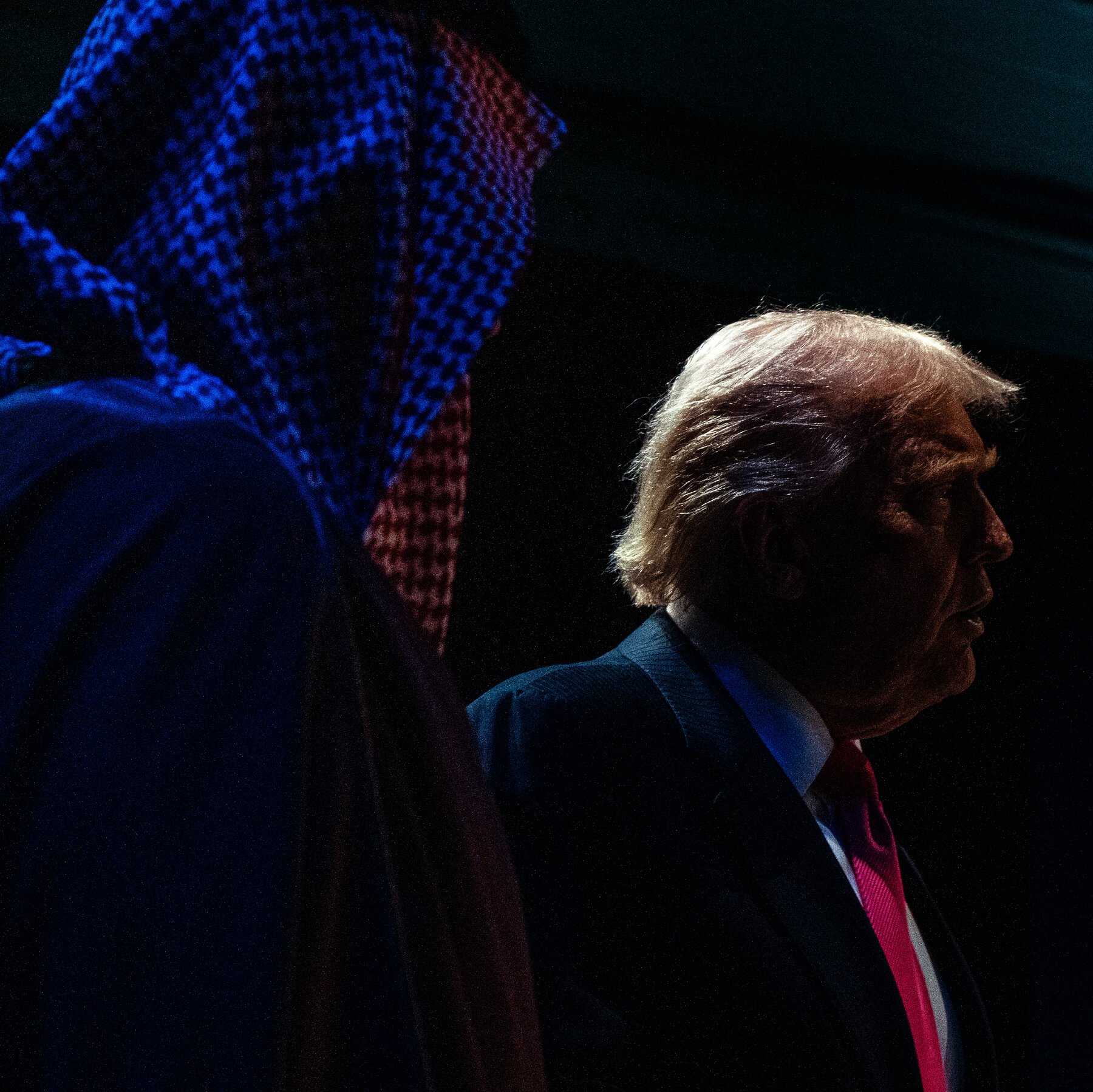
On the eve of a self-imposed Sunday deadline, President Donald Trump told reporters the United States and Iran were hours away from a memorandum of understanding that would reopen the Strait of Hormuz and end what he has called the latest Middle Eastern war. Iran's foreign ministry, by contrast, said the text would not be signed "tomorrow," and a senior advisor to the Supreme Leader accused Washington of privately agreeing to release roughly $24 billion in frozen Iranian assets while refusing to say so in public. Two governments, two timetables, two incompatible readings of the same conversation.
The gap is not a negotiating wrinkle. It is the negotiation. What is being priced this weekend is not the deal itself but the trust deficit between the parties announcing it, and the markets are doing what markets do when trust thins: they wait. Reuters reported on Saturday evening that Trump and mediator Pakistan expected a Sunday signing, while Iran pushed back on the timing. By late Saturday, Tehran time, Iranian officials had told DropSite News that two outstanding issues remained unresolved, and that whether they could be closed quickly depended on the US position.
The price of uncertainty
The most telling number to watch over the next 48 hours is not the headline date but the spread between what traders believe and what diplomats say. Trump has framed the package in blunt commercial terms: no fresh money to Tehran, only the release of a portion of already-frozen Iranian funds, in a deal he has called a "ceasefire agreement." Rezaei, an advisor to Iran's Supreme Leader, has offered a different arithmetic: $24 billion in unfreezing, structured in a way the White House does not want to advertise. Both sides agree that Iranian assets sit at the centre of the transaction. They disagree on whether that transaction is a concession, a hostage release, or the opening move of a longer sequence.
For traders in energy and Gulf-routed freight, that ambiguity is itself a tradable condition. The Strait of Hormuz is roughly 21 percent of global petroleum liquids consumption in transit. Any wording in the memorandum about transit rights, sanctions sequencing, or asset release has to be read against the price of crude and the cost of war-risk insurance for tankers. Until the text is public, the market has to choose between two priors: that a deal at the announced scope is credible, or that the announced scope is the public face of a much narrower arrangement.
Two capitals, two floors
Tehran's negotiating floor is visible on the street. Sprinter Press reported on Saturday that protesters had gathered outside the Ministry of Foreign Affairs in Tehran, blocking roads and chanting for the resignation of parliament speaker Mohammad Bagher Ghalibaf and foreign minister Abbas Araghchi. A separate sign, photographed and circulated by opposition channels, publicly asked why Ayatollah Mojtaba Khamenei, the Supreme Leader, has remained silent on the nuclear talks while issuing messages on other matters. The unrest is not the pro-government protest cycle of 2022 or the foreign-backed opposition of 2009. It is a hardline backlash inside the principlist base, and its presence narrows the political space in which any Iranian signatory can operate.
Washington's floor is narrower but more brittle. Trump has publicly committed to a Sunday signing. He has also, in the same breath, reserved the option of an unspecified "last" course if the deal collapses. That formulation is consistent with his bargaining style: a hard public deadline paired with a private acknowledgement that the other side cannot afford to be seen climbing down. The risk is symmetrical. A Sunday no-show would expose the gap between announcement and signature, and the markets would reprice the Strait accordingly.
What the intermediaries are signalling
The diplomacy around the diplomacy is unusually loud. Qatar's prime minister and foreign minister spoke by phone with his Kuwaiti counterpart to coordinate on the Iran file, according to Doha's foreign ministry. Egypt's foreign minister held a separate call with US special envoy Steve Witkoff alongside Badr Abdelatty, the Egyptian foreign minister, framing the Tehran-Washington track. The pattern is regional hedging. Gulf states are not waiting for the text; they are positioning for the aftermath, whichever way it lands. A signed memorandum, even a thin one, reopens shipping insurance, port fees, and LNG arbitrage. A collapsed Sunday produces the opposite.
Israel's response, reported by Ynet and relayed via Sprinter, has been pointed. A senior Israeli official described the emerging deal as bad and said no one in the Israeli system was happy with it. Israeli objections are not new, but they have rarely been voiced this bluntly on the eve of a US announcement. The subtext is that Washington is choosing a commercial settlement over a longer security settlement, and that Jerusalem wants it noted before the ink is dry.
What we still don't know
Three things have to land before the weekend's headlines age into the historical record. First, the text of the memorandum itself. Iranian statements as of Saturday night referred to "wait and see" language and to outstanding issues, not to a signed document. Second, the structure of the asset release. Trump's framing of "no new money, only frozen funds" and Rezaei's $24 billion figure are not yet reconciled in any public document. Third, the security envelope around Iran's uranium stocks. CNN reported, via Sprinter, that Iran has barricaded and mined tunnel entrances where uranium is stored, hardening those sites in case of a US operation. A deal that opens Hormuz but leaves the nuclear file in suspense is a deal priced for the next round, not the last.
The markets will read the text the moment it appears. Until then, the right way to read the news is as a single negotiation cycle with two public clocks running at different speeds. Trump's clock says Sunday. Iran's clock says wait. The gap between them is the deal.
Sources
- Reuters on X: "President Trump and mediator Pakistan said an initial deal…" (2026-06-13)
- Middle East Eye: "Trump says Iran deal set for Sunday, but Tehran has yet to confirm" (2026-06-13)
- Sprinter Press on X: "Iran has denied Trump's claims about reaching an agreement…" (2026-06-13)
- Sprinter Press on X: "Trump agreed to unfreeze $24 billion in frozen Iranian assets…" (2026-06-13)
- Sprinter Press on X: "Protests have also broken out in front of the Ministry of Foreign Affairs building in Tehran" (2026-06-13)
- Sprinter Press on X, citing Ynet: "This is a bad agreement. No one is happy with it" (2026-06-13)
- GeoPolitical Watch on Telegram, citing DropSite News: "two outstanding issues remain on the proposed memorandum of understanding" (2026-06-13)
- Witness from the Frontlines on Telegram: pro-principlist sign questioning the Supreme Leader's silence (2026-06-13)
- Qatar foreign ministry, via Tasnim and Sprinter: phone consultations between Qatari and Kuwaiti foreign ministers (2026-06-13)
- Mehr News on Telegram: Witkoff-Abdelatty-Egyptian foreign minister call on Iran-US track (2026-06-13)
Desk note: Monexus treats the Trump "settlement" claim and the Iranian counter-position as the two poles of a single negotiation cycle, with the Sprinter-reported price move as the market's interim judgment. When the text of the agreement is published, this piece will be updated against it.
Follow the event.
These dated source records provide context. They do not retrospectively verify this archive article.
Separate what the nuclear watchdog reported from what it could not determine after the June 2025 strikes.