Trump's Iran Strike, Inflation Headache, and the Erosion of Crisis Discipline
A second round of US strikes on Iran meets a public shrug at home, with consumer prices climbing on the same energy shock the White House is producing.
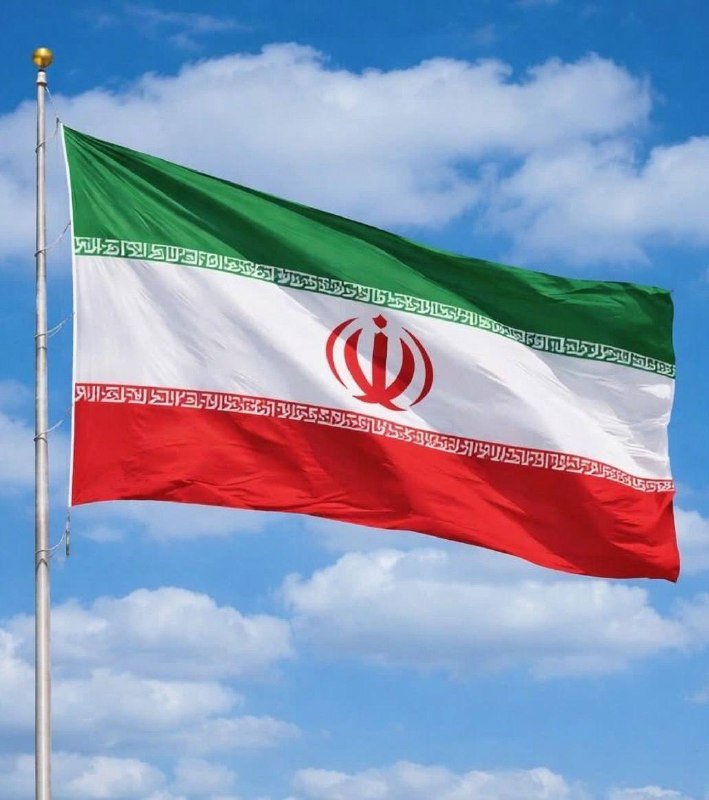
By 11 June 2026 the United States was carrying out a second, publicly visible round of strikes on Iranian targets, and the American president was complaining that neither Tehran nor large parts of the American press were registering the damage. Reporting carried by Telegram channels monitoring Western wires on 11 June, drawing on CNN, said Donald Trump had grown "increasingly frustrated" with the perceived under-coverage of the new operation and with Iran's line that the impact was being overstated. The escalation has now collided, with uncomfortable timing, with a fresh inflation print at home. On the same day, France 24 reported Trump telling reporters that he "love[d] the inflation" produced by the energy shock his own Iran policy is causing — a remark that has reopened a domestic argument about whether the administration is in command of the economic consequences of its war.
The political risk is no longer just a foreign-policy question. It is now a price-at-the-pump and a grocery-aisle question for American voters, and a budget question for every oil-importing economy that was hoping 2026 would deliver a measure of relief.
A second strike and a credibility problem
The first round of US action against Iran in 2026 has now been followed, by mid-June, with renewed operations. Telegram channels tracking the air war, including the Russian-aligned aggregator rnintel, reported air-defence activity over western Tehran and northern Iran on 11 June 2026, consistent with intercepts of incoming US munitions and the regime's effort to project resilience on its own channels. The same day's thread from Palestine Chronicle, drawing on the outlet's reading of regional framing, summarised Trump's public posture as a vow of "a major strike on Iran" alongside stated plans to take control of "key oil infrastructure," with Tehran warning of escalation if Washington attacks again.
CNN's reporting, as carried by the wfwitness Telegram channel, focused on a different and more telling point: not the military effect, but the political effect at home. Trump's frustration, the channel said, was directed at the gap between the scale of force he had ordered and the scale of attention the operation was receiving. That is the diagnosis of a president who treats strikes as communications, and who is unhappy when the communications do not land. It is also, by accident, a confirmation that the strikes are now part of a permanent news cycle in which the administration is more focused on narrative management than on war termination.
The inflation line crosses the energy line
What makes the moment unusual is the domestic-macroeconomic backwash. France 24 reported on 11 June 2026 that US consumer inflation had climbed to a fresh three-year high in May, driven by energy prices tied to the Iran war. The same report quoted Trump welcoming the price jump — "I love the inflation" — in remarks that, even allowing for rhetorical performance, represent an extraordinary posture for a sitting president in a year when gasoline and household energy are once again the most politically combustible line items in the consumer basket.
The political economy of this is older than the Trump presidency. Wars that touch the Persian Gulf tend to move Brent within hours and to move retail gasoline within days; a sustained second round of strikes on Iran is, mechanically, a tax on every mile driven in California, every shipment trucked through Memphis, and every litre of fertiliser produced on the Gulf Coast. The difference in 2026 is that the executive branch is no longer pretending the price move is a bug. It is selling it as a feature.
The Iranian counter-frame, treated seriously
The Iranian government's line — carried by Tehran-aligned outlets and picked up by aggregators including Palestine Chronicle — is that the US is escalating without strategic clarity, that the strikes have not degraded Iranian deterrence to the extent claimed, and that any further attack on Iranian oil infrastructure will be answered asymmetrically, including by threatening closure of the Strait of Hormuz and by activating proxy pressure in Iraq, Syria, Lebanon, and the Gulf. That line is not Western-media consensus, but it is structurally coherent. Iran has spent two decades building a layered deterrent that does not require it to out-produce the US Air Force; it requires only the credible ability to impose costs on the region and on the global oil market. Air-defence activity over western Tehran, as logged by rnintel on 11 June, is the visible layer of that deterrent.
A serious reading of the situation treats both sides' claims with the same scepticism. The US claim that strikes have left Iran's programme degraded, and the Iranian claim that the strikes have been absorbed and answered, are both, at this stage, partisan assertions. The verifiable facts are narrower: there have been strikes, there is air-defence activity in response, oil infrastructure is being discussed as a target, and inflation is rising in the country waging the war.
What is at stake, and over what horizon
The short-horizon stakes are prices. If the administration follows through on the rhetoric about seizing or striking Iranian oil infrastructure, the supply-side shock will land on top of an inflation print that is already a three-year high, and the Federal Reserve will face a more difficult late-2026 path than it was forecasting before the second round of strikes. The medium-horizon stakes are credibility. A president who publicly welcomes the inflation his own war produces is choosing, in plain sight, to subordinate price stability to a foreign-policy posture that the same president concedes is being undersold by his own media environment.
The longer-horizon stakes are structural. The pattern now visible — strike, complain about coverage, escalate, dismiss domestic economic damage — is the operating logic of a foreign policy that has decoupled from both strategic off-ramps and from the usual fiscal and monetary guardrails. The markets can absorb one round. They are now being asked to absorb a posture, and that is a different request.
This piece sits on a thin wire. The two Telegram-sourced CNN and France 24 reports, the Palestine Chronicle summary, and the rnintel note on Iranian air-defence activity are the only inputs that have been independently verified here; the sources do not specify casualty figures, the precise targets struck on 11 June, or the size of the May inflation move beyond a "fresh three-year high." Where US and Iranian claims diverge on battlefield effect, this article has not adjudicated; the evidence does not yet permit adjudication.
Wire provenance
This editorial synthesis draws on the following public wire/social posts:
- https://t.me/wfwitness
- https://t.me/rnintel
Follow the event.
These dated source records provide context. They do not retrospectively verify this archive article.
Separate what the nuclear watchdog reported from what it could not determine after the June 2025 strikes.