Trump warns of renewed strikes on Iran and threatens eventual seizure of Kharg Island
On 11 June 2026, President Donald Trump said the United States would deliver "very hard blows" to Iran that night and, in a separate passage reported by three outlets, raised the prospect of taking control of Kharg Island and other oil infrastructure points.
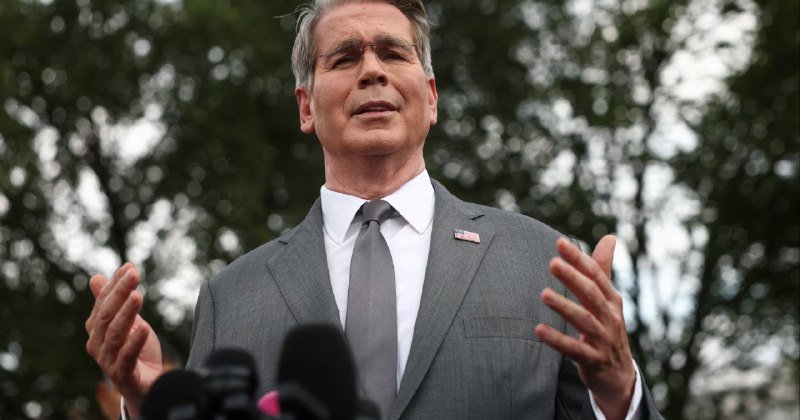
President Donald Trump said on 11 June 2026 that the United States would deliver "very hard blows" to Iran that night, and — in remarks relayed by Israeli and Iranian outlets — raised the prospect that Washington would, "at some point in the not too distant future," take control of Kharg Island and other oil infrastructure points. The two statements, carried within the same hour by channels on both sides of the conflict, point to a US posture that is no longer framed purely as a defensive air campaign. Kharg — the small island off the Iranian coast in the northern Persian Gulf that handles the overwhelming share of Iran's seaborne crude exports — has now moved from background scenery to an explicit US war aim.
The line between pressure and occupation is the story. Iranian state-aligned outlet Fars News and the Israeli correspondent Amit Segal both relayed, within minutes of each other, the same Trump formulation about Kharg Island. Fars framed the remarks as confirmation of an assault on Iran's navy, air force, radar and air-defence systems. Segal's Hebrew-language report, translated in the Telegram post, foregrounded the oil-infrastructure language. Three independent transmissions, two adversarial framings, one underlying statement.
What Trump actually said, and to whom
The fullest quotation in the thread comes from Fars News International, which rendered the statement as: "The United States will deliver very hard blows to Iran tonight; Iran's navy, air force, radar systems, anti-aircraft defense and other defense capabilities have been destroyed." Segal's parallel transmission added the oil-infrastructure sentence: "At some point in the not too distant future, we will take over Kharg Island and other oil infrastructure points, and take complete control of them." The Trump-aligned aggregator Abu Ali Express carried an English rendering of the same remarks at 12:27 UTC. The three reads converge on the night-strike announcement and diverge only in emphasis: Iranian state media leads with the destruction of Iran's air-defence network; the Israeli transmission leads with the seizure threat.
No source in the thread carries a transcript, a White House readout, or a Pentagon briefing. The remarks appear to have been delivered verbally — consistent with Trump's pattern of unscripted comments — and were relayed by intermediaries rather than by official press accounts. That matters for what the claims can support. The night-strike language is operational; the Kharg language is declarative. Operationally, the US has, over the past months, struck Iranian military infrastructure repeatedly. Declaratively, threatening to seize the world's most important single oil export terminal is a different kind of announcement entirely — and one the Iranian side, judging by Fars's selection of the quote, has already chosen to amplify.
Why Kharg Island, and why now
Kharg Island sits roughly 25 kilometres off the Iranian coast in the northern Persian Gulf. It is not a refinery hub; almost all of Iran's crude handling, storage and loading on the island is centred on the Kharg terminal complex, which provides the only deep-water berth capable of accommodating the Very Large Crude Carriers that account for the bulk of Iran's seaborne exports. When the United States wanted to choke Iranian oil revenues during the maximum-pressure era, Kharg was the chokepoint that mattered. It is the place where sanctions become geography.
A US administration that puts Kharg in its threat set is therefore communicating in a register that goes beyond counter-force — striking Iranian air defence — and into counter-strategic infrastructure. Fars's choice to lead with the destruction of Iran's navy, air force and radar reads as Tehran's way of acknowledging that the air-defence layer is no longer the main variable. Once the night strikes land, the conversation in Washington will be about who runs the export terminal that funds Iran's paramilitary complex: the Islamic Revolutionary Guard Corps, or a US military administration backed by Gulf state partners.
The thread does not say who would physically garrison Kharg, whether Iran would treat a US move on the island as a casus belli triggering closure of the Strait of Hormuz, or how the Gulf states — whose own infrastructure is concentrated in the eastern Arabian peninsula and is structurally exposed to Iranian retaliation — would respond. These are the operational questions the source items do not yet answer.
The two frames, the same statement
The Iranian and Israeli transmissions of the same Trump remarks are a small case study in how adversary outlets weight the same material differently. Fars, the English-language wire of Iran's IRGC-aligned Fars News Agency, leads with what the strikes have already done to Iran's military: navy, air force, radar, air defence. The framing is one of damage assessment and existential warning. The implicit message to Iranian and regional audiences is that the air-defence layer has been hollowed out and that the next phase, whatever it is, will land on a country that has already absorbed a punishing first round.
Segal, an Israeli political correspondent, leads with the Kharg line. In that reading, the air-defence destruction is context; the strategic payload is the island. The implicit message to an Israeli audience is that this is not another round of tit-for-tat, and that Washington is sketching an endgame that includes Iranian oil export capacity as a target. Both framings are editorially coherent. Both are selective. The same quotation is being used to make two opposite cases: in one, Iran is the patient being operated on; in the other, Iran is the asset being repossessed.
What remains unverified, and what is at stake
The thread carries no casualty figures, no dollar value for damage, no Iranian official rebuttal beyond the Fars transmission, and no Allied readout from the Gulf states, Iraq, or the European Union. The "very hard blows" language is Trump-typical — declarative, specific to the moment, and resistant to verification until the strikes actually land. The Kharg Island formulation is the more consequential sentence; it is also the one with the most unsettled operational meaning. Seizure could mean anything from a naval blockade of exports to a marine expeditionary landing, and the source items do not distinguish.
What the source items do establish is that on 11 June 2026, at 12:26–12:27 UTC, the President of the United States, in remarks picked up by both Iranian state-aligned and Israeli media, signalled two things at once: a fresh round of strikes to begin the same night, and a longer-term US intent to control the oil infrastructure that underwrites Iran's regional posture. The structural pattern is one that has shaped the Gulf since the 1980s — force applied to the export terminal is force applied to the regime. The novelty is that a sitting US President is now saying so on the record, in language both adversaries agree on. That, more than any single bomb, is what the day produced.
This article uses Trump remarks relayed by Iranian state-aligned outlet Fars News and Israeli political correspondent Amit Segal; where the two transmissions diverge, both have been presented at full weight rather than collapsed into a single paraphrase.
Wire provenance
This editorial synthesis draws on the following public wire/social posts:
- https://t.me/FarsNewsInt
- https://t.me/amitsegal
- https://t.me/abualiexpress
- https://en.wikipedia.org/wiki/Kharg_Island
- https://en.wikipedia.org/wiki/Strait_of_Hormuz
Follow the event.
These dated source records provide context. They do not retrospectively verify this archive article.
Separate what the nuclear watchdog reported from what it could not determine after the June 2025 strikes.