Trump's Iran ultimatum: a Truth Social post is not a strategy
A late-morning Truth Social post and a Fox News interview converged on the same threat: a major US strike on Iran, possibly including Kharg Island, unless Tehran signs by tomorrow. The words are maximalist. The policy behind them is harder to read.
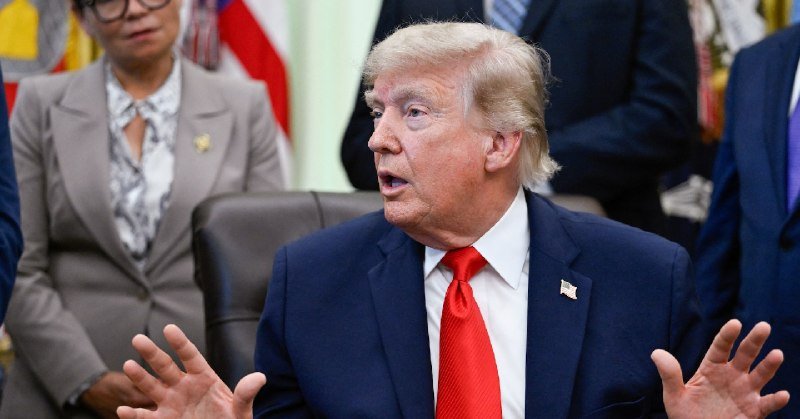
At 12:24 UTC on 11 June 2026, US President Donald Trump posted on Truth Social that "The United States will be hitting Iran (Whose Navy, Air Force, Radar, Anti Aircraft, and all other forms of Defense, together with most of its offensive capability, are GONE!), VERY HARD." The text was relayed up the chain of Telegram open-source channels within minutes — Clash Report, intelslava, WarMonitors, GeoPWatch, osintlive, BellumActaNews, rnintel — each version slightly clipped, each carrying the same expiration date. By 12:26 UTC, BellumActaNews added a second beat from a Fox News interview, in which Trump said he would "bomb the shit out of Iran" tomorrow night if the Islamic Republic did not sign an agreement to end the war. By 12:44 UTC, GeoPWatch was carrying a Reuters line describing a US plan to make Iranian assets "available to Gulf allies" to cover reconstruction costs after the fighting stopped. At 12:45 UTC, Treasury Secretary Scott Bessent entered the feed, warning that "any damage [the Iranian regime] inflicts on our allies in the Gulf will be paid for with funds extracted from Iranian accounts."
The shape of the message is familiar: a presidential deadline, an economic penalty, a threat against Iranian oil infrastructure — including, per Trump's own words on Truth Social, Kharg Island. The mechanics are not. The deadline runs to tomorrow night. The negotiating counterpart is a regime whose senior commanders and scientists have been killed in operations already attributed to Israel and, in some accounts, to the United States. And the compensating offer — Iranian assets, routed to Gulf monarchies, to pay for damage Iran will have caused them — implies a war that, on Washington's own telling, has barely started.
What the words actually say
Strip the punctuation and the post is a four-part package. First, an assertion of fact: Iran's navy, air force, radar, anti-aircraft network, and "most of its offensive capability" are already destroyed. The claim is contested by Iranian state-aligned outlets and unsupported in the wire reporting bundled into the thread, but the White House is asking the world to treat it as a premise. Second, a commitment of action: the United States will be "hitting" Iran, "VERY HARD." Third, an attached deadline — tomorrow night — paired in the Fox interview with a specific threat against Iranian oil infrastructure and Kharg Island, the terminal through which the bulk of Iran's crude exports move. Fourth, an implicit ask: sign.
The Reuters-sourced line that the US will deploy "available tools to make Iranian assets available to Gulf allies" adds a fifth, quieter element. If the war ends, Washington expects Iran to pay for the reconstruction of the states it hit. Bessent's Treasury statement gives that premise a currency: frozen Iranian accounts, presumably those already under sanctions, will be the cheque.
What the framing elides
The post does not name a counterparty. There is no Iranian minister, no negotiating lead, no forum. There is also no mention of the Gulf states whose airspace, ports, and desalination plants have been drawn into the fighting — and whose governments have spent months trying to stay out of the crossfire between Washington and Tehran. The Gulf piece is therefore doing two jobs at once: it is the audience for the threat, and it is the named beneficiary of the post-war settlement. That is a delicate balance to strike in a region where every capital reads American politics for signs of whether it is being used as a launchpad, a paymaster, or a casualty.
Kharg Island deserves its own paragraph. The facility handles the great majority of Iran's crude exports; striking it would be a strategic move against the regime's revenue base and a humanitarian move against the workforce and the surrounding coastal communities, which are civilian. The choice to single out Kharg in a Truth Social post, rather than in a classified finding or a National Security Council statement, is itself a signal — of audience (a domestic one), of posture (maximalist), and of confidence in the underlying intelligence (a US president does not normally preview a strike the day before on social media unless he believes the political cost of the surprise has already been paid for).
What this column is not willing to grant
The dominant cable frame in the next 24 hours will read the post as a textbook coercive move: raise the cost, compress the timeline, force a signature. That reading has the benefit of fitting the historical record on US–Iran confrontations from 2019 to the drone strike on Qasem Soleimani in January 2020. It has the disadvantage of treating a Truth Social post as if it were a National Security Decision Directive. The two are not the same. Presidential posts are subject to revision by the next post; NSDDs are not. The wire has so far carried no companion NSDD, no confirmed force posture, no allied readout, and no Iranian response beyond a denial that any negotiation on Washington's terms is in progress. A deadline set against an undefined counterparty, with an attached post-war financing scheme that bypasses Congress, is not yet a strategy. It is a posture.
The Iranian counter-frame, carried by state-aligned outlets and in the messaging of the Islamic Republic's diplomatic channels, is the mirror image: that the United States is escalating to cover for a battlefield position that has not delivered the regime-change outcome its maximalists promised. That is a propaganda read, but it is a propaganda read with a real structural point. Iran's air defence network, by the US's own description, is largely gone; Iranian territory has been struck repeatedly; senior figures have been killed. None of that has produced a government in Tehran willing to sign what Washington is offering, and the gap between battlefield outcome and political outcome is the actual story the next 48 hours will resolve.
Stakes and the next 48 hours
If the deadline holds, the world wakes up on 12 June to a US strike on Iranian infrastructure, a Brent crude response, and a Gulf scrambling to keep its shipping lanes, desalination plants, and sovereign wealth funds out of the line of fire. If the deadline slips, the post becomes a baseline against which the next post is read, and the cost of the next threat rises. Either way, the architecture of the post-war settlement — Iranian assets routed to Gulf allies, the freezing of central-bank reserves, the implicit carving-up of the Iranian export book — is being written publicly, in advance, with no Iranian voice at the table. That is what the framing deserves to be tested on, not on the rhetorical question of how hard the bombs will fall.
The hardest honest sentence to write is also the simplest: the source material does not yet let us say what Iran will do, what the Gulf will accept, or what Congress has been told. The deadline, the threat, the post-war financing plan, and the strike on Kharg Island are all, as of 12:50 UTC on 11 June 2026, presidential words. The world's oil markets and Iran's coastline will decide whether they remain words.
Desk note: The wire consensus frame on Iran coverage since 2023 has tended to treat Tehran's moves as reactive and Washington's as strategic. The thread material for 11 June does not support that ordering. Both sides are improvising in public; Monexus is flagging the improvisation rather than the strategy.
Wire provenance
This editorial synthesis draws on the following public wire/social posts:
- https://t.me/WarMonitors
- https://t.me/ClashReport
- https://t.me/GeoPWatch
- https://t.me/BellumActaNews
- https://t.me/GeoPWatch
- https://t.me/intelslava