Trump's Iran ultimatum lands as US oil exports hit a record — the energy and the diplomacy are now the same story
The same morning Reuters confirmed the United States as the world's largest oil exporter, the President told Iran it could 'wave the white flag of surrender.' The two facts are not coincidental.
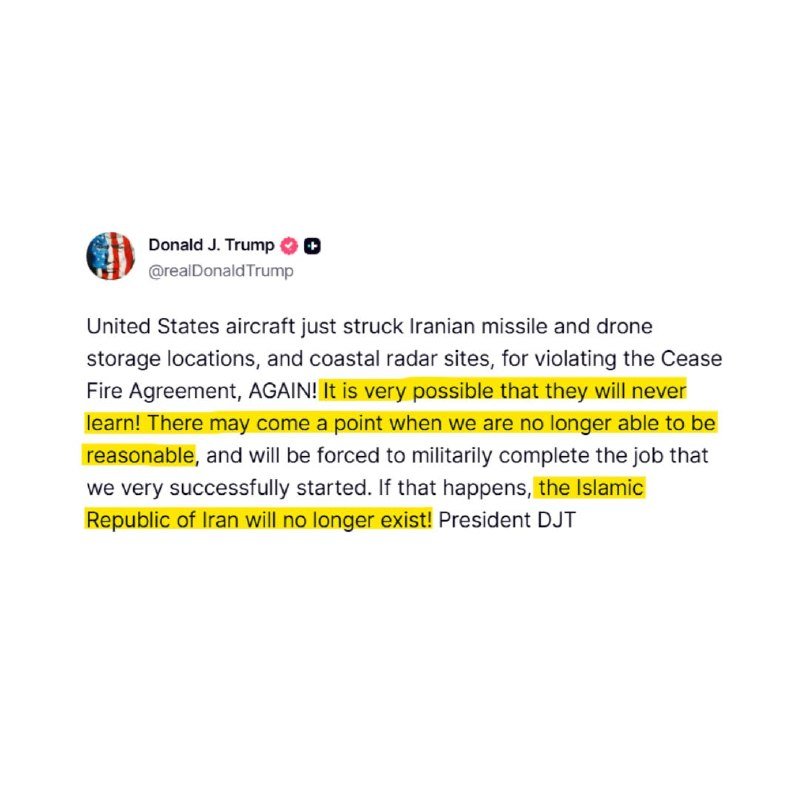
On 11 June 2026, two facts arrived in the same news cycle and the same news cycle tried, politely, to keep them apart. At 15:57 UTC, the @unusual_whales account on X flagged a Reuters dispatch confirming that the United States has become the world's largest oil exporter. Less than four hours later, at 19:37 UTC, the WarMonitors Telegram channel published the President of the United States, Donald Trump, telling Iran that it "could wave the white flag of surrender" in what he framed as a prospective deal that could be "the greatest deal in history." By 19:03 UTC the Arabic-language network Al Alam had already reported, citing Hebrew-language media, that Trump's announcement had taken Israeli political and military leadership by surprise and that no prior notice had been received from Washington.
The temptation is to read these as two separate stories: one about barrels, the other about brinkmanship. They are not separate. They are the same story told through two different reporting desks, and the gap between them is where the next phase of US-Iran policy will actually be negotiated.
The leverage is no longer rhetorical
For decades, the United States approached Iran from a position of structural disadvantage in hydrocarbons. The country that could move oil markets was Saudi Arabia in tandem with OPEC, plus a handful of Gulf producers whose cooperation was purchased in a mixture of security guarantees, dollar clearing, and quiet diplomatic latitude. The United States was a consumer, an importer, and — for most of the period since 1973 — a price-taker.
That position has now reversed. The Reuters report circulated on 11 June is the formal confirmation of a shift that data has been describing for some time: the United States is the largest single national oil exporter in the world. That changes the cost-benefit of every coercive instrument Washington has used against Tehran. Sanctions used to bite American allies harder than they bit Iran, because removing Iranian barrels forced prices up for importers who had no ready alternative. When the US itself is the swing supplier, the secondary cost of pressure on Iran falls on Tehran, not on Tokyo, Seoul, or New Delhi. The leverage profile inverts. The US can now absorb — and even monetise — the price spike that follow-on sanctions used to produce.
This is the floor under the President's rhetoric. A demand that Iran "wave the white flag" is a demand that, ten years ago, would have rallied the kind of buyers Iran needed to ride out the squeeze. The bet in 2026 is that those buyers are now fewer, more price-sensitive, and more exposed to dollar-clearing frictions than at any point in the sanctions era.
The surprise in Tel Aviv is the surprise in the story
The second thread — the Al Alam report at 19:03 UTC, citing Hebrew-language media, that Israeli political and military leadership was caught off guard by the announcement — is harder to read and more consequential. For most of the post-2018 period, the United States has calibrated its maximum-pressure posture on Iran in close, often public, consultation with Israel. Joint posture statements, intelligence sharing arrangements, and the choreography of sanctions designations have all suggested a tightly sequenced policy.
An announcement that lands without prior notice to the Israeli political and military leadership therefore does one of two things. It either signals a genuine reordering — a US decision to drive a bilateral deal with Tehran and to manage, rather than consult, the Israeli response — or it signals a tactical surprise designed to extract a reaction. The first reading is the one the markets are pricing; the second is the one the diplomatic corps in Jerusalem will be trying to confirm in the next forty-eight hours.
Either way, the policy is no longer running on the joint track it once did. That is a structural fact about the US-Iran-Israel triangle regardless of who in Washington signed off on the surprise.
What the oil market already knows
Crude traders do not need a Reuters headline to recognise a regime change. The flow data has been describing this for quarters: rising US export volumes, incremental European substitution of Russian barrels with Atlantic Basin grades, Asian refiners hedging between Middle Eastern heavy and US light sweet. By the time the headline arrives, the curve has already moved.
That has two implications worth stating plainly. First, the President's negotiating posture is reinforced by a market structure that expects American crude to absorb the disruption a deal — or a war — would produce. Second, Iran's negotiating posture is correspondingly weaker, because its principal customers in Asia now have a documented alternative source. Tehran can still cut supply; it can no longer cut supply in a way that the United States cannot route around.
This is not, on the available evidence, a story about to be resolved by a single phone call. It is a story about the slow conversion of a structural shift in global supply into a tactical negotiating advantage, and the rhetoric of surrender is a downstream consequence of the upstream chart.
What the next seventy-two hours will tell us
Three things to watch between this article's publication and the end of the week.
Whether the surprise to Israeli leadership is followed by a formal US-Israel consultation, or by silence. The former is a managed surprise; the latter is a reordering. Whether Iranian state-aligned media — Tasnim, PressTV, IRNA — treat the ultimatum language as a casus belli or as a re-entry point for negotiations. The first response will telegraph the Tehran bargaining position before any diplomat speaks. Whether the Reuters-reported export position is reinforced by a fresh round of US production guidance or held in reserve. The choice is itself a signal: a number paraded for leverage, or a number deployed as the floor for a deal.
The honest caveat is that the public record, as of 11 June 2026 at 20:00 UTC, contains the President's own framing, one network's reporting on the Israeli reaction, and the Reuters oil-export confirmation. The precise contents of any deal — the verification regime, the sanctions sequencing, the role of the IAEA, the disposition of enriched material — are not in the public sources this piece is built on. A reader looking for the text of an agreement will not find it here, and pretending otherwise would be the kind of fabrication this desk is built to avoid.
The energy and the diplomacy are the same story. The next seventy-two hours will determine whether the same story ends in a deal or in a worse crisis than the one the ultimatum was designed to avoid.
Desk note: Monexus treated the Reuters oil-export confirmation and the Trump Iran statement as a single cluster rather than two separate wires, on the judgment that the negotiating posture is unintelligible without the supply backdrop. The Israeli surprise, sourced to Hebrew-language media via Al Alam, is reported as the Al Alam reading rather than as a confirmed Israeli government position.
Wire provenance
This editorial synthesis draws on the following public wire/social posts:
- https://x.com/unusual_whales/status/
- https://t.me/WarMonitors/
- https://t.me/alalamarabic/